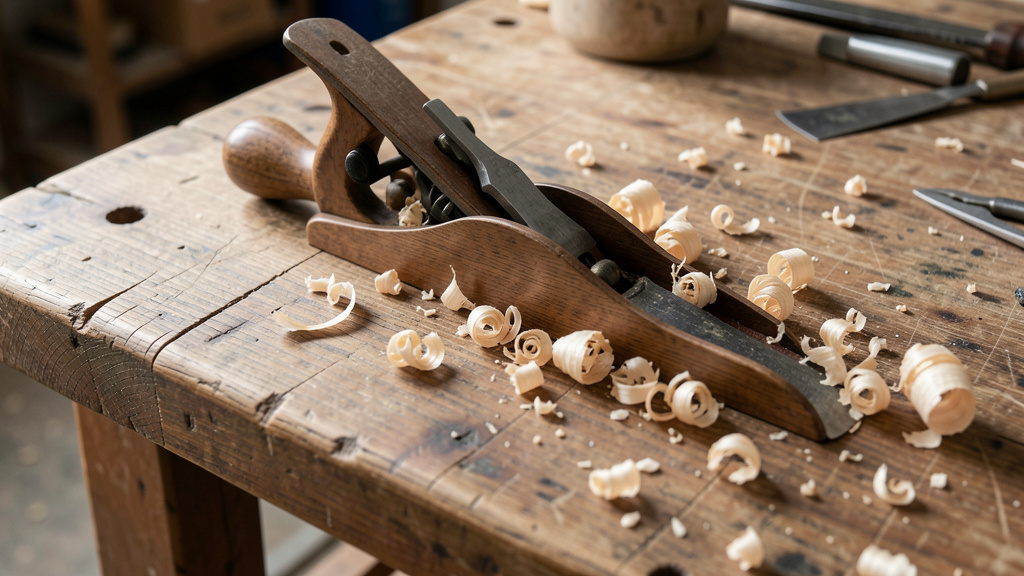
Reclaim the quiet power of creation. This definitive guide transforms hesitation into confidence through foundational chisel control, plane mastery, saw precision, and the mindful philosophy that turns raw wood into legacy—with zero electricity required.
In a world of roaring routers and vibrating sanders, a profound shift is underway. Across workshops from Portland to Prague, makers are rediscovering the whisper-quiet precision of hand tools—not as nostalgia, but as a deliberate path to deeper connection, sustainable practice, and unparalleled control. This guide transcends fragmented tutorials and romanticized history. Here lies a complete, integrated system: the biomechanics of a perfect paring cut, the grain-reading intuition that prevents tear-out, the sharpening ritual that transforms frustration into flow, and the progressive skill-building framework that turns beginner uncertainty into grounded competence. Whether restoring a family heirloom, building your first dovetail joint, or seeking mindful respite from digital saturation, these techniques offer more than finished wood—they cultivate presence, patience, and tangible pride. The journey begins not with force, but with understanding.
Introduction: Why Hands Still Matter in a Powered World
Walk into any major hardware store today, and the message is unmistakable: speed is king. Aisles hum with corded convenience, promising project completion before dinner. Yet step into community workshops, artisan studios, or quiet home garages, and a counter-movement thrives. The scent of sharpening stones mingles with sawdust. The rhythmic shush-shush of a smoothing plane replaces mechanical whine. This isn’t rejection of progress—it’s reclamation of process. For centuries, these techniques formed the backbone of furniture making, boat building, instrument crafting, and architectural millwork—traditions preserved across continents through guilds, apprenticeships, and intergenerational knowledge transfer. Today, they offer something increasingly rare: a tangible, sensory-rich path to creation requiring minimal space, no electricity, and deep respect for material. More than skill acquisition, hand tool work cultivates a unique cognitive state—where breath syncs with stroke, eyes learn wood’s hidden language, and missteps become gentle teachers rather than costly errors. This guide honors that legacy while making it rigorously accessible. It moves beyond “just do it” instructions to reveal the why behind every grip, angle, and motion. You’ll understand not only how to hold a chisel but how wrist alignment prevents fatigue; not just how to sharpen, but why a specific bevel angle unlocks control on difficult grain. This is woodworking as embodied knowledge—a dialogue between maker and material where every shaving tells a story.
The Craftsman’s Triad: Your Framework for Lasting Mastery
Before touching a single tool, internalize this foundational model. Mastery in traditional woodworking never rests on technique alone. It emerges from the dynamic balance of three interconnected pillars. Neglect one, and frustration follows. Strengthen all three, and progress becomes inevitable. This triad model aligns with time-tested approaches to skill acquisition in traditional crafts and contemporary adult education principles, transforming scattered efforts into coherent, sustainable growth.
Pillar 1: The Mindset of Patient Precision
Modern culture rewards speed. Hand tool work cultivates its antidote: intentional presence. Consider the difference between scrolling social media (fragmented attention) and reading a physical book (sustained focus). Hand tool work trains the latter. When planing a board, rushing causes tear-out, uneven surfaces, and wasted effort. Slowing down allows you to feel the blade engage the wood fibers, hear the subtle shift in sound as grain direction changes, and see the quality of the shaving curling from the mouth. This sensory feedback loop is your most valuable teacher.
Begin each session with a 60-second ritual: Place both hands flat on your workbench. Take three deep breaths. State your intention quietly: “Today, I focus on smooth, consistent strokes.” This simple act transitions your nervous system from “task completion mode” to “craft mode.” Embrace concepts like shokunin—a Japanese ethos of deep, lifelong commitment to craft where improvement is a journey, not a destination. When a cut wanders off-line, resist self-judgment. Instead, observe neutrally: “The saw followed the wood’s internal tension. Next time, I’ll check grain direction first.” This reframing turns setbacks into actionable data. Remember: A single well-executed dovetail joint, cut slowly with understanding, holds more developmental value than ten rushed, inaccurate ones. Mastery accumulates in microscopic increments—a slightly cleaner paring cut today, a more consistent shaving thickness tomorrow. Acknowledge these subtle victories. They compound.
Pillar 2: The Sanctuary Workspace
You do not need a dedicated barn-sized shop. You need a functional sanctuary. This space signals to your brain: “Here, we create with care.” Start small. A sturdy folding table (minimum 24″x48″) against a wall suffices. Critical elements transcend square footage:
- Lighting is non-negotiable: Position a bright, daylight-spectrum LED task lamp (5000K color temperature) to cast shadows along your cutting path, not across it. Shadows reveal surface imperfections and blade alignment. Avoid overhead fluorescent lights—they flatten dimension and hide critical details. Why it matters: Poor lighting forces guesswork; precise shadows guide precision.
- Secure your work: A vise isn’t optional. Even a modest 4-inch quick-release vise mounted to your bench edge provides essential stability. No vise? Use non-slip shelf liner under your workpiece and clamp it firmly with two F-clamps positioned at 90 degrees to prevent shifting. Unsecured wood moves; moving wood causes slips. Budget alternative: A well-anchored bench hook offers surprising stability for smaller tasks.
- Tool accessibility: Keep frequently used tools within arm’s reach on a simple pegboard strip or magnetic knife bar mounted vertically beside your bench. Chisels, marking knife, square, mallet. Tools buried in drawers break flow and invite rushed handling. Emergency workaround: A shallow tray lined with cork holds tools securely during a single session.
- The “clean sweep” rule: Before starting any cut, clear all debris—pencil shavings, dust, stray tools—from your immediate work area. A single wood chip under your hand can cause a chisel to slip. This ritual reinforces mindfulness and safety.
Your sanctuary need not be large, but it must be yours—a zone of order where external chaos pauses at the threshold. This psychological boundary is as vital as physical setup. In humid climates, consider silica gel packs stored with tools to prevent rust; in very dry environments, wood may become brittle, warranting extra care during paring.
Pillar 3: Tool Mastery Through Deliberate Practice
Owning tools ≠ mastering tools. Mastery emerges from deliberate practice: focused repetition of specific micro-skills with immediate feedback. Forget “building a bookshelf” as your first goal. Instead, design 15-minute daily drills:
- Chisel Drill: Clamp a scrap pine block. Using only a marking knife and 1/4″ chisel, pare a 1/16″-deep trench exactly along a pencil line. Goal: Perfectly straight walls, smooth bottom, no tear-out. Repeat 10 times. Focus solely on wrist stability and consistent pressure. Why it works: Isolates control without project pressure. Common mistake: Using shoulder force instead of controlled hand pressure.
- Plane Drill: Take a rough-sawn pine board. Set your smoothing plane for a fine cut. Plane the entire surface with the grain, aiming for translucent, continuous shavings. Stop after 5 strokes. Examine the surface. Is it smooth? Are shavings consistent? Adjust stance or pressure. Repeat. Nuance: On cathedral grain sections, slightly skew the plane (20 degrees) to reduce tear-out.
- Saw Drill: Draw a perfectly straight line on scrap wood. Start your backsaw precisely on that line. Cut slowly, focusing only on keeping the kerf centered on the line for the first inch. Stop. Assess. Restart. Accuracy in the first inch dictates the entire cut. Counter-example: Rushing the start guarantees drift later.
Track progress in a small notebook: “Day 3: Shavings consistently translucent on straight grain. Struggled on cathedral grain section—need to adjust angle.” This documentation transforms subjective “feeling” into objective growth. Mastery isn’t innate talent; it’s accumulated deliberate repetitions. Honor the drill. Trust the process.
The Fundamental Principle: True control arises not from force, but from alignment—of body, tool, material, and intention. A whisper of pressure guided by understanding achieves what brute strength cannot.
The Non-Negotiable Foundation: Safety and Sharpening
Skipping this section undermines every advanced technique. Two bedrock practices support all else: unwavering safety awareness and consistently sharp tools. Dull tools increase risk. Physics explains why: a dull edge requires excessive force to cut, raising the likelihood of slippage and loss of control. Conversely, a sharp tool bites cleanly with minimal pressure, granting precise control. Safety and sharpening are inseparable partners in confident creation.
Safety First: Beyond the Obvious Cuts
Standard safety advice—”wear eye protection”—is necessary but insufficient. True hand tool safety operates on three integrated levels:
Level 1: Physical Guardrails
Eye Protection: Always. Wood fibers, stone grit, or a snapped chisel tip travel faster than reaction time. Safety glasses with side shields are non-negotiable. Keep a pair clipped to your bench apron.
Hand Positioning (The Golden Rule): Always cut away from your body and never place a hand directly in the path of the tool’s travel. When paring with a chisel, position your guiding hand behind the cutting edge, fingers curled safely. When sawing, keep your non-dominant hand clear of the saw plate’s path once the kerf is established. Visualize an invisible “danger zone” extending 6 inches beyond the tool’s cutting edge.
Tool Integrity:* Before use, inspect every tool. Check chisel handles for cracks (especially around the ferrule). Examine saw teeth for bends. Ensure plane blades are securely seated. A failing tool fails unpredictably.
Level 2: Environmental Awareness
Footwear: Closed-toe shoes. Always. A dropped chisel weighs more than anticipated.
Distraction Protocol: Silence phone notifications. Inform household members of your focused work time. Fatigue is a major hazard—stop if tired, frustrated, or rushed. The wood will wait.
Workpiece Security: Reiterate: Nothing moves but the tool.* A shifting workpiece is a leading cause of hand tool injuries. Double-check clamps. Test stability with gentle pressure before cutting.
Level 3: Psychological Safety
This layer is frequently overlooked. Cultivate “beginner’s mind” (shoshin)—approaching each cut with fresh attention, regardless of experience. Complacency increases risk. Before every significant cut, perform a 5-second mental checklist: “Secure work? Clear path? Sharp tool? Body aligned? Breath steady?” This ritual anchors presence. Furthermore, normalize stopping. If a cut feels wrong—if resistance changes unexpectedly, sound alters abruptly—stop immediately. Withdraw the tool. Reassess grain, alignment, or setup. There is strength in pausing. This mindset shift—from “pushing through” to “mindful adjustment”—significantly reduces incident risk. Safety isn’t restriction; it’s the freedom to work with relaxed confidence.
The Sharpening Ritual: Creating and Maintaining a Razor Edge
Sharpening is preparation. It is meditation. It is the moment you transition from passive owner to active partner with your tool. Forget complex jigs initially. Master the foundational freehand method applicable to chisels, plane blades, and carving tools. You need only three items: a coarse stone (220-400 grit for reshaping), a medium stone (800-1200 grit), and a fine stone (4000-8000 grit). Water stones are ideal for beginners (splash-and-go), though oil stones or diamond plates work. Consistency matters more than brand.
The Four-Stage Sharpening Sequence (For a Standard 25° Bevel Chisel):
- Flatten the Back (Critical First Step): Place the flat back of the chisel on your coarse stone. Apply even pressure across the entire width. Push forward 10 times. Check for uniform scratch marks across the entire surface near the edge. Repeat on medium, then fine stone. A perfectly flat back is essential for a sharp edge. Why it matters: The cutting edge is the intersection of the bevel and the back. If the back is uneven, the edge cannot be truly sharp.
- Establish the Bevel (Coarse Stone): Hold the chisel with the bevel flat on the stone. Lift the handle until the bevel makes full contact—typically 25° for general woodworking. Use your index finger on the bevel face as a guide. Push the chisel forward in a smooth arc (like drawing a shallow smile), maintaining constant angle and pressure. Repeat 10-15 times until a distinct “burr” (a tiny wire edge) forms along the entire cutting edge. Test by gently dragging a fingernail across the edge (not along it)—you should feel a slight catch. Common mistake: Rocking the wrist, creating a rounded edge. Keep the bevel flat on the stone.
- Refine the Bevel (Medium Stone): Repeat the same motion on the medium stone, 10-15 strokes. The burr should feel more pronounced. This stage removes deep scratches from the coarse stone.
- Polish and Remove Burr (Fine Stone): Repeat on the fine stone, 10-15 strokes. Then, perform the “back flip”: Lightly stroke the flat back of the chisel 3-5 times on the fine stone. This cleanly shears off the burr. Test sharpness: Pare end grain on a softwood block (like pine). A sharp chisel produces a clean, glassy surface; a dull one crushes fibers.
Sharpening Nuances & Adaptive Solutions:
Hollow Grinding (Advanced Path): Some prefer grinding a slight hollow on the bevel (using a slow-speed grinder) before honing. This reduces honing time significantly. Beginner path: Master flat-bevel honing first. Hollow grinding adds complexity best approached after foundational confidence.
Secondary Bevels (Micro-Bevels): For very hard woods or heavy paring, adding a tiny secondary bevel (e.g., 30° on a 25° primary) strengthens the edge. Create it only on the fine stone with 5-7 very light strokes. Not needed for most beginners.
“I can’t feel the burr!”: You’re likely not maintaining a consistent angle. Use a marker: Color the entire bevel face with a permanent marker. Hone until all marker is removed. This visual feedback is invaluable.
Frequency: Sharpen before the tool feels dull. Notice increased resistance, tear-out, or crushed fibers? Stop and hone. A quick 30-second touch-up on the fine stone often suffices mid-project. Waiting until the tool is “dead dull” requires lengthy reshaping.
Contextual Note:* In very dry workshop conditions, steel may feel slightly more brittle during honing; use lighter pressure. In humid environments, wipe tools dry immediately after water-stone use to prevent flash rust.
This ritual—5 minutes of focused, rhythmic motion—centers the mind. The sound of steel on stone, the visual transformation of the edge, the tangible result: this is where confidence is forged. A sharp tool responds predictably. It becomes an extension of your will. Honor this ritual. Your safety, your work, and your satisfaction depend on it.
Measuring and Marking: The Language of Precision
In hand tool woodworking, measurement isn’t about numbers; it’s about transferring intent onto material with absolute fidelity. A misplaced line compromises every subsequent cut. Precision here eliminates frustration later. Move beyond the tape measure. Embrace the craftsman’s marking toolkit: tools designed for transfer, not just measurement.
Essential Marking Tools and Their Distinct Roles
- Marking Knife (The Non-Negotiable): A sharp, pointed blade scores a fine, precise line into the wood fibers. Why knife over pencil? A knife line has near-zero width. It creates a physical groove that guides your chisel or saw tooth, preventing drift. Pencil lines have width (up to 1/32″), inviting error. Use a knife for all critical joinery lines (dovetails, mortises), layout lines for cuts, and anywhere absolute precision matters. Technique: Hold the knife vertically against your square or straightedge. Slice with the grain direction to avoid tear-out. For cross-grain cuts, make a light initial pass, then deepen. Budget path: A sharp utility knife blade in a handle works acceptably for beginners.
- Combination Square (Your Multi-Tool): Essential for 90° and 45° angles, depth gauging, and checking squareness. Ensure the blade slides smoothly and locks firmly. Critical check: Verify its accuracy before use. Draw a line with the square against a known-straight edge. Flip the square 180° and draw another line beside it. If the lines diverge, the square is inaccurate. Accuracy is non-negotiable.
- Marking Gauge (For Layout Lines Parallel to an Edge): Consists of a beam, a fence, and a pin (or knife blade). Used for marking mortise locations, tenon shoulders, or any line running parallel to a reference edge. Why it beats a pencil and ruler: Once set, it replicates the exact same distance repeatedly with perfect consistency. Technique: Set the fence against your reference edge. Hold the gauge firmly, tilt the pin slightly away from the fence (so it scores cleanly), and drag it toward you along the edge. The pin should score a fine line, not plow a deep groove. For cleaner results on delicate woods, use a gauge with a knife blade instead of a pin.
- Sliding Bevel (For Transferring Arbitrary Angles): Crucial for dovetails, complex joinery, or matching existing angles. Loosen the wing nut, align the blade with your desired angle (using a protractor or existing piece), tighten securely, then transfer to your workpiece.
- Pencil (Strategic Use Only): Reserve for rough layout, non-critical dimensions, or marking waste areas (“X” on the side to remove). Never rely on pencil lines for final cut guidance where precision matters.
The Golden Rule—and Its Wise Exceptions
“Measure twice, cut once” is sound advice, but incomplete. The craftsman’s refinement is: “Establish one reliable reference edge, mark precisely from it, and verify the mark before cutting.” Why? Every measurement introduces potential error. Instead of measuring the same dimension twice from potentially different starting points, establish one reliable reference edge or face on your workpiece (using your jointer plane or sanding block). Then, use your marking gauge or combination square to transfer all critical dimensions from that single reference. This ensures internal consistency. Example: When marking tenon shoulders on a table leg, reference all measurements from the same end of the leg. This guarantees shoulders align perfectly during assembly.
When to adapt the rule: In restoration work or fitting pieces to existing structures (like a shelf into an old cabinet), direct transfer is superior to measurement. Use a story stick—a simple scrap of wood marked with critical dimensions transferred directly from the space—or trace the existing profile. Measuring introduces error; direct transfer eliminates it. Similarly, when cutting multiple identical pieces (like drawer sides), cut one piece perfectly, then use it as the template to mark the others. This guarantees uniformity far more reliably than repeated measurements. In tight spaces where a gauge won’t fit, a sharp awl can score a precise reference point.
Transferring Complex Shapes and Angles
Need to copy a curved bracket or match an irregular edge? Master these low-tech, high-accuracy methods:
- The Compass Trick: For copying an inside curve (like a recessed panel profile), set a compass to a small radius. Place the point on the original curve and trace the arc onto your workpiece. Adjust radius as needed for complex curves. Simple, effective, no templates required.
- Ridge Tracing: For matching an outside profile (like a molding), hold a sharp pencil horizontally against the original profile. Rest a straightedge vertically against the pencil tip. Slide the straightedge along the profile while keeping the pencil tip firmly against both the profile and the straightedge. The pencil traces a perfect offset line. Sand or plane to this line.
- Cardboard Template: For highly complex shapes (a chair leg silhouette), trace the shape onto stiff cardboard. Cut carefully with a sharp utility knife. Use this template to mark multiple workpieces. Secure with a tiny dot of spray adhesive for tracing. Eco-note: Reuse templates for future projects; store flat between boards.
Precision marking is silent communication between your design intent and your cutting tools. A clean, sharp, unambiguous line invites confident, accurate cuts. A fuzzy, wide, or misplaced mark breeds doubt and error. Invest time here. The quality of your entire project is laid down in these initial lines. Treat marking not as a preliminary chore, but as the first act of creation—a promise of accuracy you make to the wood, and to yourself.
Chisels: Carving Control and Confidence
The chisel is woodworking’s scalpel—a tool of immense power and subtlety. In untrained hands, it’s frustrating. In skilled hands, it achieves breathtaking precision: cleaning tight mortises, paring delicate joints, carving intricate details. Mastery begins not with force, but with understanding leverage, grain direction, and the dialogue between steel and wood.
Selecting the Right Chisel for the Task (Beyond Brand Hype)
You don’t need a 12-piece set to start. Focus on versatility and quality fundamentals. For foundational work, prioritize these three:
- 1/4-inch (6mm) Bench Chisel: Your precision instrument. Ideal for fine paring, cleaning tight corners in dovetails, and detailed work. Its narrow width accesses confined spaces.
- 1/2-inch (12mm) Bench Chisel: The versatile workhorse. Handles most paring tasks, mortising small to medium joints, and general cleanup. The most frequently used size for beginners.
- 3/4-inch (19mm) or 1-inch (25mm) Bench Chisel: For heavier removal, chopping wider mortises, or levering out waste. Provides stability for two-handed work.
Critical Quality Check: Examine the steel. Look for terms like “high-carbon steel” (e.g., O1, A2) or “tool steel.” Avoid “stainless steel” chisels marketed to beginners—they are notoriously difficult to sharpen and hold a poor edge. Check the handle: Hardwood (beech, hornbeam) or composite should feel solid, with a metal ferrule (ring) at the top to prevent splitting when struck. Tap the handle lightly on a bench—if it sounds hollow, avoid it. The blade should be perfectly straight with no visible twists. A slight convex grind on the bevel is acceptable; flat bevels are easier for beginners to hone consistently. Start with reputable mid-tier brands known for consistent heat treatment (e.g., Narex, Two Cherries). Avoid ultra-cheap sets—the steel is often too soft (rolls over) or too brittle (chips easily), leading to immense frustration during sharpening. Budget path: Seek well-maintained vintage chisels from estate sales; many can be restored to excellent performance with patience.
The Grip: Two-Handed Control for Power and Precision
How you hold the chisel dictates control, safety, and effectiveness. Master these two foundational grips:
- The Paring Grip (For Controlled Slicing): Hold the chisel handle firmly in your dominant hand, thumb resting along the side of the blade (not on top!). Place the palm of your non-dominant hand flat against the top of the blade, just behind the cutting edge. Fingers of this hand curl safely away from the edge path. Apply forward pressure with your palm, guiding the cut with minute wrist adjustments. Why it works: Your non-dominant hand provides precise, variable pressure control directly behind the cutting edge. Your dominant hand stabilizes direction. This grip allows whisper-light cuts for final fitting. Safety note: Your guiding hand is always behind the cutting edge. Never place fingers ahead of the blade.
- The Chopping Grip (For Mortising or Heavy Removal): Hold the chisel vertically in your dominant hand near the top of the handle. Grip your mallet firmly in the other hand. Position the chisel exactly where you want the cut. Strike the handle squarely with the mallet—sharp, controlled taps, not wild swings. After 2-3 taps creating a groove, switch to the paring grip to lever out the waste chip. Critical nuance: Angle the chisel slightly away from the waste side when levering. This uses the wood itself as a fulcrum, reducing strain on the chisel edge and preventing breakage. Never lever straight up against the full depth of the mortise wall.
Paring: The Art of the Controlled Slice
Paring is the essence of chisel mastery—removing thin, consistent shavings to achieve perfect fit. It requires patience, not power.
- With the Grain: Always pare with the direction of the wood grain. Paring against the grain causes tear-out and requires excessive force. How to tell grain direction? Look for the “valleys” running along the wood surface. Pare in the direction where the valleys slope downward away from your cut. When in doubt, make a tiny test pare on scrap. Smooth cut = correct direction. Ragged tear-out = reverse direction.
- The Slice Motion: Don’t push straight down. Angle the chisel slightly (5-10 degrees) and use a slicing motion—pushing forward and slightly sideways as you advance. This shears the fibers cleanly, like slicing bread with a serrated knife. A straight downward push crushes fibers.
- Progressive Depth: For deep paring (like fitting a tenon), work in stages. Pare halfway down the required depth along the entire length. Then pare the next quarter. Finally, the last section. This prevents the chisel from catching and splitting the wood at the end of the cut. Think “shallow passes, multiple times.”
- The “Stop Cut” for Clean Edges: Before paring to a layout line (like a shoulder line), make a shallow vertical “stop cut” exactly on the line using light mallet taps. This severs the wood fibers cleanly at the boundary. Now, when you pare toward this line from the waste side, the fibers break cleanly at the stop cut, preventing tear-out beyond your line. This single technique elevates joinery from rough to refined.
Mortising: Building Strength and Accuracy
Cutting a clean, square mortise (the socket for a tenon) is a rite of passage. Rushing guarantees sloped walls and weak joints. Follow this systematic approach:
- Layout Precisely: Use your marking knife and combination square to score all four sides of the mortise deeply. Knife lines prevent tear-out when chopping.
- Drill Relief Holes (Recommended for Beginners): For mortises deeper than 1/2″, drill a series of overlapping holes within the scored lines using a drill bit slightly smaller than the mortise width. This removes bulk waste, reducing chopping effort and preventing the chisel from binding. Traditional path: Purists chop entirely by hand—it builds skill—but drilling is a valid efficiency for learners.
- Chop the Ends First: Position the chisel vertically on the scored end line. Tap firmly with the mallet to establish a groove. Repeat along the entire end. This defines the mortise depth boundary.
- Chop the Sides: Work along each long side, establishing vertical walls. Keep the chisel bevel facing the waste material for better leverage and cleaner cuts.
- Pare the Walls: Switch to the paring grip. Pare down the walls you just chopped, working from both ends toward the center. Pare with the grain direction of the wall (which may differ from the board’s face grain). Check for squareness frequently with your combination square.
- Clean the Bottom: Once walls are clean and square, pare the bottom flat. Work systematically, checking depth with your square or a depth gauge. A clean, flat bottom ensures full contact with the tenon for maximum glue strength.
Common Chisel Mistakes and Adaptive Solutions
- Mistake: Tear-out on the exit side of a through-mortise.
Solution: Stop chopping 1/16″ short of full depth from the first side. Flip the workpiece. Chop and pare from the opposite side to meet the first hole. The exit tear-out occurs on the waste side you’ll clean up anyway. Alternative: Place a sacrificial backing board against the exit side during chopping. - Mistake: Chisel slipping sideways during paring.
Solution: Ensure your non-dominant guiding hand applies even pressure directly behind the edge. Check your stance—feet shoulder-width apart, body aligned with the cut direction. A slippery workbench surface? Place a non-slip mat under your workpiece. Quick fix: Lightly sand the bench area where your hand rests for better grip. - Mistake: Rounded edges on mortise walls.
Solution: When chopping the initial grooves, keep the chisel perfectly vertical. Use your square frequently as a visual guide. Pare walls deliberately after chopping. Prevention: Practice vertical chopping on scrap with a mirror beside your work to check alignment. - Mistake: Chisel edge chipping or rolling.
Solution: Inspect wood carefully for hidden knots or grit. Ensure your edge is properly sharpened (a weak edge chips). For very hard woods like oak or maple, use a slightly higher bevel angle (30° instead of 25°) for added strength. Never strike the chisel handle with a steel hammer—always use a wooden, rawhide, or plastic mallet. Emergency: If a tiny chip occurs, hone it out on your fine stone; don’t ignore it.
The chisel teaches humility and precision. It demands respect for the material’s voice—the subtle feedback of grain direction, density changes, and fiber structure. Each clean shaving is a small victory. Each corrected mistake deepens understanding. Hold it not as a weapon to conquer wood, but as a key to unlock its hidden potential. In the quiet scrape of steel on wood, you’ll find a rhythm that calms the mind and sharpens the spirit.
Hand Planes: Smoothing Surfaces with Intention
If the chisel is the scalpel, the hand plane is the painter’s brush—a tool that transforms rough, splintered surfaces into silk-smooth canvases ready for finish. More than mere smoothing, planes correct wind (twist), flatten surfaces, thickness stock, and create perfect edges for glue-ups. Understanding their anatomy and physics unlocks effortless control.
Understanding Plane Anatomy and Function (Beyond “Sharp Blade”)
A hand plane is a sophisticated shaving machine. Each component plays a critical role:
- Body (or Stock): Traditionally wood (beech, maple), now often ductile iron or bronze. Provides mass and stability. Heavier planes (like a #7 jointer) glide through difficult grain with momentum; lighter planes (like a #3 smoother) offer nimble control for final passes.
- Iron (Blade): The cutting component. Made of high-carbon or tool steel. Ground to a specific bevel angle (typically 25°-30°). The sharp edge shears wood fibers.
- Chipbreaker (Cap Iron): A thin steel plate clamped tightly to the blade just behind the cutting edge. Its critical functions: 1) Breaks the wood shaving immediately after it’s cut, preventing it from levering up and causing tear-out. 2) Adds rigidity to the thin blade tip, reducing vibration. Crucial setup: The chipbreaker edge must be honed sharp and set extremely close to the cutting edge (1/1000″ or less)—visible only as a hairline gap. A poorly set chipbreaker is a common cause of tear-out in otherwise sharp planes.
- Frog: The angled casting that holds the blade assembly. Its angle (typically 45°-50°) combined with the blade bevel determines the “effective cutting angle.” A higher effective angle (e.g., 55°) is better for difficult, interlocked grain (like figured maple) but requires more force. A lower angle (45°) is smoother on straight grain.
- Mouth: The opening in the sole just ahead of the blade. A tight mouth (narrow opening) supports the wood fibers right up to the cutting edge, minimizing tear-out on final smoothing passes. A wider mouth allows thicker shavings for rapid stock removal. Many planes allow frog adjustment to fine-tune mouth opening.
- Lever Cap: Secures the blade/chipbreaker assembly to the frog. Must be tightened firmly to prevent chatter (vibration).
Beginner Plane Recommendation: Start with a #4 Smoothing Plane (approx. 9″ long). It’s the most versatile size—long enough to bridge minor surface irregularities, short enough for control. Avoid tiny “block planes” initially; their low angle (20°) is specialized for end grain and requires more nuanced technique. A vintage Stanley #4 (pre-1960s) found at a flea market, properly restored, is an excellent, affordable option. Modern equivalents from Veritas, Lie-Nielsen, or Wood River offer reliable performance out of the box. Budget path: A well-tuned vintage plane often outperforms new budget models; seek guidance from local woodworking clubs for restoration tips.
Setting Up Your Plane: The 5-Minute Tune-Up Ritual
A plane straight from the box (or attic) rarely performs optimally. Master this setup sequence:
- Flatten the Sole (Critical): Place fine sandpaper (220 grit) on a known-flat surface (float glass, granite tile, or a verified-flat board). Rub the plane sole in a figure-8 pattern until uniform scratch marks cover the entire sole, especially around the mouth and toe/heel. A warped sole causes rocking and uneven cuts. Check: Hold the plane up to a light source against a straightedge—no light should pass through gaps.
- Sharpen the Blade: Follow the sharpening sequence detailed earlier. Ensure a mirror polish on the fine stone. A sharp blade is non-negotiable.
- Set the Chipbreaker: Remove the blade assembly. Honing the chipbreaker edge is optional but helpful. Reassemble: Place chipbreaker on blade. Slide it forward until it just contacts the blade edge. Tighten the screw finger-tight. The gap should be barely visible. This is vital for tear-out prevention.
- Install and Adjust Depth: Insert the assembly into the plane. Tighten the lever cap firmly. Turn the depth adjustment wheel (or tap the blade with a mallet on vintage planes) until the blade just protrudes through the mouth. Test on scrap wood: Take a light pass. Adjust until you get a consistent, translucent shaving. Too deep? Shavings are thick, chattery, hard to push. Too shallow? No shaving, or intermittent scratches.
- Check for Squareness: Take a pass on scrap. Hold the shaving up to light. Is it uniform thickness across its width? If thicker on one side, the blade is not parallel to the sole. Loosen the lateral adjustment lever (or tap the blade side with a mallet on vintage planes) until the shaving is even.
This ritual transforms a frustrating tool into a responsive extension of your hands. Perform it before every significant session. It builds intimate familiarity with your tool. Contextual note: In humid conditions, wooden plane bodies may swell slightly; check sole flatness periodically. In dry climates, metal planes are less affected by ambient moisture.
The Planing Stroke: Body Mechanics for Effortless Cuts
Pushing a plane shouldn’t feel like a workout. Proper biomechanics leverage your body weight, not arm strength.
- Stance: Stand with feet shoulder-width apart, dominant foot slightly back. Position your body so your shoulders are square to the board’s direction of travel. Bend knees slightly—do not bend at the waist. Keep your back straight.
- Grip: Place your dominant hand firmly on the rear tote (handle), fingers wrapped underneath. Place your non-dominant hand flat on the front knob or toe of the plane, fingers pointing forward. This hand guides direction and applies downward pressure.
- The Stroke: Initiate movement with your legs and hips, not your arms. Shift your weight smoothly forward from your back foot to your front foot as you push the plane the full length of the board. Keep the plane flat on the sole throughout—no lifting at the start or end. At the end of the stroke, shift weight back, lift the plane straight up (don’t drag it back!), return to start position, and repeat.
- Pressure Points: Apply downward pressure primarily with your front hand at the start of the stroke (to prevent the toe from diving). Shift pressure to your rear hand at the end of the stroke (to prevent the heel from lifting and rounding the end). This “rocking pressure” maintains full sole contact.
Why this works: Using leg drive engages large muscle groups efficiently. Keeping the back straight prevents fatigue and injury. The rocking pressure ensures the entire sole references the wood surface, producing a truly flat result. Practice this motion slowly on scrap wood without the blade installed—focus purely on body mechanics. Smoothness comes from rhythm, not force. Common mistake: Bending at the waist strains the back; keep hips hinged, spine neutral.
Reading the Wood: Grain Direction and Tear-Out Prevention
Wood is not uniform. Its grain direction dictates your planing strategy. Ignoring it guarantees tear-out—where fibers are ripped out instead of sliced cleanly, leaving a rough, pitted surface.
- Identify Grain Direction: Look closely at the board’s surface. You’ll see lines (grain) running lengthwise. Notice how they rise and fall like gentle hills. Plane downhill—in the direction where the grain lines slope downward away from your cut. Running your hand lightly along the surface can reveal the “smooth” direction (with the grain) vs. the “rough” direction (against the grain).
- The Shaving Test: Take a very light pass. Examine the shaving and the surface:
- Translucent, continuous ribbon: Perfect. Continue planing in this direction.
- Thick, broken chunks: Blade is set too deep. Back off the depth adjustment.
- Rough, fuzzy surface with pits: Tear-out. You are planing against the local grain direction.
- Tear-Out Solutions (Adaptive Toolkit):
- Reverse Direction: Simply plane from the opposite end of the board. Often, one direction is predominantly “with grain.”
- Skewing the Plane: Rotate the plane 20-30 degrees off the board’s length. This presents the blade at a slicing angle rather than a straight-on shearing angle, reducing the force that lifts fibers. Extremely effective on difficult grain. Why it works: Skewing reduces the effective cutting angle dynamically.
- Sharper Blade + Tighter Mouth: Re-sharpen. Ensure chipbreaker is set close. Close the mouth slightly (if adjustable) to support fibers.
- Higher Effective Angle: If your plane allows (e.g., a bevel-up smoother), use a blade with a higher bed angle (50° instead of 45°). Or, temporarily add a “back bevel” (hone a tiny secondary bevel on the back of the blade) to increase the effective cutting angle. Beginner path: Master skewing and sharpening first before modifying angles.
- Dampen the Surface (Use Judiciously): Lightly wipe the surface with a barely damp cloth. Let it sit 30 seconds. The moisture temporarily softens the fibers, making them less prone to tear-out. Caution: Only use on stable, dry wood. Test on scrap first. Never soak the wood. Avoid in very humid environments where wood is already moisture-laden.
Smoothing, Jacking, and Jointing: Choosing the Right Plane
While the #4 smoother is your foundation, understanding plane roles clarifies their purpose:
- Smoothing Plane (#3, #4, #4.5): Final surface preparation. Takes ultra-thin shavings (0.001″-0.002″). Tight mouth, finely set blade. Goal: Glass-smooth surface ready for finishing. Used after stock is dimensioned and flattened.
- Jack Plane (#5): The “jack-of-all-trades.” Longer than a smoother (14″), shorter than a jointer. Used for initial stock thicknessing, removing saw marks, and general flattening. Takes thicker shavings. Often the first plane used on rough lumber. Can be set up as a “scrub plane” (cambered blade, wide mouth) for aggressive stock removal.
- Jointer Plane (#7, #8): Long body (22″-24″) for straightening edges and flattening wide panels. Its length bridges dips and humps, cutting only the high spots. Essential for preparing edges for glue-ups (ensuring tight, seamless joints) and flattening wide boards. Requires more skill to push but delivers unmatched straightness.
Progression Path: Start with a well-tuned #4 smoother. Master flattening and smoothing small boards. Add a #5 jack plane when ready to process rough lumber. Add a #7 jointer plane when building projects requiring precise edge joints (like tabletops). This staged investment builds skill alongside tool collection. Remember: A single well-mastered plane achieves more than a cabinet full of unused tools. Space-constrained path: A #5 jack plane can be tuned for both roughing and smoothing tasks with blade adjustments, making it a versatile single-plane solution for very small workshops.
The hand plane teaches flow. In the rhythmic push, the whisper of the blade, the curl of a perfect shaving, time softens. You learn to read the wood’s story—the tight growth rings of a slow-growing tree, the subtle figure hidden beneath rough saw marks. Each pass is a conversation. Each smoothed surface, a testament to patience. This is not merely preparing wood; it is cultivating presence. The plane does not hurry. Neither should you.
Hand Saws: Cutting with Accuracy and Ease
A hand saw, properly used, cuts straighter, smoother, and with greater control than many power saws—without noise, dust clouds, or electrical cords. The secret lies not in arm strength, but in understanding tooth geometry, body alignment, and the critical importance of the starting cut. Master this, and you’ll approach straight lines with quiet confidence.
Crosscut vs. Rip: Understanding Tooth Geometry (Your Cutting Compass)
Saw teeth are engineered for specific tasks. Using the wrong saw is inefficient and frustrating.
- Rip Saw (For Cutting With the Grain – Lengthwise): Teeth are shaped like tiny chisels (aggressive “rakers”). They lift and tear fibers parallel to the grain. Fewer teeth per inch (TPI) – typically 4-7 TPI. Creates a wider kerf (cut width), removing material quickly. Use for: Dimensioning lumber (cutting a board to width along its length), resawing (splitting a board thickness-wise).
- Crosscut Saw (For Cutting Across the Grain – Widthwise): Teeth are shaped like tiny knives with beveled edges (sharp “cutters”). They slice through fibers perpendicular to the grain. More teeth per inch – typically 8-12 TPI. Creates a narrower, smoother kerf. Use for: Cutting boards to length, trimming tenons, most joinery cuts.
- Dovetail Saw / Backsaw (Specialized Crosscut): Shorter blade (8″-10″), reinforced back (brass or steel) for rigidity, fine teeth (14-20 TPI). Designed for precision joinery: dovetails, tenons, small crosscuts. The rigid back prevents blade flex, ensuring straight, accurate cuts. Essential for: Any project requiring tight-fitting joints. This should be your first dedicated saw purchase after a basic panel saw.
Critical Insight: Many modern “universal” saws feature hybrid tooth patterns. While versatile for beginners, they lack the optimized performance of dedicated rip or crosscut saws. For foundational learning, seek a dedicated Western-style backsaw (crosscut pattern) for joinery. Its feedback teaches proper technique more clearly. Japanese pull saws are excellent tools but introduce different biomechanics; master Western push-saw fundamentals first for broader understanding. Budget path: A well-maintained vintage Disston or Spear & Jackson backsaw, cleaned and sharpened, offers exceptional value.
The Starting Cut: Establishing a Precise Kerf (The Make-or-Break Moment)
A wandering cut begins with a poor start. The first inch determines the entire cut’s accuracy. Master this sequence:
- Secure the Work: Clamp the board firmly. Place your non-dominant hand flat on the board, fingers curled safely behind the layout line, acting as a guide and stabilizer. Never hold the board with fingers near the cut line.
- Position the Saw: Place the saw teeth exactly on your knife line. For Western saws, start with the saw tilted at a 45-degree angle to the workpiece (to engage fewer teeth initially). For the first few strokes, use only the front third of the saw blade.
- The “Start Stroke” Technique: Apply zero downward pressure. Use your thumb of the non-dominant hand braced alongside the saw plate (not in front of it!) as a visual guide. Make 3-5 very light, short strokes only on the push (for Western saws), focusing solely on keeping the kerf centered on the line. Let the teeth do the work. You should see a clean, narrow groove forming.
- Establish the Kerf: Once a groove ~1/8″ deep is established and the saw feels “locked in,” gradually lower the saw to its full cutting angle (typically 5-10 degrees off vertical for crosscuts). Begin using the full blade length with smooth, rhythmic strokes. Remove your thumb guide once the kerf is stable.
Why light pressure? Heavy pressure on the start causes the saw to bounce, skip teeth, and veer off-line. Light pressure allows the teeth to cleanly engage the wood fibers. The thumb guide provides crucial visual feedback without risking injury (thumb is beside the plate, not in the path). This deliberate start builds confidence and accuracy. Rushing here guarantees frustration later.
Maintaining a Straight Line: Body Position and Saw Control
Once the kerf is established, consistency is key. Your body, not just your arms, guides the saw.
- Stance and Alignment: Stand with your body square to the cut line. Your dominant shoulder should be directly in line with the intended cut path. Bend knees slightly, keep back straight. Imagine a laser beam shooting from your shoulder along the cut line—your entire body should align with this beam.
- Grip and Motion: Grip the handle firmly but not tightly (white-knuckle grip causes fatigue and vibration). Use your wrist and forearm to guide the saw, keeping the blade perpendicular to the workpiece (for 90° cuts) or at your intended angle. Initiate the stroke with your shoulder and elbow, not just wrist flicks. The motion should be a smooth, pendulum-like swing from the elbow.
- Let the Saw Work: Apply gentle, consistent pressure only on the cutting stroke (push for Western saws). Release pressure completely on the return stroke. Forcing the return stroke wears teeth unnecessarily and causes overheating. Listen to the saw: A clean “zzzzip” sound indicates proper cutting. A harsh “chatter” or “grind” means too much pressure or misalignment.
- Visual Focus: Keep your eyes focused ahead of the saw teeth, on the layout line 2-3 inches in front of the blade. Do not stare at the teeth themselves. Your peripheral vision will track the blade’s position relative to the line. Trust your initial alignment.
- Correcting Drift: If the saw begins to drift slightly off-line, do not force it back abruptly. Instead, apply slightly more pressure on the side opposite the drift during the next few strokes. For example, if drifting left, apply marginally more pressure on the right side of the blade. Small corrections are effective; large corrections cause binding and worsen the error. If drift is significant, stop, back the saw out carefully, and restart the cut from the beginning—do not try to “steer” a badly drifted kerf.
Dovetail Saws and Backsaws: Specialized Cuts for Joinery
Backsaws (including dovetail saws and tenon saws) are the precision instruments of the saw world. Their rigid back prevents blade flex, enabling cuts accurate to 1/64″. This rigidity demands refined technique:
- The “Knife Wall” Start: For dovetails, use your chisel to pare a shallow vertical wall exactly on your layout line before sawing. This creates a physical guide for the saw plate, ensuring the cut starts perfectly vertical and on-line. Place the saw plate against this wall to begin.
- Vertical Alignment is Paramount: Because the blade is narrow and rigid, any tilt translates directly into a non-vertical cut, ruining joint fit. Practice cutting scrap blocks while constantly checking blade angle with a small square held beside the saw. Develop muscle memory for perfect verticality.
- Short, Controlled Strokes: Use shorter strokes than with a panel saw. Focus on precision over speed. Let the fine teeth do the work with minimal pressure.
- Cutting to the Line: When cutting joinery (like the pins of a dovetail), saw to the waste side of your knife line, leaving the line itself intact on the finished piece. The knife line represents the absolute boundary of your joint. Sawing on the line removes critical material; sawing past the line ruins the piece. This requires trusting your initial layout and saw control. The knife wall technique is invaluable here.
Common Saw Frustrations and Adaptive Solutions
- Frustration: Saw binds (gets stuck) in the kerf.
Causes & Fixes:- Kerf closing: Wood is pinching the blade. Place a small wedge (a tapered scrap) into the kerf behind the blade as you cut to keep it open.
- Blade not perpendicular: You’re tilting the saw. Check body alignment. Practice cutting scrap while watching blade angle in a mirror placed beside the work.
- Dull teeth: Resharpen or replace. Binding increases dramatically with dull teeth.
- Frustration: Cut wanders significantly despite careful start.
Causes & Fixes:- Inconsistent body position: Record yourself sawing with a phone. Watch for shoulder sway or foot shifting. Practice stance without the saw first.
- Looking at the teeth: Shift focus to the line ahead.
- Rushing: Slow down. Count strokes: “Push… release… push… release.” Rhythm prevents error.
- Frustration: Rough, splintered cut surface.
Causes & Fixes:- Wrong saw type: Using a rip saw for crosscuts. Verify tooth pattern.
- Dull teeth: Sharpen.
- Cutting too fast: Reduce stroke speed. Let teeth clear sawdust.
- No backing board: Place a sacrificial scrap of wood behind your workpiece where the saw exits. This supports the fibers and prevents tear-out on the exit side. Critical for: Through-cuts on visible surfaces.
The hand saw cultivates spatial awareness and rhythmic patience. Each stroke is a commitment. Each straight cut, a small triumph of mind-body coordination. In the focused silence of sawing—no motor roar, just the clean whisper of teeth parting wood—you reconnect with a fundamental human act: shaping the world with intention. This is not regression; it is refinement. The saw does not judge haste. It simply reveals it. Learn its language, and it will guide your hands with unwavering truth.
Expanding Your Toolkit: Mallets, Marking Gauges, and Scrapers
While chisels, planes, and saws form the core triumvirate, three supporting tools elevate efficiency, precision, and finishing quality. They address specific friction points beginners encounter, transforming struggle into satisfaction.
The Mallet: Controlled Force, Not Brute Impact
A mallet is not a hammer. Its purpose is to deliver controlled, non-marring force to chisel handles or assembly joints. Choosing and using it correctly prevents tool damage and injury.
- Material Matters:
- Wood (Beech, Lignum Vitae, Maple): Traditional choice. Dense hardwoods (like Lignum Vitae) deliver sharp, precise taps ideal for fine paring and joinery assembly. Softer woods (like beech) offer slightly more “give,” reducing shock to your hands during prolonged mortising. Wood mallets develop character with use but can crack if struck edge-on.
- Rubber/Phenolic: Modern alternative. Provides consistent, vibration-dampening strikes. Excellent for general workshop use. Avoid very soft rubber—it absorbs too much energy, requiring harder swings.
- Avoid: Metal hammers. They will mushroom chisel handles, damage tool edges, and transmit painful shock to your joints. The only exception is a specialized brass-headed hammer for specific metalwork tasks—never for wood chisels.
- Technique for Precision:
- The “Tap” vs. “Swing”: For chisel work, use short, controlled taps from the wrist and forearm, not full-arm swings. Imagine tapping a nail gently into place. Each tap should be intentional. Listen to the sound—a clean “tap” indicates solid contact; a dull “thud” suggests misalignment or excessive force.
- Striking Zone: Always strike the center of the chisel handle’s end grain. Off-center hits cause the chisel to twist in the cut, leading to inaccurate mortises or slips. Practice tapping a pencil eraser balanced on your bench—hit the center consistently without knocking it over.
- Assembly Use: When tapping joints together (like a mortise-and-tenon), place a scrap wood “follower” block between the mallet and the joint. This distributes force evenly and prevents marring the finished piece. Tap alternately on both sides of the joint to seat it evenly.
A well-chosen mallet feels like an extension of your hand—a tool of communication between your intent and the chisel’s edge. Its weight should feel balanced, not cumbersome. Start with a medium-weight (12-16 oz) beech mallet. Its versatility covers 95% of beginner needs. The satisfying thock of a precise tap is a sound of progress. Budget path: A solid maple block wrapped in leather makes an effective temporary mallet.
Marking Gauge: The Consistency Catalyst
Earlier introduced for layout, the marking gauge deserves deeper exploration. Its true power lies in eliminating measurement error and ensuring perfect replication—a cornerstone of professional results.
- Pin vs. Knife Blade Gauge:
- Pin Gauge: Traditional. The sharp pin scores a line. Works well on softwoods. Drawback: Can tear fibers on hard or brittle woods (like oak or maple), creating a fuzzy line. The pin can also deflect slightly when encountering dense grain or knots.
- Knife Blade Gauge: Superior for precision work. The sharp knife blade slices cleanly through fibers, creating a crisp, unambiguous line that guides chisels and saws perfectly. Essential for hardwoods and critical joinery. Beginner Recommendation: Invest in a knife-blade gauge (e.g., Veritas Wheel Marking Gauge). The initial cost is justified by vastly improved accuracy and cleaner cuts. The wheel design also allows smooth, consistent pressure without digging in. Budget adaptation: Carefully modify a pin gauge by grinding the pin to a sharper, knife-like edge—but a dedicated knife gauge is preferable.
- Mastering the Technique:
- Set Precisely: Use calipers or a ruler to set the fence distance. Lock firmly. Verify by marking a test piece and measuring the line.
- Body Position: Stand with the workpiece clamped securely. Position your body so your dominant shoulder aligns with the direction of travel.
- The Stroke: Hold the gauge with the fence firmly against the reference edge. Tilt the blade slightly away from the fence (so the cutting edge leads). Drag the gauge toward you in one smooth, continuous motion. Apply just enough pressure for the blade to score the wood—no deep gouging. Why toward you? This allows your body weight to assist control and keeps your hand clear of the blade path. Pushing the gauge away risks the blade catching and jumping.
- Multiple Passes: For deep, clear lines (especially with a pin gauge), make 2-3 light passes rather than one heavy pass. This prevents tear-out and ensures a clean score.
Pro Application: When cutting multiple identical parts (like drawer sides), set your gauge once. Mark all pieces referencing the same edge. This guarantees every piece has the mortise or tenon in the exact same location, ensuring perfect alignment during assembly. This simple practice eliminates the “measure each piece” error cascade. The marking gauge is the unsung hero of workshop efficiency—transforming variable measurements into absolute consistency.
Card Scrapers: The Secret Weapon for Flawless Surfaces
When plane tear-out persists despite perfect technique, or when preparing highly figured wood (like birdseye maple or burl), the card scraper shines. This humble rectangle of hardened steel produces a glass-smooth surface without sandpaper scratches, dust, or tear-out. It’s not “scraping” in the rough sense—it’s burnishing a microscopic hook to slice fibers.
- Selecting and Preparing a Scraper:
- Material: Buy a dedicated cabinet scraper (2″x3″ hardened steel). Do not use old saw blades or random steel—they lack proper hardness and temper. Thickness matters: 0.032″ is ideal for beginners (flexible yet stable).
- Creating the Hook (Burnishing): This is the critical step. You need a burnisher (a hardened steel rod) or the back of a gouge/chisel.
- File the Edge: Clamp the scraper vertically in a vise. File the long edge perfectly straight and square using a mill file. Remove all burrs.
- Deburr: Lightly hone the edge on a fine stone (or rub on sandpaper on glass) to remove file marks. Wipe clean.
- Burnish the Hook: Place the scraper flat on the bench. Hold the burnisher at a 5-10 degree angle to the scraper face. Push the burnisher firmly along the edge 10-15 times. Flip the scraper. Repeat on the other face. This cold-works the steel, rolling a microscopic cutting hook along the edge. Test: Lightly drag a fingernail across the edge—you should feel a slight catch. Do not feel a sharp edge like a knife; the hook is too small to feel directly.
- Using the Scraper Effectively:
- Grip: Hold the scraper with both thumbs braced behind the cutting edge on the scraper face, and fingers curled over the top edges. Flex the scraper slightly into a shallow curve by pressing thumbs inward. This curve creates the cutting angle.
- The Stroke: Tilt the scraper forward 10-15 degrees (so the leading edge contacts the wood). Push forward with firm, even pressure. A fine, curly shaving should appear. Adjust tilt and flex until shavings flow consistently. Work with the grain direction. Overlap strokes slightly.
- When to Use: After planing, for final surface refinement. Especially valuable on end grain, highly figured wood, or areas where plane tear-out occurred. Leaves a surface so smooth it often requires minimal or no sanding before finishing.
- Refreshing the Hook: As the hook dulls (shavings stop), simply re-burnish the edge 5-10 times. No sharpening stones needed. When the hook is exhausted after multiple refreshes, re-file the edge and start over.
Contextual Note: In very dry conditions, steel may feel slightly more brittle during burnishing; use moderate pressure. Scrapers excel where sanding would clog pores in oily woods like teak or rosewood.
The card scraper embodies elegant simplicity. It requires no electricity, creates minimal dust, and produces results power sanders cannot match on difficult woods. Learning it builds confidence—you hold a solution to one of woodworking’s most common frustrations. The whisper-quiet shush of a scraper producing translucent shavings is deeply satisfying. It’s a tool of quiet mastery, revealing the wood’s true beauty without violence.
These supporting tools—mallet, gauge, scraper—are force multipliers. They address specific pain points with elegant solutions, reducing frustration and elevating results. They teach nuanced lessons: the mallet in controlled force, the gauge in replicable precision, the scraper in adaptive problem-solving. Integrate them thoughtfully. They transform the journey from competent to confident.
Building Your Skill: Progressive Projects for Confidence
Knowledge without application remains abstract. Theory solidifies through doing. Avoid the common trap of attempting an ambitious project before foundational skills are ingrained. This leads to frustration, wasted material, and abandoned tools. Instead, follow this deliberate progression of micro-projects. Each builds specific, transferable skills while delivering tangible satisfaction. Use inexpensive, forgiving softwood (pine, poplar, or basswood) for all practice pieces. Save precious hardwoods for final projects once skills are proven. Work in a well-lit area with your sanctuary workspace prepared.
Project 1: The Precision Block (Mastering Marking, Sawing, Paring)
- Goal: Cut a perfect 2″x2″x4″ block with all faces square and edges crisp.
- Skills Developed: Accurate marking with knife and square; starting and maintaining a straight saw cut; precise paring to final dimension; checking for squareness.
- Process:
- Select a rough 2.5″x2.5″x5″ pine block.
- Joint one face flat using your plane (reference face).
- Joint one edge square to that face (reference edge).
- Use marking gauge to layout final width and thickness from reference edges.
- Saw carefully to the waste side of the lines.
- Pare precisely to the knife lines using stop cuts and the paring grip.
- Check all faces for flatness (straightedge), all edges for squareness (combination square).
- Success Metric: All dimensions within 1/64″ tolerance. All corners sharp, no tear-out. This block becomes your personal “squareness standard” for future projects.
- Why it Works: Isolates core dimensional accuracy skills without complex joinery. The small scale demands precision. Success here builds immense confidence for larger work. Adaptive path: If sawing straight is challenging, practice the start-stroke technique on scrap for 10 minutes before beginning.
Project 2: The Mortise-and-Tenon Sample (Foundational Joinery)
- Goal: Create one perfectly fitting mortise-and-tenon joint on a 3″x6″ sample block.
- Skills Developed: Layout transfer; precise sawing to lines; controlled chopping and paring; fitting joints for snug (not tight) assembly.
- Process:
- Cut two 1.5″x1.5″x6″ blocks from pine.
- On Block A (mortise piece): Layout a 1/4″x1″x1.5″ mortise centered on the end grain. Score deeply with knife. Drill relief holes. Chop and pare to clean, square mortise.
- On Block B (tenon piece): Layout matching tenon shoulders and cheeks. Saw shoulders carefully using backsaw. Saw cheeks. Pare tenon cheeks to the knife lines for perfect thickness.
- Test fit. Pare mortise walls or tenon cheeks minutely until joint slides together with firm hand pressure (no mallet needed) for the last 1/4″. Should require light mallet taps to fully seat.
- Success Metric: Joint fits squarely. No gaps visible at shoulders. Tenon fully seats. Wood fibers remain intact—no crushing or tear-out at shoulders.
- Why it Works: This joint is the backbone of furniture making. Mastering it builds competence applicable to chairs, tables, frames. The sample size reduces pressure. Focus on process, not perfection. Each attempt refines technique. Troubleshooting tip: If the tenon is too tight, pare the cheeks evenly on both sides; never pare just one side.
Project 3: The Simple Shelf (Integration and Flow)
- Goal: Build a small wall-mounted shelf (8″x6″) with through-mortise-and-tenon joints and a smoothed top.
- Skills Developed: Project planning; cutting multiple identical parts; edge jointing for glue-up; assembly sequence; final surface preparation.
- Process:
- Mill stock: Plane two 1″x3″x10″ boards for shelf top. Plane two 3/4″x1.5″x7″ boards for sides.
- Edge-joint shelf top: Plane mating edges perfectly straight and square. Glue and clamp. Once dry, plane top surface smooth.
- Cut sides to final length. Layout and cut two through-mortises on each side piece (for shelf supports).
- Cut two 1/4″x1″x5″ tenon rails. Fit to mortises.
- Assemble dry-fit. Disassemble. Apply glue to mortises and tenons. Assemble. Wipe excess glue. Clamp squarely. Check diagonals for squareness.
- Once dry, plane entire assembly smooth. Round edges slightly with sandpaper or block plane. Finish with oil.
- Success Metric: Shelf sits level. Joints are tight with no visible gaps. Surface is smooth. Shelf holds weight without flexing.
- Why it Works: Integrates all prior skills into a functional object. Teaches workflow: milling → joinery → assembly → finishing. The small scale is manageable. The finished shelf is a tangible reward—a visible testament to growing skill. Hang it proudly. It holds more than objects; it holds your progress. Space-saving note: This project requires minimal clamping space; use band clamps if traditional clamps are unavailable.
Project 4: The Dovetail Practice Block (The Confidence Catalyst)
- Goal: Cut one clean, interlocking dovetail joint on a 2″x3″x4″ block.
- Skills Developed: Advanced layout; precise angled sawing; delicate chisel work; spatial reasoning.
- Process:
- Cut two 1.5″x2″x4″ pine blocks.
- Layout tails on end grain of Block A: Mark center. Draw two tails (approx. 1/2″ wide at base, 15° angle). Score deeply with knife.
- Saw tails: Use backsaw to cut exactly on the waste side of each line, maintaining perfect verticality. Saw down to baseline.
- Remove waste: Chisel vertically down baseline to create a “V” groove. Pare cheeks of tails smooth.
- Transfer tails to Block B (pins): Place Block A on end of Block B. Trace tail profiles with knife. Saw pins carefully on the waste side of lines.
- Pare pins to fit tails. Test fit. Pare minimally until joint slides together snugly.
- Success Metric: Pins and tails interlock cleanly. No gaps along mating surfaces. Joint holds together under light hand pressure without glue. Wood fibers remain crisp—no crushing at tail corners.
- Why it Works: Dovetails are woodworking’s “badge of honor.” They seem daunting, but broken into steps, they are achievable. Success here provides an unparalleled confidence boost. It proves your saw and chisel control has reached a new level. Many makers keep their first successful dovetail block forever—a milestone marker. Beginner adaptation: Start with wider tails (3/4″) to reduce precision pressure; narrow them as skill grows.
Embracing the Learning Curve
Expect imperfections. Your first mortise will be slightly out of square. Your first dovetail will have gaps. This is not failure; it is data. After each project, conduct a gentle “post-mortem”:
What went well? (Celebrate this!)
Where did I struggle? (Be specific: “Saw drifted left on the second tail cut.”)
What is one micro-adjustment for next time?* (“Practice starting cuts with thumb guide for 5 minutes before next session.”)
Keep a project journal. Sketch your pieces. Note wood type, tool settings, challenges. This documentation transforms subjective experience into objective learning. Progress is rarely linear—it’s a spiral, circling back to similar skills at deeper levels of understanding. Trust the spiral. Each rotation builds competence you cannot unlearn. These projects are not ends in themselves; they are vessels for skill. The shelf holds books; the dovetail block holds your growing identity as a maker. Honor the process. The results will follow. Seasonal note: In winter’s low humidity, wood may be more brittle; take lighter cuts. In summer’s humidity, allow extra drying time for glue-ups.
Troubleshooting Common Frustrations
Even with careful practice, challenges arise. Frustration is a natural part of learning. How you respond determines progress. Below, address specific pain points with actionable solutions—not vague advice. Each solution includes the why, empowering you to adapt to future variations.
“My Plane is Chattering or Skipping”
- Symptoms: Vibration, inconsistent shavings, rough surface, plane feels “jumpy.”
- Root Causes & Solutions:
- Blade Not Secure: The lever cap isn’t tightened sufficiently, or the chipbreaker isn’t seated firmly against the blade. Fix: Tighten the lever cap screw firmly (you should feel resistance). Ensure the chipbreaker screw is snug. Re-check blade depth.
- Dull Blade: A slightly dull edge catches and releases instead of cutting smoothly. Fix: Resharpen immediately. Don’t “push through” chatter—it damages the wood and reinforces bad habits.
- Mouth Too Wide for Cut: Taking a fine cut with a wide mouth allows the shaving to buckle and cause vibration. Fix: Close the mouth slightly (if adjustable) or take a slightly thicker shaving. For final smoothing passes, ensure the mouth is tight.
- Sole Not Flat: High spots on the sole cause rocking. Fix: Re-flatten the sole on sandpaper glued to glass. Pay special attention to the area around the mouth.
- Wood Movement: Planing across severe grain changes or knots. Fix: Skew the plane. Reduce cut depth significantly. Plane around difficult areas and return later with lighter passes.
“My Chisel Slips or Skates Off the Mark”
- Symptoms: Loss of control during paring or chopping; cuts veer off layout lines; tool feels “unstable.”
- Root Causes & Solutions:
- Dull Edge: A dull chisel crushes fibers instead of cutting them, causing it to glance off hard spots. Fix: Sharpen. This is the most common cause. A sharp chisel bites predictably.
- Poor Grip: Hand position is insecure or fingers are in the danger zone. Fix: Revisit the paring grip: non-dominant palm firmly on blade behind the edge, fingers curled safely