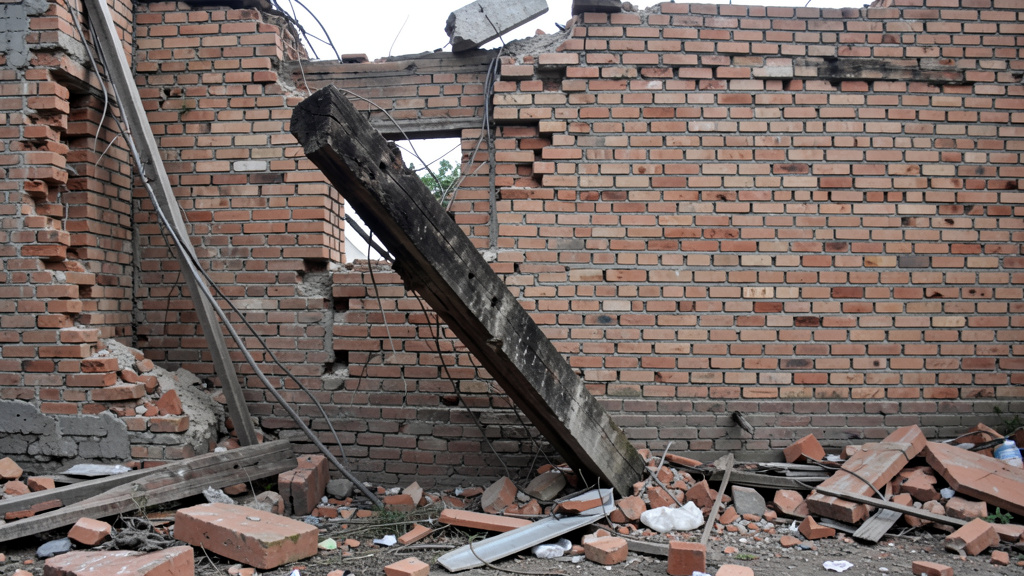
Structural Emergency Assessment: Your Step-by-Step Protocol to Determine Immediate Safety After Damage or Disaster

When every second matters: A systematic visual assessment approach to identify potential structural hazards, avoid critical errors, and make informed decisions about evacuation—using only observable evidence and established safety principles

You stand before your home after the storm has passed, the tremor has ceased, or you’ve noticed a new crack tracing across the ceiling. Your pulse quickens. Is it safe to step inside? Should you gather essentials or move to safety immediately? This guide provides a structured observational protocol aligned with established emergency assessment methodologies—translated into clear, actionable steps anyone can follow. We replace uncertainty with pattern recognition: specific visual cues, contextual considerations, and decision triggers that help distinguish between minor concerns and situations requiring immediate action. No technical expertise required. No guesswork. Just a methodical process designed to protect you and your loved ones while preserving clarity under pressure.

Introduction

Structural emergencies arrive without warning—a severe weather event, unexpected ground movement, the sound of stressed materials. In these moments, hesitation carries weight. Yet most homeowners face a significant knowledge gap: how to differentiate between superficial damage and indicators of potential structural compromise. This guide bridges that gap. Developed through review of widely referenced rapid evaluation resources including FEMA P-154 guidelines, International Code Council emergency protocols, and documented engineering case studies, this methodology transforms overwhelming uncertainty into a clear, sequential decision pathway. We focus exclusively on observable evidence—what your eyes can verify from safe positions—because in structural emergencies, assumptions can lead to dangerous outcomes. You will learn where to look, which patterns warrant heightened caution, and how environmental context (recent weather, building age, site conditions) critically informs risk interpretation. This is not theoretical advice; it is a field-applicable assessment sequence designed for real-world application under stress. Your safety depends on recognizing three foundational principles: structural changes often show visible precursors, human perception narrows under pressure (making a checklist-driven approach essential), and no possession holds greater value than human life. As safety authorities consistently emphasize: when uncertainty exists, distance provides the only reliable safety margin. This guide offers the observational discipline to replace doubt with structured clarity.

The SAFE Framework: Survey, Assess, Flag, Evacuate/Evaluate

Imagine emergency personnel approaching a potentially compromised structure. They do not rush in. They follow protocol: size up the scene, identify hazards, communicate risks, and determine next steps. Your structural assessment requires identical discipline. The SAFE Framework provides this systematic sequence—designed to prevent two common critical errors: entering potentially unsafe areas and delaying necessary evacuation due to emotional attachment. Each phase builds deliberately on the previous one, creating cognitive anchors that support clear thinking when stress runs high. This goes beyond “checking for cracks.” It is a layered diagnostic process where context transforms isolated observations into informed risk categories. Variations of this methodology are used in professional settings because they compensate for natural human bias during high-stress moments. Commit these four phases to memory before an emergency occurs. Practice visualizing them. In crisis, mental preparation becomes your most reliable tool.

Phase 1: Survey (The 360-Degree Safety Perimeter)

Do not enter the structure. Maintain distance of at least 1.5 times the building’s height. For a typical two-story home, stay 30+ feet back initially. Survey establishes your safety first—before gathering any information about the structure. Your position must be defensible against secondary hazards like falling debris or ground instability. Begin here:

Establish Your Observation Post: Move to solid, stable ground uphill from the structure if slope exists. Avoid areas beneath damaged trees, compromised retaining walls, or visible utility hazards. Note environmental conditions first: downed wires (assume all are energized), unusual odors near gas lines, standing water, or disturbed soil (sinkholes, soil liquefaction signs after seismic events). Document observations with your phone camera from your safe position—this aids responders later. If you detect gas odor, hear hissing, or see sparking wires, retreat immediately to 300+ feet and call emergency services. Do not operate light switches, engines, or phones near suspected gas leaks.

Conduct the Full Circumnavigation (Visually): Walk the perimeter at your established safe distance, observing all sides of the structure. Use binoculars if available. Note asymmetries: Is the roof ridge level? Does one corner appear lower? Are eaves separating from walls? Pay special attention to connections—where structural elements join. A roof pulling away from wall plates, a porch detaching from the main structure, or a chimney leaning independently are significant indicators. Photograph each elevation systematically: front, rear, both sides, then close-ups of anomalies. Timestamp matters—these images establish a baseline if conditions change.

Assess Ground-Level Context: Examine soil around the foundation. Fresh radiating cracks? Soil heaving near footings? Water pooling abnormally against one wall after rain? These may indicate foundation movement. Check adjacent surfaces: Are new cracks in driveways or sidewalks aligned with foundation cracks? Are sections displaced vertically? This “crack mapping” helps determine whether movement appears isolated or widespread. Note recent conditions: Heavy rainfall saturates soil, potentially reducing foundation support. Freeze-thaw cycles exert pressure on masonry. Recent excavation nearby? Vibrations from construction can affect adjacent structures. Context transforms a small crack from “likely cosmetic” to “requiring professional review.”

Why this phase is essential: Documented incident reviews following severe weather events note cases where individuals re-entered visibly damaged structures to retrieve items, resulting in injury from delayed collapses. The Survey phase creates necessary physical and psychological distance—enabling objective observation before emotion influences action. Common oversight: Focusing only on obvious damage (a broken window) while missing a leaning chimney that signals broader instability. Your survey must be methodical, not reactive.

Phase 2: Assess (Targeted Visual Inspection of Critical Zones)

Only proceed to closer inspection if Phase 1 revealed no immediate evacuation triggers (see Phase 3). Approach cautiously, stopping frequently to re-evaluate. Never stand directly beneath areas showing distress. Use the “Z-Pattern Scan”: Start at ground level on one corner, move vertically upward, then horizontally to the next section. This reduces the chance of missing critical zones. Focus on these key structural elements:

Foundation & Footings: Crouch (avoid leaning directly against walls) and examine the entire perimeter at ground level. Use a flashlight at a low angle to highlight surface irregularities. Key observations:
Horizontal cracks in concrete block or poured foundations, especially if accompanied by inward curvature. Noticeable bowing warrants professional evaluation.
Stair-step cracks following mortar joints in block foundations—these may indicate differential settlement. Note if width changes from top to bottom.
Spalling: Concrete surface flaking or exposing reinforcement. Rust-colored streaks below spalled areas suggest active corrosion.
Moisture signs: Persistent dampness, white chalky deposits (efflorescence), or mold at the base of interior walls after rain may signal hydrostatic pressure—a factor requiring monitoring.

Contextual insight: Post-flood assessments have shown structures with seemingly minor foundation cracks later exhibiting significant movement when combined with soil saturation and specific crack patterns. The combination of crack type, visible deformation, soil conditions, and recent weather creates the full risk picture—not any single factor alone.

Load-Bearing Walls (Interior & Exterior): Identify likely load-bearing walls: typically exterior walls, walls running perpendicular to floor joists (visible in basement/crawlspace), and central walls in multi-story homes. Inspect for:
Diagonal cracks originating at window or door corners. Cracks extending significantly beyond the opening warrant attention. Cracks forming intersecting patterns across a wall section indicate notable stress.
Bowing or bulging: Place a straightedge against the wall. Visible gaps suggest deflection requiring evaluation. Tap the wall—hollow sounds may indicate separation from framing.
Doors and windows: Attempt to open/close interior doors on upper floors. New sticking (especially if previously operated smoothly) often indicates frame distortion. Check window operation similarly. Uneven gaps between sashes and frames may signal structural shifting.

Critical distinction: Not all cracks carry equal significance. Vertical cracks in drywall at seam joints are frequently benign (resulting from normal framing movement). Diagonal cracks through structural materials, however, often transmit stress. Context matters: A fine diagonal crack in an older masonry home after minor seismic activity may reflect historic movement. The same crack appearing suddenly after nearby construction warrants professional review.

Floors & Ceilings: Walk slowly across floors, noting new springiness, slopes, or unusual sounds beyond normal. Simple slope check: Place a small round object on the floor in multiple rooms. Does it roll consistently in one direction? This may reveal subtle slope indicating foundation movement. Inspect ceiling-wall joints for separation gaps. In basements or crawlspaces (enter ONLY if Phase 1 confirmed safety), examine structural supports:
Sagging: Visible curvature in beams or at mid-span is a significant indicator.
Cracked or split members: Especially near supports or mid-span. Hairline cracks along wood grain may be normal; cross-grain cracks or splits warrant evaluation.
Support column condition: Check for rust streaks on steel columns, concrete deterioration on piers, or visible gaps between posts and beams.

Important note: While some floor flexibility is normal in older homes, new or worsening movement after an event (earthquake, flood) signals potential support compromise. Documented cases show that ignoring progressive floor movement post-event has led to discovery of critical connection failures requiring immediate attention.

Roof Structure & Connections: From ground level (use binoculars), inspect:
Ridge line alignment: Is the peak straight or sagging in sections? Sagging may indicate compromised rafters or ridge beam.
Roof plane distortion: Visible waves, dips, or bulges suggest underlying support issues.
Eave separation: Gaps forming between roof overhangs and exterior walls indicate potential connection failure—a serious concern.
Chimney condition: Visible leaning, significant cracks, or separation from roof flashing. Masonry chimneys require careful evaluation after seismic events.

Why connections matter: Engineering analyses of structural performance consistently highlight connection integrity as critical. A roof system relies on secure ties to walls; without them, environmental loads become significantly more hazardous. Post-wildfire assessments have noted structures surviving flames later experiencing roof instability due to heat-affected connections. Prioritize examining these junctions.

Structural Openings & Penetrations: Windows, doors, and utility entry points concentrate stress. Inspect frames for:
Racking: Rectangular openings becoming parallelograms (measure diagonals—if noticeably unequal, the frame is distorted).
Crack patterns: Cracks radiating from corners in a “spiderweb” pattern may indicate point-load stress.
Utility lines: Check where gas, water, or electrical lines enter. Gaps forming around penetrations may suggest foundation movement. Never attempt to shut off gas yourself if line damage is suspected—evacuate and contact the utility provider.

Phase 3: Flag (The Red, Yellow, Green Decision Matrix)

Observations gain meaning through risk categorization. This matrix converts visual evidence into clear action guidance. Consider printing this section for your emergency kit. When uncertainty exists, default to the higher caution level.

Risk Level Visual Indicators Immediate Action
RED (EVACUATE NOW) • Noticeable foundation bowing or separation
• Chimney leaning visibly or with significant cracking
• Roof ridge sagging or eaves pulling away from walls
• Intersecting crack patterns on load-bearing walls
• Fresh soil heaving, sinkholes, or liquefaction signs near foundation
• Audible creaking, popping, or grinding sounds from structure
• Doors/windows suddenly jammed shut
1. Leave immediately. Do not retrieve items.
2. Move to pre-identified safe zone (300+ ft away).
3. Call emergency services. State: “STRUCTURAL CONCERNS OBSERVED.”
4. Prevent others from approaching.
YELLOW (DO NOT ENTER – PROFESSIONAL EVALUATION REQUIRED) • Horizontal foundation cracks with visible deformation
• Diagonal wall cracks extending significantly from openings
• Detectable floor slope or new sticking doors/windows post-event
• Minor roof distortion visible from ground
• Water intrusion at foundation after heavy rain
1. Secure perimeter. Prevent entry.
2. Contact qualified structural professional promptly.
3. Document with dated photos.
4. Monitor periodically for changes (new cracks, sounds).
5. If worsening, escalate to RED protocol.
GREEN (MONITOR – LOW IMMEDIATE RISK) • Fine vertical drywall cracks at seams
• Minor efflorescence without active moisture
• Cosmetic stucco cracks
• Historic cracks unchanged over time
• Normal seasonal door operation changes
1. Safe to occupy.
2. Document existing conditions with photos.
3. Schedule routine inspection with qualified professional.
4. Implement preventive maintenance (gutter cleaning, drainage).

The Fundamental Principle: Structural condition is dynamic—it changes with time, environmental factors, and loading. A YELLOW condition can evolve rapidly under rain saturation or aftershocks. Ongoing observation is part of responsible assessment.

Critical Flagging Considerations:
Progression Over Size: A very fine crack appearing recently warrants more attention than a stable, older crack. Date your photos. Compare to prior images if available.
Pattern Recognition: One small crack may be insignificant. Multiple cracks forming geometric patterns (triangles, intersecting lines) suggest systemic stress redistribution—a notable warning sign.
Sound as Indicator: Structural groaning is not typical “settling.” Audible distress signals material stress. Treat persistent unusual sounds as requiring immediate evacuation, even without visible damage.
Hidden Hazard Awareness: After flooding, hidden damage poses significant risk. Saturated soil temporarily loses bearing capacity. A foundation appearing intact may become unstable hours later as water recedes and soil shifts. Always treat flood-affected structures with heightened caution until soil stabilizes and professional assessment occurs.

Phase 4: Evacuate/Evaluate (The Action Protocol)

This phase executes the decision from Phase 3. For RED conditions, evacuation is immediate. For YELLOW/GREEN, evaluation defines next steps.

RED Protocol Execution:
Evacuate Strategically: Move perpendicular to potential collapse zones. Falling debris typically travels horizontally up to 1.5x the building height. If a chimney leans north, evacuate south.
Account for All Persons: Use your emergency contact list. Designate a visible meeting point (e.g., “the large oak tree across the street”).
Communicate Clearly: When calling emergency services, state: “I observed [specific indicator] at [address]. Structure requires safety evaluation. No one is inside.” This aids responder preparation.
Secure Perimeter (Safely): If possible from a distance, place visible barriers (cones, tape) with “DANGER: UNSAFE STRUCTURE” signs. Prevent well-meaning others from entering.

YELLOW Protocol Execution:
Contact Qualified Professionals: Seek:
Licensed Structural Engineer (SE): For definitive safety evaluation, engineering analysis, and repair guidance. Often required for insurance documentation involving structural concerns.
Certified Building Inspector (CBI): For initial screening if engineer availability is limited. Verify credentials through state licensing resources.
Avoid: Individuals without relevant structural assessment credentials offering immediate “fixes”—seek unbiased evaluation.
Prepare Documentation: Compile your SAFE Framework notes: dated photos, observations, timeline of events (when changes appeared, weather conditions), prior repair history. This streamlines professional assessment.
Temporary Measures (ONLY if safe): If rain is entering through a roof breach and you can access the area without risk (e.g., from inside a confirmed stable attic), place a tarp over the damage. Never climb onto a compromised roof. For minor water near foundation, improve grading away from the house using sandbags—but only if soil is stable and you remain at safe distance.

GREEN Protocol Execution:
Document Baseline: Photograph all existing conditions, label with date/location. Store digitally off-site. This creates invaluable reference if future changes occur.
Schedule Preventive Review: Even stable structures benefit from periodic checks by qualified inspectors. Focus on drainage, grading, and connection points.
Implement Simple Monitoring: Place masking tape across stable cracks. Date the tape. If tape tears, movement is occurring. Simple tilt indicators (available online) can track wall alignment over time.

Adapting the SAFE Framework to Specific Emergency Scenarios

Generic protocols require contextual adaptation. A crack after seismic activity carries different implications than the same crack after heavy snow. This section tailors the SAFE Framework to six common scenarios, highlighting scenario-specific considerations and critical adaptations. Note the emphasized triggers—they may override general guidelines.

Earthquake/Tremor Events

Unique Considerations: Lateral forces stress connections and shear elements. Damage may be hidden within wall cavities or foundations. Aftershocks can trigger delayed movement.
Survey Adaptation: Prioritize checking for utility hazards (gas odor, downed wires). Assume utilities may be compromised. Listen for aftershocks—evacuate immediately if felt during assessment.
Critical Indicators:
Soft-story concerns: Visible crushing or buckling of large openings on ground floor (common in certain multi-unit buildings). EVACUATE IMMEDIATELY.
Chimney separation: Cracks at roofline where chimney meets structure. Masonry chimneys require careful evaluation after seismic events.
Horizontal crack patterns across multiple floors at similar elevations—may indicate floor system stress.
Evaluation Nuance: Stucco cracks are common after quakes. Focus inspection on underlying framing at corners. Document all cracks with grid-pattern photos for professional review.
Professional Insight: Engineers use specialized methods post-quake to detect hidden voids. Do not attempt probing yourself. Comprehensive documentation accelerates professional assessment.

Flood/Water Saturation Events

Unique Considerations: Hydrostatic pressure acts against foundations; saturated soil temporarily loses stability; prolonged moisture affects structural materials. Collapse risk may increase as waters recede due to soil shifting.
Survey Adaptation: Never enter floodwaters. Depth hides hazards. Assess from high, stable ground. Note water marks on structures—highest mark indicates peak pressure points.
Critical Indicators:
Foundation movement signs: New cracks appearing above previous water lines, doors/windows jammed shut as structure shifts. EVACUATE—professional evaluation required before re-entry.
Soil instability: Ground appearing to “boil” or losing solidity (test cautiously with long pole from safe distance—if it sinks easily, soil is unstable). Retreat immediately.
Bowing walls with water stains: Indicates sustained pressure.
Evaluation Nuance: Efflorescence (white powder) alone isn’t critical. But if accompanied by dampness and horizontal cracks, it signals active water pressure. Monitor closely as water recedes.
Critical Awareness: “The house looks dry now, so it’s safe” is a dangerous misconception. Hidden moisture in wall cavities causes progressive deterioration. Structures affected by flooding require professional moisture assessment before re-entry. Historical data indicates flood-related structural concerns often emerge within the first few days after waters recede.

High Wind/Storm Events (Hurricanes, Tornadoes, Derechos)

Unique Considerations: Uplift forces target roof connections; wind-driven debris creates puncture hazards; asymmetric loading causes racking.
Survey Adaptation: Beware of loose debris—shingles, branches, siding become hazards in residual winds. Wear head and eye protection during assessment. Note damage patterns on neighboring properties (indicates wind direction/intensity).
Critical Indicators:
Roof decking exposed: Missing roofing material exposing underlying sheathing. EVACUATE—water intrusion will accelerate material deterioration.
Gable end wall distortion: Triangular end walls are vulnerable. Any visible curvature requires professional evaluation.
Missing soffit panels: May indicate wind entered attic space, potentially affecting roof connections.
Evaluation Nuance: Missing roofing material on leeward side may be less critical. Missing material on windward side, especially near ridges or valleys, indicates severe uplift stress on connections. Inspect attic only if safe for lifted sheathing edges.
Professional Insight: Post-storm assessments sometimes reveal intact roofs with compromised roof-to-wall connections. Document anomalies with video for engineer review.

Heavy Snow/Ice Load Events

Unique Considerations: Vertical downward force accumulates. Roof geometry matters—flat roofs and valleys collect disproportionate loads. Ice dams create secondary water concerns.
Survey Adaptation: Assess from multiple angles. Snow cover hides roof distortion. Look for abnormal snow accumulation patterns (e.g., snow sliding off one section but not another—may indicate underlying sag).
Critical Indicators:
Visible roof sag: Especially at ridges or valleys. EVACUATE IMMEDIATELY. Indicates load capacity exceeded.
Cracking or groaning sounds from attic area. Leave structure instantly.
Doors sticking on upper floors: May indicate roof load transferring downward, distorting frames.
Evaluation Nuance: Minor ceiling cracks after heavy snow may resolve as snow melts. BUT: If cracks widen during melt cycle, or if water stains appear, structural deflection may be occurring. Monitor closely. Never attempt rooftop snow removal—fall risk and added point load are extremely hazardous.
Contextual Note: Snow and ice add significant weight. Local building codes specify design loads, but visible deformation is a clear warning sign regardless of exact measurements.

Fire Events (Structural Compromise Post-Flame)

Unique Considerations: Heat affects material strength; hidden fire may smolder within cavities; water from suppression adds weight and moisture.
Survey Adaptation: NEVER ENTER A FIRE-DAMAGED STRUCTURE. Even “contained” fires compromise structural integrity invisibly. Thermal imaging may miss smoldering voids. Assume professional evaluation is required until fire officials confirm structural safety.
Critical Indicators (Visible from Exterior):
Sagging rooflines or leaning walls post-fire. DO NOT APPROACH.
Discolored structural steel (in applicable structures): Color changes may indicate heat exposure affecting strength.
Cracked or spalled concrete on foundations or columns.
Evaluation Reality: Fire department “all clear” typically refers to fire extinguishment, not structural safety. All fire-affected structures require engineering assessment before entry. Documented incidents show structural elements can retain compromised integrity despite appearing intact.
Case Reference: Post-incident reviews of fire events note cases where structural elements failed hours after fire suppression due to hidden heat damage. Professional engineering sign-off is essential before re-entry.

Long-Term Deterioration (The “Silent Emergency”)

Unique Considerations: Gradual decay (rot, corrosion, insect activity) accumulates until a minor event triggers failure. Often missed until advanced stage.
Survey Adaptation: Compare current state to historical photos. Consult long-term neighbors about prior repairs or observed changes. Look for patterns: recurring water stains, doors sticking seasonally then permanently.
Critical Indicators:
Soft or spongy wood at foundation sill plates (probe gently with screwdriver—if penetrates easily, significant decay exists).
Rust streaks below steel beams or columns indicating active corrosion.
Insect evidence (mud tubes, frass) combined with hollow-sounding wood.
Evaluation Strategy: Implement a monitoring schedule. Tape across cracks monthly. Photograph quarterly. Track door/window operation changes. Small investments in moisture control (proper grading, drainage) prevent progressive deterioration.
Preventive Insight: Many structural failures that appear sudden are preceded by observable warning signs that, if addressed early, could prevent escalation. Annual visual inspections using the SAFE Framework catch issues at manageable stages.

Even with a robust framework, human psychology and misinformation create critical friction points. Addressing these explicitly prevents dangerous errors. This section confronts common myths with evidence-based clarity.

Myth 1: “If it’s stood for 50 years, it can handle this.”
Reality: Age does not equal resilience. Materials fatigue. Soil conditions change. Prior undocumented repairs may have altered structural behavior. An older home with original unreinforced masonry elements may be more vulnerable to certain events than a modern engineered structure. Historical significance does not guarantee current structural soundness. Assessment must be event-driven and observation-based, not history-driven. Documented event reviews show newer structures with appropriate engineering features sometimes outperforming older buildings during similar events. Age requires more attentive observation, not less.

Myth 2: “I can shore it up myself with some lumber.”
Reality: Improper shoring can accelerate failure. Adding support without engineering guidance may concentrate loads on already weakened points. Hydraulic jacks require precise load calculations—amateur attempts have caused catastrophic shifts. Incident reports cite cases where well-intentioned “quick fixes” on compromised structures led to injury. Only licensed professionals should install temporary supports. Your role is assessment and evacuation—not intervention.

Myth 3: “The insurance adjuster said it’s safe to enter.”
Reality: Insurance adjusters assess damage extent for claims purposes, not structural safety. Their training focuses on coverage determination. An adjuster may permit brief entry to retrieve essentials based on visible cues—but this does not override RED indicators in the SAFE Framework. If you observe RED-level concerns, evacuate regardless of adjuster statements. Request a structural engineer’s written assessment before re-entry. Document all communications.

Myth 4: “Cracks are normal in older homes.”
Reality: Context determines significance. Vertical drywall cracks at seams in an older home with stable foundations? Likely benign. New diagonal cracks appearing after nearby construction? Significant warning. The danger lies in dismissing all cracks due to age bias. Implement the crack monitoring protocol: tape, date, photograph. Track progression. Stable cracks remain stable; evolving cracks require attention. Data overrides assumptions.

Myth 5: “I felt safe inside during the event, so it must be okay.”
Reality: Human perception is unreliable under stress. Adrenaline masks danger cues. Structural failure often occurs after the triggering event ceases (aftershocks, soil saturation, material cooling). Safety during the event does not equal safety after. Always conduct post-event assessment using the SAFE Framework—never rely solely on subjective “feeling.”

The Emotional Attachment Challenge:
This is a profound friction point. “I need to save my grandmother’s quilt.” “My child’s medication is inside.” These impulses are deeply human—but they carry extreme risk. Develop a pre-emergency protocol:
– Keep critical items (medications, documents, irreplaceable photos) in a “grab-and-go” bag stored outside the main living area (garage, shed, trusted neighbor).
– Practice evacuation drills with family, emphasizing: “We save people, not things. Things can be replaced; lives cannot.”
– Designate a “decision anchor”—a trusted friend/family member not emotionally invested who can objectively state: “Do not enter. I will help replace what’s lost.”
Documented event reviews consistently show that pausing to retrieve items significantly increases risk. Pre-commit to the protocol. Your brain will rationalize risk when emotionally charged. Preparation creates clarity.

When Professional Opinions Differ:
You contact two professionals; one says “minor repair,” the other says “immediate evacuation.” This occurs. Resolution protocol:
1. Request written reports citing specific observations or standards.
2. Contact your local building department—they may provide preliminary safety guidance post-disaster.
3. Hire an independent structural engineer (paid directly by you) for unbiased evaluation.
4. Default to the most conservative assessment until resolved. Safety margins exist for valid reasons.
Document all opinions. Insurance considerations should never override immediate safety decisions. Your well-being is non-negotiable.

Your Questions, Answered

Q: I see a small crack in my basement wall after heavy rain. It’s about the width of a credit card. Should I evacuate?
A: A crack matching a credit card’s thickness is narrow, but context is critical. First, confirm it’s new—compare to prior photos. Is it horizontal? Horizontal cracks in foundation walls under hydrostatic pressure warrant attention. Is soil still saturated? If yes, flag YELLOW: avoid the basement, monitor periodically for widening or water seepage, contact a qualified structural professional promptly. If the crack is vertical, fine, and in a decades-old home with no other symptoms, it may be GREEN—but document and monitor. Never ignore foundation cracks appearing after weather events. When rain is the trigger, soil conditions are dynamic; what seems minor can evolve as water infiltrates.

Q: Can I use my smartphone level app to check if walls are plumb?
A: Smartphone sensors lack the precision for structural assessment. Consumer apps have significant margins of error—enough to miss critical deflection. A simple bubble level held against the wall provides more reliable data. For true accuracy, professionals use specialized tools. However, your eyes are valuable: stand back and sight along the wall edge. Does it appear straight? Compare to a known vertical reference (door frame, plumb line made from string and weight). If visual inspection suggests leaning, flag YELLOW and seek professional evaluation. Don’t rely on phone apps for safety-critical measurements.

Q: After an earthquake, officials said the building is “safe to occupy,” but I hear creaking sounds at night. Should I trust their assessment?
A: Initial assessments address immediate life hazards at the time of inspection. They do not guarantee long-term structural integrity. Audible creaking, popping, or grinding after their departure indicates ongoing movement or material stress—a RED indicator requiring immediate evacuation. Sounds mean energy is being released through structural deformation. Do not wait. Evacuate, secure the perimeter, and contact both emergency services (for re-assessment) and a structural engineer. Document the sounds with video (audio + timestamp). This is prudent response to active indicators, not paranoia. Multiple post-event reviews cite ignored auditory warnings preceding structural movement.

Q: My contractor says the sagging roof is “just old” and doesn’t need engineering review. How do I verify?
A: Roof sag is never “just old.” It indicates exceeded load capacity, failed connections, or deteriorated members. Politely but firmly state: “I require a written assessment from a licensed structural engineer before proceeding.” Verify the engineer’s license through your state’s professional licensing board website. Request they evaluate deflection and inspect connections. If the contractor resists, seek another professional. Red flag phrases: “I’ve seen worse,” “It’s held this long,” or refusal to involve an engineer. Your safety depends on objective engineering standards, not subjective experience claims. Insurance may cover engineer fees for damage assessment—ask.

Q: Is it safe to sleep in the house tonight if I see new cracks but no other symptoms?
A: This depends entirely on crack characteristics and context. Apply the SAFE Framework immediately:
Location: Cracks on load-bearing walls? Near foundations?
Pattern: Diagonal? Radiating from openings?
Width: Use a ruler. Noticeable width warrants caution.
Timing: Appeared after specific event (storm, quake)?
Progression: Tape across it tonight; check tomorrow morning.
If ANY RED indicators exist (see Phase 3 matrix), evacuate tonight. If YELLOW, sleep elsewhere tonight while arranging professional assessment tomorrow. Never gamble with overnight occupancy when new structural symptoms appear. The minimal inconvenience of temporary relocation outweighs catastrophic risk. Document everything before leaving.

Q: How do I find a qualified structural engineer in an emergency?
A: Preparation is key. Before an emergency:
1. Save contact info for 2–3 local structural engineering firms in your phone.
2. Note your local building department’s emergency contact.
3. Ask your insurance agent for preferred engineer lists.
During emergency:
– Contact your state’s licensing board for verified license holders.
– Call engineering associations (e.g., Structural Engineering Institute).
– Avoid random internet searches—verify credentials. Ask: “Are you licensed to practice structural engineering in [State]?” Request license number.
– For urgent assessments, state: “I need a rapid safety evaluation for potential evacuation decision.” Reputable engineers prioritize these.
Cost should not delay safety assessment—most charge reasonable fees for initial evaluation, often covered by insurance if damage is confirmed.

Q: Can pets or children stay inside while I assess?
A: Absolutely not. Evacuate all living beings immediately upon suspecting structural risk. Children and pets cannot recognize danger cues or communicate symptoms. A falling debris zone has no “safe corner.” During assessment phases, keep everyone at the established safe perimeter (1.5x building height minimum). Designate a responsible adult to supervise evacuees away from the structure. Never send children to “check if the basement is wet.” Your assessment protocol requires full focus without distraction or emotional compromise. Safety is non-negotiable for every occupant.

Q: What if I can’t afford professional assessment?
A: Structural safety is essential. However, resources exist:
– Local building departments often provide free preliminary safety checks after declared disasters (contact city/county emergency management).
– FEMA may deploy Structural Assessment Safety Teams (SAST) in presidentially declared disasters—register with local emergency operations center.
– Nonprofits like Team Rubicon assist vulnerable populations post-disaster.
– Some engineering firms offer sliding-scale fees; explain your situation.
– Document meticulously with photos/videos—this aids remote consultations from engineering schools or professional groups.
Never use cost as justification to occupy a potentially unsafe structure. Temporary relocation costs less than medical consequences. Community resources exist to bridge gaps—ask early.

Q: Are hairline cracks in brick veneer a concern?
A: Brick veneer (non-structural facade) cracks differ from structural brick walls. Veneer cracks are often cosmetic, caused by thermal movement or minor settlement. However, investigate further:
Pattern: Stair-step cracks following mortar joints may indicate foundation movement affecting the structural wall behind veneer.
Location: Cracks concentrated on one side of the house? Correlate with soil conditions (e.g., recent excavation nearby).
Progression: Tape and monitor. Stable cracks = likely GREEN. Widening cracks = YELLOW.
Probe gently behind brick (if accessible in crawlspace) for moisture or framing damage. When in doubt, have a professional distinguish veneer issues from structural concerns. Never assume all brick cracks are benign.

Q: How long after an event should I wait before assessing?
A: Timing balances urgency and safety:
During active hazard (storm, fire, aftershocks): Shelter in place only if your location is confirmed safe (interior room, away from windows). Do not assess.
Immediately after hazard ceases: Begin Phase 1 (Survey) from maximum safe distance. Look for RED flags.
First hour: Critical window for identifying immediate risks (utility hazards, active movement signs).
First 24 hours: Highest concern period for delayed developments (soil saturation, material cooling). Monitor YELLOW conditions periodically.
Beyond 24 hours: Continue monitoring until professional assessment occurs. Some concerns (e.g., from hidden moisture) manifest days later.
Never delay initial Survey phase—but never rush into unsafe proximity. Patience with protocol saves lives.

Q: Can previous repairs hide current damage?
A: Yes—this is a critical consideration. Poorly executed prior repairs (e.g., cosmetic crack filling without addressing cause) mask ongoing deterioration. During assessment:
– Look for mismatched materials (new concrete patch on old foundation).
– Probe repaired areas gently with a screwdriver—soft spots indicate underlying decay.
– Check if new cracks radiate from old repair sites (stress concentration).
– Request repair history from prior owners if possible.
Disclose all prior repairs to assessing professionals. Hidden damage has been noted as a contributing factor in structural failure case reviews. Transparency is essential.

Q: What’s the single most important thing to remember?
A: Your life has infinite value; the structure has finite value. No photograph, heirloom, or possession justifies risking human life. When the SAFE Framework indicates YELLOW or RED, trust the protocol over emotion. Evacuate without hesitation. Document from safety. Engage professionals. This mindset—reinforced through pre-emergency planning and family drills—is the ultimate safety tool. Everything else is secondary.

Conclusion and Your 24-Hour Action Plan

Structural emergencies test us deeply. They trigger primal fears and emotional attachments that cloud judgment. Yet within this guide lies a powerful truth: uncertainty can be navigated through systematic observation. You now possess a structured protocol—the SAFE Framework—to transform panic into purposeful action. Remember its core sequence: Survey from safety, Assess critical zones objectively, Flag risks using the decision matrix, and Execute Evacuation or Evaluation without hesitation. This methodology has empowered countless individuals to make informed decisions when seconds counted. It is not a substitute for professional engineering judgment, but a bridge to it—a way to gather critical information while preserving your safety.

Recap: The Three Foundational Principles
1. Distance Before Data: Never compromise your safety to gather information. All critical observations can be made from a defensible perimeter.
2. Patterns Over Pixels: Isolated symptoms rarely tell the full story. Context—crack progression, environmental triggers, structural patterns—reveals true significance.
3. Professional Verification is Essential: Your assessment determines immediate safety actions. Only licensed structural engineers determine long-term occupancy safety. Honor this boundary.

The 24-Hour Rule: Your Tiny, Transformative Action
Within the next 24 hours, complete this single task: Walk around your home’s exterior right now. Take five smartphone photos—one of each elevation plus foundation details. Save them in a folder labeled “STRUCTURAL BASELINE [TODAY’S DATE].” This takes less than ten minutes. Why? Because in an emergency, you cannot distinguish new damage from old without a reference point. These photos become your objective truth-teller. Pair this with one additional action: Locate and save the contact information for one licensed structural engineer in your area. Store it in your phone’s emergency contacts under “STRUCTURAL SAFETY.” These two micro-actions—baseline photos and verified contact—create outsized preparedness. They cost nothing but time, yet they arm you with clarity when chaos strikes. Do this today. Not tomorrow. Today.

The Bigger Picture: Cultivating Structural Awareness
True safety extends beyond emergency response. It grows from proactive stewardship: ensuring proper drainage away from foundations, trimming trees that could fall on roofs, understanding your home’s age-specific considerations, and scheduling periodic visual inspections using the SAFE Framework. View your home not as a static shelter, but as a dynamic system interacting with its environment. This mindset shift—from passive occupant to informed steward—builds resilience long before emergencies arise. Share this guide with neighbors. Discuss evacuation meeting points. Community-wide structural literacy strengthens entire neighborhoods. When we normalize preparedness conversations, we dismantle the stigma of “overreacting” and build cultures where safety protocols are respected, not ridiculed.

You hold the power to protect what matters most. Not through fear, but through knowledge. Not through guesswork, but through disciplined observation. Carry this protocol in your mind. Practice it mentally. Share it generously. And remember: the most courageous decision is often the one that chooses caution over impulse, distance over daring, and life over property. Your vigilance today ensures tomorrows filled with safety and peace.


Explore Our Complete Home Safety System:
Understanding Foundation Types and Failure Modes | Emergency Preparedness Kits: Beyond the Basics | Decoding Home Inspection Reports: A Visual Guide | Weatherproofing Your Home: Seasonal Defense Strategies | When to Call a Structural Engineer: Cost vs. Catastrophe | Post-Disaster Documentation: Maximizing Insurance Claims | Building Resilience: Retrofitting Older Homes for Modern Threats