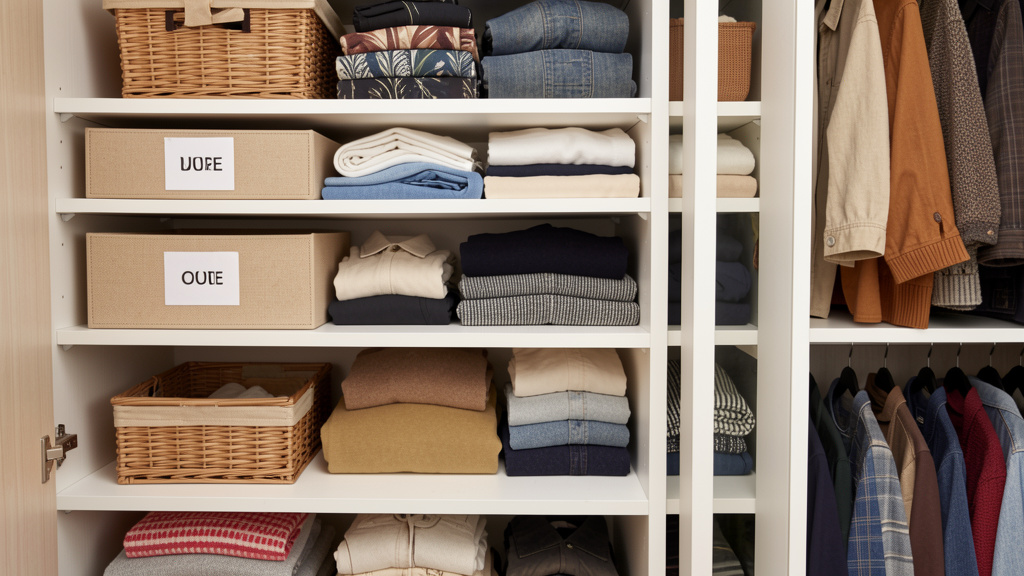
Transform chaotic closet excavations and forgotten holiday decor into a seamless, predictable rhythm that reclaims your space, time, and peace of mind—season after season.
Imagine this: It’s the first crisp morning of autumn. Instead of frantically digging through overstuffed bins searching for that favorite cable-knit sweater while tripping over misplaced garden hoses, you simply open a labeled container stored exactly where your system dictates. Within minutes, cozy layers are unpacked, summer linens are sealed away with lavender sachets, and your entryway feels intentionally prepared for the season ahead. No stress. No last-minute trips to the store for replacement items you know you own somewhere. This isn’t a fantasy reserved for professional organizers—it’s the tangible outcome of implementing a deliberate seasonal rotation system. Experience shows that the most sustainable systems share a critical foundation: they work with human behavior and household rhythms, not against them. This guide delivers the only framework you’ll need to build that system permanently.
Introduction: Why “Just Toss It in a Bin” Always Fails
Seasonal storage feels simple in theory. Winter ends? Box up the scarves. Summer arrives? Stash the snow boots. Yet for most households, this cycle devolves into a recurring source of frustration. Bins accumulate in attics and garages like archaeological layers of good intentions. Holiday decorations emerge with missing pieces. That expensive patio furniture cover cracks from improper folding. We’ve all stood in a cluttered basement in December, sweating under fluorescent lights while hunting for the menorah or string lights, wondering why this happens every single year.
The root cause isn’t laziness or lack of containers. It’s the absence of a system. Random acts of tidying—grabbing random bins, shoving items wherever space exists—create hidden costs: wasted time searching for misplaced items, damaged belongings (from moisture, pests, or crushing), emotional friction (“Why is this so hard?”), and inefficient use of valuable space. A true rotation system eliminates these costs by embedding predictability into your home’s workflow. It transforms seasonal transitions from chaotic events into calm, manageable rituals. This approach integrates principles of behavioral psychology (reducing decision fatigue), spatial organization (zoning and flow), and material preservation (protecting item integrity). The goal isn’t perfection—it’s reliability. When your system works consistently, you stop dreading seasonal changes and start appreciating the gentle rhythm they bring to home life. You’ll find yourself actually looking forward to swapping out throw pillows or unpacking the Halloween decor because the process feels intentional, not overwhelming.
The Seasonal Cycle Framework: Your Blueprint for Effortless Rotation
Forget fragmented tips like “use clear bins” (helpful, but incomplete) or “label everything” (necessary, but insufficient). Sustainable seasonal rotation requires a cohesive architecture addressing three interconnected layers: Mindset, Method, and Maintenance. This isn’t just another checklist—it’s a behavioral operating system designed to make rotation feel inevitable, not optional. Each layer builds on the previous one, creating compounding reliability. Skipping a layer may reduce the system’s resilience, as all components work synergistically. Master all three, and seasonal transitions become as automatic as your morning routine.
Layer 1: The Mindset Shift (From Chaos to Calendar)
Before touching a single bin, we must reframe when and why rotation happens. Most people operate on reactive triggers: “It’s snowing—where are the shovels?” or “Guests are coming tomorrow—where’s the extra bedding?” Reactive rotation guarantees stress. The Mindset Layer replaces reactivity with proactive anticipation.
Anchor Your Year with Two Non-Negotiable Dates
Identify two fixed transition points annually. These are your Seasonal Pivot Dates:
– Spring Pivot: Typically 2–3 weeks before your region’s average last frost date (e.g., April 1st in USDA Zone 6). This isn’t when you start gardening—it’s when you rotate storage.
– Fall Pivot: Typically 2–3 weeks before your region’s average first frost date (e.g., October 15th in USDA Zone 6).
Why this works: Tying dates to local climate patterns (not arbitrary calendar months) aligns your system with actual need. Checking your zip code’s frost dates takes moments online and prevents premature rotations (storing patio cushions during an unseasonable cold snap) or risky delays (leaving hoses connected before a freeze). These dates become sacred appointments in your digital calendar with reminders set 7 days prior. No debating. No “I’ll do it later.” The date arrives, the ritual begins.
Reframe “Storage” as “Active Rest”
Psychologically, labeling items as “in storage” implies neglect. Instead, view off-season items as resting intentionally. Your winter coat isn’t “put away”—it’s being preserved in optimal conditions to perform brilliantly next season. This subtle shift fosters care during packing (proper cleaning, breathable wrapping) rather than hurried stuffing. It also reduces guilt about “not using” items; they’re on scheduled duty rotation, like tools awaiting their next purpose. For households with children, this language is powerful: “Teddy Bear is taking his winter nap in the cedar chest so he’s fresh for next Christmas!” makes participation feel meaningful, not chore-like.
The Household Contract
Rotation fails in shared homes when expectations are invisible. Draft a one-page “Seasonal Rotation Agreement” co-created with all household members. Include:
– Who leads each pivot (rotate responsibility seasonally to prevent burnout)
– Where the master checklist lives (printed on fridge? shared digital doc?)
– The “15-Minute Rule”: Everyone spends 15 minutes pre-pivot gathering their personal seasonal items
– Consequence-free grace period: Items left out after pivot date go into a “Hold Bin” accessible only after a small symbolic gesture (like choosing the next family movie)
This isn’t about rigidity—it’s about shared ownership. When teens know exactly when to pull out soccer gear and where to store swim goggles, resistance evaporates. The contract transforms rotation from “someone else’s project” into “our family’s smooth system.”
Layer 2: The Method (Categorize, Containerize, Calendarize)
This is the operational core—the physical workflow that turns mindset into action. Execute these three phases in strict sequence during each pivot window. Skipping “Categorize” leads to chaotic container stuffing. Skipping “Calendarize” guarantees forgotten items next season.
Phase 1: Categorize with Surgical Precision
Dumping all “winter stuff” into one bin is the fastest path to next year’s frustration. Instead, sort items into these six universal categories before selecting containers:
| Category | Purpose | Critical Items Included | Common Pitfalls to Avoid |
|---|---|---|---|
| Apparel & Textiles | Body-worn seasonal items | Coats, sweaters, boots, scarves, seasonal pajamas, heavy blankets | Storing dirty items (attracts pests); folding heavy knits improperly (causes distortion) |
| Decor & Ambiance | Seasonal aesthetic elements | Throw pillows, table linens, holiday ornaments, wreaths, string lights | Mixing fragile ornaments with heavy decor; untangling lights after storage |
| Tools & Gear | Seasonal activity equipment | Garden tools, patio furniture, snow shovels, sports equipment | Storing damp gear (promotes rust/mold); disassembling complex items without documentation |
| Entertaining | Seasonal hosting supplies | Holiday dishes, outdoor serving platters, themed napkins, extra chairs | Separating matching sets; storing glassware without protection |
| Documentation | Seasonal records & plans | Garden seed packets, holiday card lists, vacation itineraries, maintenance logs | Tossing seed packets; losing contact lists for seasonal greetings |
| Sentimental | Emotionally significant items | Baby’s first snowsuit, handmade ornaments, vacation mementos | Over-storing low-impact sentiment; inadequate protection for fragile keepsakes |
Why categorization precedes container selection: A wool coat needs acid-free tissue paper and breathable cotton storage; string lights need compartmentalized boxes to prevent tangling; garden tools require rust-inhibiting care and organized hanging space. Matching container type to category before packing prevents damage and streamlines retrieval. Notice how “Documentation” is its own category—this is where most systems fail. That seed packet tucked inside a gardening glove? Lost forever. The holiday card list scribbled on a receipt? Gone. Give paperwork intentional homes.
Phase 2: Containerize with Purpose, Not Preference
Not all containers are created equal. Match container properties to category needs using this decision guide:
For Apparel & Textiles:
– Ideal: Vacuum-seal bags only for synthetic fills (down alternatives, polyester pillows). Natural fibers (wool, cashmere) require airflow—use cotton storage bags with cedar blocks.
– Budget Hack: Clean, empty suitcase with garment folder insert. Line with acid-free tissue paper.
– Critical Mistake: Using plastic bins without moisture control in humid climates. Always add reusable desiccant packs per bin.
– Pro Tip: Place a small fabric swatch of the stored item (e.g., scrap of plaid blanket) on the bin’s label. Visual cues speed identification faster than text alone.
For Decor & Ambiance:
– Ideal: Clear, lidded bins with removable compartment trays (like modular organizers). Store ornaments in divided trays; wrap lights around cardboard tubes before placing in compartments.
– Budget Hack: Repurpose sturdy cereal boxes as mini-compartments inside a larger bin. Label each box “Ornaments,” “Hooks,” “Tree Topper.”
– Critical Mistake: Overfilling bins until lids bulge. This stresses seams and makes stacking unstable. Leave 1 inch of headspace.
– Pro Tip: Take a smartphone photo of the fully decorated tree or tablescape before packing. Tape the printed photo to the bin’s lid. Next year, you’ll replicate the look effortlessly.
For Tools & Gear:
– Ideal: Heavy-duty plastic totes with reinforced handles (minimum 30-gallon capacity). Line bottom with old towel to absorb residual moisture. Hang long tools (rakes, shovels) on wall hooks before storing smaller items in bins beneath.
– Budget Hack: Clean metal trash cans with tight-sealing lids. Drill small drainage holes in the bottom if storing outdoors.
– Critical Mistake: Storing gasoline-powered equipment with fuel in the tank. Always follow manufacturer instructions for off-season storage.
– Pro Tip: Create a “Gear Passport”—a laminated card stored inside the bin listing maintenance steps performed (e.g., “Hose drained 10/12,” “Shovel blade oiled 10/14”). Prevents duplicate work and tracks service history.
Universal Container Rules:
1. Size Standardization: Use only two bin sizes per household (e.g., 27-quart for decor/apparel, 65-quart for gear). Uniform sizes stack securely and maximize vertical space.
2. Labeling Protocol: Labels must include: (1) Category name, (2) Season stored for (e.g., “FOR WINTER 2024”), (3) Contents summary (“Xmas Ornaments + Tree Stand”), (4) Location code (“ATTIC NORTH”). Use a label maker with bold font—handwritten labels fade.
3. Accessibility Hierarchy: Place next-season items at the front of storage zones. Store items needed earliest in the season (e.g., Halloween decor) on top of bins containing later items (Thanksgiving). Think “first in, last out” for sequential holidays.
Phase 3: Calendarize the Retrieval
Packing perfectly is useless if you forget where items live or when to retrieve them. Embed retrieval cues directly into your life’s existing rhythms:
- Digital Triggers: In your calendar app, create recurring events titled “ROTATE: [Season] ITEMS.” Set reminders for:
- 7 days before pivot: “Gather seasonal items per Household Contract”
- Pivot date: “Execute Seasonal Cycle Framework”
- 30 days before next season: “Preview stored items—note replacements needed” (e.g., “Check patio cushions for fading”)
- Physical Anchors: Tape a small, laminated “Seasonal Snapshot” card inside your pantry door or closet. It lists:
CURRENT SEASON: FALL

  NEXT ROTATION: SPRING PIVOT — APRIL 1

  ITEMS IN STORAGE:

  • Summer patio cushions (Garage Shelf B)

  • Garden hose reel (Basement Corner)

  • Beach towels (Under Bed Bin 3)
Update this card immediately after each pivot. Seeing it daily reinforces system awareness. - The “Why” Note: Tuck a small card inside sentimental bins: “Stored 10/15/2024. Contains Liam’s first snowman drawing. Retrieve for Christmas Eve tradition.” This prevents emotional disconnect during future rotations.
The Fundamental Principle: A seasonal storage system’s success is measured not by container aesthetics, but by the speed and certainty of item retrieval six months later. If you can locate and access any stored item within moments of needing it, your system is working. Everything else is secondary.
Layer 3: The Maintenance Protocol (The 15-Minute Monthly Check)
Even well-designed systems benefit from gentle upkeep. This isn’t about major overhauls—it’s strategic micro-maintenance preventing future friction. Schedule 15 minutes on the first Sunday of each month specifically for storage zone health:
- The Scan (5 mins): Walk through primary storage zones (attic, garage, under-bed areas). Look for:
- Pest evidence (droppings, chewed corners)
- Moisture signs (condensation, musty smells)
-
Structural issues (warped bins, unstable stacks)
Action: Address issues promptly. Refresh cedar blocks or desiccant packs proactively. -
The Audit (7 mins): Open one bin relevant to the upcoming season. Example: In February, check the “Spring Garden” bin. Verify:
- Seed packets are intact and dated
- Tool handles are secure
-
No corrosion on metal parts
Action: Note needed replacements on your phone (“Buy new trowel”). This prevents last-minute spring panic. -
The Adjust (3 mins): Tweak one small element. Examples:
- Relabel a bin whose contents shifted (“Added extra string lights 2/3”)
- Re-stack two bins for better accessibility
- Discard one item that didn’t earn its place last season (“Donated unused snow globe”)
Why it works: Tiny, consistent actions prevent neglected zones from becoming overwhelming. This protocol transforms maintenance from a dreaded chore into a mindful, manageable ritual. It also builds deep familiarity with your system—you’ll instinctively know where everything lives because you gently interact with it monthly.
Season-by-Season Rotation Deep Dive: Executing the Framework
Theory becomes transformation through precise execution. Below is your actionable playbook for each pivot, integrating all three framework layers. Treat these as adaptable templates—adjust specifics to your climate, home layout, and lifestyle. The magic lies in the sequence and intentionality, not rigid item lists.
Spring Pivot: Awakening Your Home (Executing ~2–3 Weeks Before Last Frost)
This pivot isn’t about spring cleaning—it’s about strategic emergence. You’re transitioning from inward-focused winter to outward-engaged spring. Energy should feel light, hopeful, and preparatory.
Pre-Pivot (7 Days Out):
– Mindset: Frame this as “welcoming growth.” Play uplifting music during rotation. Involve kids by having them “rescue” summer toys from storage.
– Categorize: Pull all “Spring/Summer” bins to your staging area (garage floor, cleared dining table). Sort into sub-piles: “Garden Ready,” “Patio Ready,” “Closet Ready.”
– Critical Check: Inspect all garden tools. Sharpen shovel edges, oil pruner hinges, replace cracked handles. A well-maintained tool lasts decades; a neglected one breaks mid-task.
Rotation Day Workflow (Follow Strict Order):
1. Clear Winter Items FIRST:
– Apparel: Wash all winter woolens before storage. Larvae are attracted to residues. Use cold water gentle cycle; lay flat to dry. Fold sweaters with tissue paper between layers to prevent creasing. Store in cotton bags with cedar blocks—never vacuum-sealed (compresses fibers, damages elasticity).
– Decor: Wipe down holiday ornaments with microfiber cloth. Wrap fragile items individually in acid-free tissue. Coil string lights around cardboard tubes before placing in compartmentalized bins. Take photo of fully decorated tree; tape to bin lid.
– Pro Tip: Place a small ziplock bag containing spare lightbulbs, hooks, and extension cord adapters inside the holiday decor bin. No frantic searches next December.
- Introduce Spring Items SECOND:
- Apparel: Rotate lightweight layers into closets. Store off-season winter apparel immediately after clearing space—don’t let bins linger. Use shelf dividers to separate spring/summer clothing visually.
- Decor: Swap heavy velvet throw pillows for linen or cotton covers. Replace dark table runners with light burlap or floral prints. Store winter blankets in under-bed bins; bring out lighter quilts.
- Tools & Gear: Uncoil garden hose; check for cracks. Attach to spigot and run water to flush debris. Store nozzle in a dedicated pocket of the hose reel bin. Clean patio furniture with mild soap solution; apply UV protectant to wicker or wood pieces.
-
Documentation: File last year’s garden journal. Place current year’s seed packets in a labeled accordion folder (“2024 Seeds – Plant by Zone”). Note planting dates on calendar.
-
Zone Your Storage Areas:
- Garage: Position “Summer Gear” bin (beach towels, pool toys) at front of shelf. Place “Fall Prep” bin (rake, leaf bags) at back.
- Attic: Store holiday decor requiring earliest retrieval (Easter, Memorial Day) on top shelves. Place Halloween/Thanksgiving bins below.
- Under Bed: Use low-profile bins for off-season clothing. Label ends visible from floor level (“WINTER APPAREL – RETRIEVE OCT 15”).
Post-Pivot Ritual:
– Update your “Seasonal Snapshot” card: “CURRENT SEASON: SPRING | NEXT ROTATION: FALL PIVOT — OCT 15”
– Set calendar reminder: “July 1 – Preview Summer Storage Needs” (check pool cover integrity, note worn beach towels)
– Friction Fix: If patio furniture feels overwhelming to clean, break into micro-tasks: “Monday: Wipe chairs. Tuesday: Clean table. Wednesday: Apply protectant.” Completion builds momentum.
Summer Pivot: Streamlining for Sunlight (Executing ~2 Weeks Before Peak Heat)
Summer rotation focuses on maximizing usable space and protecting items from heat/humidity damage. This pivot often happens incrementally (e.g., storing spring rain gear after last shower), but anchor it to your Spring Pivot date + 8 weeks for consistency.
Critical Climate Consideration:
Humidity is a key concern. In zones with higher humidity:
– Add extra silica gel packs to all textile bins
– Store leather items (sandals, bags) with breathable cotton stuffing to maintain shape
– Avoid storing photos or paper documents in non-climate-controlled attics—heat accelerates deterioration
Rotation Day Workflow:
1. Clear Spring Items:
– Apparel: Wash raincoats and boots thoroughly. Air-dry completely before storage—trapped moisture causes mildew. Store boots upright in original boxes or boot shapers to prevent slouching.
– Tools: Clean garden trowels and pruners; wipe metal parts with oiled cloth to prevent rust. Coil extension cords neatly; secure with velcro ties (never rubber bands—they degrade and snap).
– Documentation: File spring planting records. Note which seeds germinated well for next year’s order.
- Introduce Summer Items:
- Apparel: Rotate tank tops, shorts, and sandals forward. Use slim, non-slip hangers for lightweight fabrics to prevent slipping. Store off-season spring items in labeled under-bed bins.
- Entertaining: Bring out outdoor serving platters, citronella candles, and folding chairs. Wipe down coolers; leave lids open to air-dry completely before next use.
- Tools & Gear: Inflate pool toys; check for leaks. Store repair kit (patches, pump) with the toys. Clean grill grates thoroughly; store brush and scraper in a dedicated pouch attached to the grill cover.
-
Pro Tip: Create a “Summer Station” near your back door: a small caddy holding sunscreen, bug spray, and a microfiber towel. Restock after each use. Eliminates frantic searches before heading outside.
-
Optimize for Heat:
- Store vinyl items (inflatable pools, shower curtains) away from direct sunlight in storage areas. UV rays cause cracking.
- Place moisture-absorbing crystals in storage closets holding summer linens.
- For homes without climate control in storage areas: prioritize storing summer items in coolest zones (basement over attic).
Post-Pivot Ritual:
– Update “Seasonal Snapshot”: “CURRENT SEASON: SUMMER | NEXT ROTATION: FALL PIVOT — OCT 15”
– Set reminder: “August 15 – Inspect Pool Cover for Storage”
– Friction Fix: Overwhelmed by beach gear? Designate one bin as “Beach Ready.” Pack it once at season start with towels, toys, snacks container. Grab-and-go eliminates daily packing stress.
Fall Pivot: Preparing for Coziness (Executing ~2–3 Weeks Before First Frost)
This is the most critical pivot—the foundation for winter comfort and holiday readiness. Rushing it guarantees December chaos. Approach with methodical calm.
Pre-Pivot (7 Days Out):
– Mindset: Frame as “nesting.” Light a seasonal candle (pumpkin spice, cedar) during rotation to create positive sensory association.
– Categorize: Pull “Fall/Winter” bins. Sort into “Immediate Need” (Halloween decor, warm pajamas) and “Later Season” (Christmas ornaments, heavy blankets).
– Critical Check: Test all holiday string lights before packing away summer items. Discard tangled or faulty strands immediately—don’t store broken items “to fix later.”
Rotation Day Workflow:
1. Clear Summer Items FIRST (Non-Negotiable Sequence):
– Tools & Gear: Drain garden hoses completely. Store coiled loosely (not tightly wound) to prevent kinking. Disconnect and store sprinkler heads in a labeled pouch. Clean patio furniture; apply protective cover only after surfaces are bone-dry. Store cushions in breathable bags—never sealed plastic where moisture traps.
– Apparel: Wash all swimwear in cool water with mild detergent. Lay flat to dry away from direct sun (prevents elastic degradation). Store with silica gel packs to absorb residual moisture.
– Documentation: File summer vacation photos. Update contact list for holiday cards with new addresses gathered over summer.
- Introduce Fall/Winter Items SECOND:
- Apparel: Rotate sweaters, boots, and scarves into accessible closet zones. Store off-season summer clothing in vacuum bags only if synthetic; use cotton bags for natural fibers. Place boot shapers in tall boots to maintain shape.
- Decor: Unpack autumn wreath; hang immediately. Store Halloween decor in clear bins with compartment trays. Place heaviest items (pumpkin buckets) at bin bottom.
- Entertaining: Bring out holiday serving dishes. Check china for chips; note replacements needed. Store with felt dividers between plates.
-
Pro Tip: Create a “Holiday Command Center” bin. Include:
- Labeled folders: “Cards Sent 2024,” “Gift Ideas,” “Wrapping Supplies Inventory”
- Pre-addressed shipping labels for out-of-town relatives
- Roll of gift wrap, scissors, tape, tags
Store this bin in your main living area—not buried in attic. Reduces holiday decision fatigue dramatically.
-
Winterize Storage Zones:
- In cold climates: Store sensitive items (paint, chemicals) in heated areas. Never store in unheated garages where freezing occurs.
- Place natural repellents (peppermint oil sachets) near stored textiles. Check monthly during Maintenance Protocol.
- Stack bins containing earliest-needed items (Halloween) on top of later-season bins (Christmas).
Post-Pivot Ritual:
– Update “Seasonal Snapshot”: “CURRENT SEASON: FALL | NEXT ROTATION: SPRING PIVOT — APRIL 1”
– Set reminders:
– “October 20 – Finalize Holiday Card List”
– “November 1 – Test All String Lights”
– “December 26 – Pack Away Holiday Decor” (schedule cleanup before New Year’s)
– Friction Fix: Dreading holiday decor chaos? Implement the “One Bin Per Holiday” rule. All Halloween items live in one labeled bin. All Thanksgiving in another. Prevents cross-contamination and speeds setup.
Winter Pivot: Cultivating Calm Amidst Celebration (Executing December 26–January 15)
This pivot happens after holidays conclude—not during the frenzy. Its purpose: restore calm, protect sentimental items, and set the stage for spring. Emotionally, it’s about closing the chapter gently.
Critical Timing Insight:
Do not rotate on December 25th. Exhaustion leads to poor decisions (stuffing broken ornaments into bins). Wait until energy returns. December 27th or January 2nd are ideal. If traveling, schedule for your return date.
Rotation Day Workflow:
1. Clear Holiday Items FIRST (Handle with Care):
– Decor: Disassemble tree before removing ornaments. Place fragile ornaments in individual compartments. Wrap tree stand legs in old towel to prevent scratches during storage. Coil lights around cardboard tubes; label tube with tree section (“Top,” “Middle”).
– Sentimental Items: Clean handmade ornaments gently with soft brush. Store in acid-free boxes with tissue paper dividers. For children’s artwork: photograph pieces not kept physically; store digital files in “Holiday Memories” folder.
– Documentation: File holiday card list with notes (“Sent card to new neighbors—add to permanent list”). Toss outdated addresses.
– Pro Tip: Place a small note inside the Christmas bin: “Stored 12/28/2024. Tree lights tested working. Added new star topper.” Future-you will feel immense gratitude.
- Introduce Winter-Only Items SECOND:
- Apparel: Rotate heavy coats, snow boots, and thermal layers forward. Store off-season fall items (light sweaters) in under-bed bins. Clean winter boots thoroughly; stuff with newspaper to absorb moisture and maintain shape.
- Tools & Gear: Check snow shovel for cracks. Apply wax to metal blade for easier snow release next time. Store ice melt in original container inside a sealed bin (prevents clumping).
-
Ambiance: Swap autumn pillows for deep red or forest green throws. Store light summer blankets; bring out faux fur or wool throws.
-
Deep Clean Storage Zones:
- Wipe down empty shelves with vinegar solution (natural deterrent).
- Vacuum storage areas thoroughly—removes dust and potential attractants.
- Reorganize bins so “Spring Prep” items (garden seeds, light jackets) are most accessible.
Post-Pivot Ritual:
– Update “Seasonal Snapshot”: “CURRENT SEASON: WINTER | NEXT ROTATION: SPRING PIVOT — APRIL 1”
– Set reminder: “February 1 – Preview Spring Garden Needs”
– Friction Fix: Feeling post-holiday depletion? Break rotation into two 45-minute sessions: “Day 1: Pack Decor. Day 2: Rotate Apparel.” Honor your energy levels.
Navigating Real-World Friction Points: Practical Solutions for Imperfect Homes
No system survives contact with reality unchanged. These practical adaptations address common pain points without compromising framework integrity. Remember: the goal is progress, not perfection.
Challenge: “I Live in a Tiny Apartment with Zero Dedicated Storage”
Solution: Vertical Zoning + Multi-Functional Furniture
– Under-Bed Strategy: Use low-profile rolling bins (max 6″ height). Store off-season apparel here. Label bin ends with vertical tags visible when peering under bed.
– Closet Optimization: Install double-hang rods. Top rod: current season clothing. Bottom rod: off-season in slim garment bags. Add over-door organizer for accessories (scarves, belts).
– Furniture Hacks:
– Ottoman with storage interior = seasonal blanket bin
– Bed frame with built-in drawers = dedicated decor storage
– Floating shelves above desk = “Documentation Zone” for seed packets, card lists
– Critical Principle: Store items where they’re used, not where space randomly exists. Beach towels live in bathroom cabinet during summer; move to under-bed bin only at Fall Pivot. Reduces retrieval friction.
Positioning frequently accessed items within easy reach (between waist and shoulder height) reduces physical strain compared to bending or climbing. Prioritize accessibility over capacity.
Challenge: “My Family Never Puts Things Back—The System Collapses”
Solution: Friction Reduction + Visual Accountability
– The “One-Touch” Rule: Design storage so returning items takes <10 seconds. Example:
– Beach towels go directly into labeled hamper after use
– Hamper lives inside the “Summer Gear” bin
– At pivot, entire hamper moves to storage—no sorting needed
– Visual Cues:
– Outline bin shapes on garage floor with painter’s tape. “If outline is visible, bin is missing.”
– Use color-coded bins: Blue = Summer, Red = Winter. Even young children recognize colors.
– Positive Reinforcement: After successful pivot, celebrate with family ritual (hot cocoa, watching first snowfall). Connect system adherence to shared joy.
– Graceful Degradation: Accept that consistent effort matters more than perfection. If one person’s ski gloves end up in the hall closet, have a “Hold Bin” there. During Monthly Maintenance, return items to system without judgment. Perfectionism undermines consistency.
Challenge: “I Have Deeply Sentimental Seasonal Items (Baby’s First Snowsuit, Handmade Ornaments)”
Solution: Archival-Grade Preservation + Intentional Curation
– Preservation Protocol:
– Clean items thoroughly per material type
– Wrap in unbuffered acid-free tissue paper
– Store in acid-free cardboard boxes (never plastic bins—traps off-gassing)
– Place box inside a cotton pillowcase for dust protection
– Store in climate-stable area (interior closet > attic/garage)
– Curation Framework: Ask three questions before storing:
1. “Does this item spark a specific, joyful memory?” (Not just “I should keep this”)
2. “Will someone in my family cherish this in coming years?”
3. “Does the emotional value justify the physical space?”
If two answers are “no,” photograph the item and release it. Digital archives preserve memory without spatial cost.
– Display Integration: Rotate 2–3 sentimental items into current season decor. Example: Frame baby’s first snowman drawing; display on mantel each December. Honors the memory actively rather than burying it in storage.
Conservation best practices indicate that light, heat, and humidity fluctuations are primary factors in textile degradation. Prioritizing stable storage conditions preserves meaningful items for future generations.
Challenge: “I Rent—Can’t Install Shelves or Make Permanent Changes”
Solution: Portable, Landlord-Friendly Systems
– Freestanding Units: Use modular cube storage with fabric bins. Entire unit moves with you. Label cubes by season/category.
– Tension Rods: Install in closets to create extra hanging zones for garment bags. Remove without damage at move-out.
– Rolling Carts: Place in closets or corners. Top shelf: current season. Bottom shelf: off-season. Wheels allow repositioning for cleaning.
– Documentation: Photograph storage setup before moving in. Shows landlord you maintain order. Include system description in lease addendum if needed (“Tenant uses portable storage solutions”).
– Move-Out Protocol: During Final Pivot before lease ends, pack all seasonal items into labeled bins. Store in unit’s least-used corner. Simplifies moving day and leaves space pristine for next tenant.
Challenge: “I Forget to Do the Monthly Maintenance Check”
Solution: Habit Stacking + Environmental Triggers
– Habit Stacking: Attach the 15-minute check to an existing non-negotiable habit:
– “After I pour Sunday morning coffee, I spend 15 minutes on storage maintenance.”
– “While my phone charges overnight Sunday, I update the Seasonal Snapshot card.”
– Environmental Triggers:
– Place a small, attractive timer on your key hook. Seeing it triggers the habit.
– Keep Maintenance Protocol checklist taped inside pantry door—visible during daily routines.
– Tech Integration: Use voice assistant routine: “Start Seasonal Maintenance.” Plays 15-minute timer with gentle background music.
– Forgiveness Protocol: Missed a month? No guilt. Simply do a 10-minute “mini-scan” next opportunity. Systems endure through resilience, not rigidity.
Your Questions, Answered
Q: How do I store leather boots or bags without them cracking over summer?
A: Clean thoroughly with pH-neutral leather cleaner. Stuff interiors with acid-free tissue paper or clean cotton cloths to maintain shape—never newspaper (ink transfers). Place in breathable cotton dust bags (original bags ideal). Store upright in a cool, dark closet away from direct sunlight. Include a silica gel pack outside the dust bag (not touching leather) to regulate humidity. Avoid plastic bins; if unavoidable, leave lid slightly ajar for airflow. Check during Monthly Maintenance for dryness; condition lightly if needed before next use.
Q: What’s the safest way to store string lights without tangling?
A: The cardboard tube method is universally reliable: Cut empty paper towel tubes into 3-inch sections. Coil lights loosely around each section. Secure ends with velcro ties (never wire ties—they damage wires). Place coiled tubes upright in compartmentalized bins. Label each tube (“Tree Top,” “Porch Rail”). For LED lights with delicate connectors, add a small ziplock bag containing spare fuses or connectors inside the bin. Test all strands before packing away—discard faulty ones immediately to avoid storing broken items.
Q: Can I store winter coats in vacuum bags? I’ve heard conflicting advice.
A: It depends entirely on the fill material. Synthetic fills (polyester, PrimaLoft): Vacuum sealing is generally safe for short-term storage (under 6 months). Natural fills (down, wool, cashmere): Never vacuum seal. Compression damages the loft structure of down clusters and crushes wool fibers, permanently reducing insulation and causing irreversible creasing. For natural fibers, use breathable cotton storage bags with cedar blocks. Fold gently with acid-free tissue paper between layers. Store on shelves—not hanging—to prevent shoulder distortion. If space is critical, use vacuum bags only for synthetic outer layers, and limit compression time.
Q: How do I handle seasonal items for rapidly growing children (outgrown snowsuits, tiny boots)?
A: Implement a “Growth Buffer” system. At each pivot, sort children’s seasonal gear into three piles:
1. Current Size: Store normally for next season
2. Next Size Up: Store separately in a “Future” bin labeled with child’s name and target season (“Emma – Winter 2025”)
3. Outgrown: Photograph sentimental items; donate usable pieces immediately
Store the “Future” bin in an accessible location (top shelf of child’s closet). During Monthly Maintenance in July, check if child has grown into items—move to “Current” bin if ready. This prevents last-minute scrambles for replacements and honors the reality of childhood growth. For highly sentimental items (first pair of snow boots), follow archival preservation steps outlined earlier.
Q: What’s the best way to store garden seeds to ensure they germinate next year?
A: Seed viability depends on cool, dark, dry storage. Transfer opened packets to small airtight containers (glass jars with rubber seals ideal). Include a silica gel pack in a separate breathable pouch inside the jar—never let seeds touch desiccant directly. Label container with seed type, purchase date, and “Test Germination 2/15” reminder. Store in refrigerator (not freezer—moisture fluctuations damage seeds). Before planting season, conduct a simple germination test: Place 10 seeds between damp paper towels in a sealed bag; keep warm. If fewer than 7 sprout, consider ordering new seeds. Unopened seed packets stored properly remain viable 1–5 years depending on plant type (check packet for specifics).
Q: I live in a humid climate (Florida, Louisiana). How do I prevent mildew on stored textiles?
A: Humidity control is essential. For every storage bin containing textiles:
– Use breathable cotton or canvas storage bags—not plastic
– Include 2–3 reusable silica gel packs (reactivate monthly by baking per instructions)
– Add natural repellents: Cedar blocks (refresh scent with sandpaper annually) or lavender sachets
– Store bins on shelves at least 6 inches off concrete floors (moisture wicks upward)
– Place moisture absorbers on shelves near storage zones
– During Monthly Maintenance, open bins briefly to allow air exchange
For severe humidity, prioritize climate-controlled storage areas (interior closets over garages/attics). If mildew appears, isolate item immediately; clean per fabric type before it spreads. Prevention is vastly easier than remediation.
Q: How do I rotate seasonal items when my spouse/partner has completely different habits?
A: Focus on shared values, not methods. Have a calm conversation: “I know storage isn’t exciting. What part of seasonal chaos bothers you most? (e.g., ‘Can’t find the grill tools,’ ‘Tripping over holiday bins’).” Anchor the system to their pain points. Then co-create minimal agreements:
– “We’ll both spend 10 minutes gathering our items before Pivot Date”
– “We use the color-coded bins—no debating where things go”
– “Whoever leads rotation chooses the post-rotation treat”
Start small: Implement system for one category (holiday decor) first. Success builds buy-in. Celebrate wins: “Remember last Christmas when we found everything quickly? That was the system working!” Patience and positive reinforcement transform resistance into partnership.
Q: Are clear bins worth the extra cost over opaque ones?
A: For most seasonal storage, yes—but strategically. Use clear bins for:
– Decor items (seeing contents prevents unnecessary opening)
– Children’s seasonal gear (kids identify bins visually)
– Frequently accessed items (holiday entertaining supplies)
Use opaque bins for:
– Textiles (blocks light exposure that fades fabrics)
– Sentimental items (privacy for personal keepsakes)
– Garage storage (hides clutter visually)
Cost-saving tip: Buy clear bins only for top-layer bins in stacks. Store opaque bins beneath—they’re invisible anyway. Prioritize uniform size over clarity; consistent stacking maximizes space efficiency more than visibility. If budget is tight, use opaque bins but implement the “fabric swatch label” technique—tape a small material sample to the label for instant visual ID.
Q: What should I do with seasonal items I didn’t use this year?
A: Apply the “One Season Rule” during pivot:
– Unused but functional: Store normally. Note on bin: “Unused 2024—reassess next pivot”
– Unused and damaged: Repair immediately or discard. Don’t store broken items.
– Unused and irrelevant: Donate before storing. Example: Formal holiday dress worn once years ago. Photograph if sentimental; release the physical item.
– Unused due to lifestyle change: Acknowledge the shift. Retired gardener? Donate tools now with gratitude for past joy. Keeping “just in case” items burdens future you. The pivot date is your annual permission slip to release what no longer serves your life. This practice cultivates intentional ownership.
Q: How do I store artificial Christmas trees without crushing branches?
A: Original box is ideal—if unavailable:
1. Disassemble tree section by section before removing from stand
2. Wrap each section vertically in old sheets or moving blankets
3. Store sections upright in a tall, narrow bin (like a wardrobe box)
4. Place heaviest section (bottom) at bin bottom; lightest (top) on top
5. Stuff tree stand cavity with crumpled paper to maintain shape
Never compress branches horizontally—that causes permanent bending. For pre-lit trees, coil wires loosely around sections; secure with velcro ties. Label bin: “Tree Sections – Handle Upright.” During retrieval, assemble sections in reverse order of storage. This method preserves tree shape for many years.
Conclusion and Your Next Step
Seasonal storage transformation isn’t born from a single grand gesture. It emerges from the quiet consistency of a system honored year after year. You now hold the complete architecture: the Mindset to anticipate transitions with calm intention, the Method to categorize, containerize, and calendarize with precision, and the Maintenance Protocol to sustain reliability through gentle upkeep. This framework turns the annual storage scramble into a predictable rhythm—a series of small, satisfying rituals that honor your home, your time, and your peace of mind. Remember the core truth we uncovered: success isn’t measured by pristine bins or Pinterest-perfect labels. It’s measured by the quiet confidence of knowing exactly where your child’s snow boots live on the first snowy morning, or the ease of unpacking holiday decor while sipping cocoa instead of wrestling tangled lights at midnight.
Recap: Your Three Anchors
- Anchor Your Year: Two non-negotiable Pivot Dates tied to your local climate—not calendar months.
- Anchor Your Actions: The Categorize → Containerize → Calendarize sequence executed in strict order.
- Anchor Your Awareness: The 15-Minute Monthly Maintenance Check preventing system decay.
The 24-Hour Rule
Within the next 24 hours, complete this single, tiny action:
Open your digital calendar. Create two recurring events titled “SEASONAL PIVOT – [Your City].” Set the Spring Pivot date (2–3 weeks pre-last frost) and Fall Pivot date (2–3 weeks pre-first frost). Enable reminders for 7 days prior.
That’s it. No bins to buy. No items to sort. Just two dates secured in your life’s central nervous system. This microscopic step breaks the inertia of “someday” and plants the seed of system ownership. Everything else flows from this commitment.
The Big Picture
When seasonal rotation becomes effortless, something profound shifts. The mental bandwidth once consumed by storage anxiety redirects toward what truly matters: savoring the first snowfall with hot chocolate, hosting summer barbecues without frantic prep, feeling the gentle satisfaction of a home that breathes with the seasons. Your space stops feeling like a storage unit and starts feeling like a sanctuary—intentionally curated to support your life, not complicate it. This system is more than organization; it’s a practice in mindful stewardship. You’re not just storing sweaters and shovels. You’re preserving memories with care, honoring the cyclical nature of time, and building a legacy of calm for everyone who shares your home. The seasons will continue to turn. With this framework, you’ll turn with them—gracefully, confidently, and without ever losing that one special ornament again.
Explore Our Complete Home Rhythm System:
The Mindful Closet Audit: Beyond Marie Kondo | Space-Saving Storage Hacks for Apartments Under 800 Sq Ft | The Family Command Center: Ending Paper Clutter for Good | Sustainable Home Maintenance: The 12-Month Care Calendar | Preserving Heirlooms: A Non-Museum Guide to Textile Care | The Digital Declutter: Organizing Photos, Files & Passwords | Creating Calm: Sensory-Friendly Home Zones for Anxiety Relief