Where Heritage Warmth Meets Contemporary Calm—And How to Choose the Style That Truly Resonates With Your Life
Walk into two homes both described as “rustic,” and you might feel you’ve stepped into entirely different worlds. One wraps you in the deep, weathered embrace of a century-old mountain lodge, where every beam tells a story and texture reigns supreme. The other offers the serene clarity of a sunlit forest cabin redesigned for mindful living—warm wood accents resting against clean white walls, uncluttered surfaces inviting breath and reflection. This isn’t confusion; it’s evolution. Rustic interior design and modern rustic represent two distinct philosophies of bringing nature’s authenticity indoors. One honors heritage with unwavering fidelity; the other interprets that legacy through a lens of intentional simplicity. This guide dismantles the ambiguity once and for all. Through the proven Three Pillars Framework—Authenticity, Materiality, and Atmosphere—you’ll gain the clarity to distinguish these styles with confidence, avoid common design missteps, and cultivate a space that doesn’t just look beautiful, but feels unmistakably like home.
Introduction
The longing for connection—to nature, to history, to something genuine—fuels the enduring appeal of rustic aesthetics. Yet in today’s design landscape, the term “rustic” has become a catch-all phrase stretched thin across digital galleries and showroom catalogs. True rustic design is not a superficial application of barn doors or antler motifs; it is a deeply rooted design language shaped by geography, necessity, and cultural memory. Modern rustic, conversely, is not merely “rustic with less clutter.” It is a deliberate synthesis, filtering historical elements through contemporary values of minimalism, functionality, and psychological well-being. Understanding this distinction is critical. Choosing an interpretation misaligned with your lifestyle, architecture, or emotional needs can result in a space that feels either visually heavy or emotionally distant. This guide is informed by documented regional design traditions, material considerations, and spatial principles to provide a structured, actionable comparison. We move beyond fleeting trends to explore how each style functions in daily life—how light interacts with surfaces throughout the day, how textures invite tactile engagement, how spatial flow supports your routines. Whether you’re renovating a historic structure, designing a new build in a natural setting, or seeking to infuse your urban apartment with grounded warmth, this framework empowers you to make intentional choices that resonate long after the final decor piece is placed. The goal is not merely visual appeal, but the creation of an environment that actively supports how you live, rest, and connect.
The Three Pillars Framework: Your Compass for Authentic Rustic Clarity
To cut through subjective descriptions like “cozy” or “clean,” we introduce the Three Pillars Framework—a structured lens used by design historians and spatial planners to objectively analyze and apply rustic aesthetics. This framework isolates the core DNA of each style across three interconnected dimensions. Master these pillars, and you’ll instantly recognize authentic examples versus diluted imitations. More importantly, you’ll gain the vocabulary to communicate your vision precisely to designers, contractors, or collaborators. Each pillar operates interdependently; weakening one affects the perceived integrity of the whole. We’ll explore each pillar in depth, contrasting Traditional Rustic and Modern Rustic side-by-side, followed by actionable implementation guidance. This is not about declaring one style superior—it’s about matching the style’s inherent philosophy to your values, home structure, and daily rituals.
Pillar 1: Authenticity and Historical Roots—Beyond Surface-Level Nostalgia
Authenticity is the soul of rustic design. It answers the fundamental question: What story does this space tell, and is that story truthful? Traditional Rustic draws its authenticity from specific, documented regional traditions born of necessity and local resources. Modern Rustic derives authenticity not from historical replication, but from intentional curation and emotional resonance. Confusing these sources of truth is the most common pitfall leading to spaces that feel costumed rather than lived-in.
Traditional Rustic: The Language of Place and Necessity
Traditional Rustic is inseparable from its geographic and cultural origin. It is not a universal style but a collection of distinct vernaculars:
– Adirondack Rustic (Northeastern U.S./Canada): Emerged in the late 19th century among those building Great Camps in the Adirondack Mountains. Authenticity lies in the use of whole logs (not milled lumber), bark-on twig work for railings and furniture, and stone fireplaces massive enough to heat the entire great room. Furniture was often crafted on-site using local materials—birch bark containers, twig chairs. The aesthetic celebrates the craft of wilderness living. A true Adirondack room feels like an extension of the forest itself, with irregular log walls and ceilings following the natural curve of the trees.
– American Farmhouse (Midwest/South): Rooted in agricultural practicality. Authentic elements include wide-plank pine floors (often with visible saw marks and nail holes from original construction), beadboard wainscoting for easy cleaning, deep farmhouse sinks carved from a single slab of soapstone or fireclay, and open shelving born from the need to air-dry dishes and display frequently used pottery. Color palettes were historically dictated by available pigments: milk paint in ochre, sage, or faded red. Ornamentation was minimal and functional—a carved detail on a cupboard door, a hand-stitched quilt. This style whispers stories of harvests, family meals, and resourcefulness.
– Alpine Chalet (European Alps): Defined by structural necessity against heavy snow. Steeply pitched roofs, extensive use of aged spruce or larch wood (often smoke-darkened from centuries of hearth use), and carved wooden balconies (galeries) are non-negotiable. Interiors feature Stube (a tiled masonry heater), built-in wooden benches under windows for warmth, and textiles like loden wool reflecting regional folk art. Authenticity is felt in the weight of the timber, the scent of aged wood, and the functional layout designed for communal warmth during long winters.
– Southwestern Pueblo Revival (American Southwest): Draws from Indigenous Pueblo and Spanish Colonial architecture. Authenticity requires adobe construction (sun-dried earth bricks) or modern equivalents that mimic its thermal mass and organic curves. Vigas (exposed ceiling beams), latillas (smaller branches laid perpendicularly across vigas), kiva fireplaces with bancos (built-in benches), and deeply recessed windows (nichos) are structural and cultural elements. Colors are pulled directly from the desert landscape: terracotta, sand, sky blue, and deep ochre. Using faux adobe paint on drywall without respecting the architectural forms results in inauthentic pastiche.
Why this pillar matters: When Traditional Rustic elements are borrowed without understanding their origin, the space loses emotional depth. Installing a faux log beam in a suburban tract home with no regional connection can feel disjointed. Authentic Traditional Rustic thrives where history is palpable—in restored barns, century-old farmhouses, or new constructions meticulously designed to honor a specific regional legacy. The emotional payoff is profound: a sense of continuity, heritage, and belonging to a place. You don’t just see the history; you feel it in the texture of the floorboards and the weight of the timber.
Modern Rustic: The Language of Intentional Curation
Modern Rustic does not seek to replicate history. Its authenticity stems from a conscious, thoughtful selection of elements that evoke warmth, nature, and simplicity within a contemporary context. It asks: Does this element serve our life today? Does it bring calm or connection? The story shifts from “this is how it was built” to “this is why we chose this for our well-being now.”
– Curated Heritage: Instead of filling a room with antique furniture (which can feel museum-like or impractical), Modern Rustic might feature one significant reclaimed element—a single barn door transformed into a dining table, a salvaged factory cart repurposed as a kitchen island. This piece becomes a focal point of narrative and texture, surrounded by clean-lined, functional modern pieces. The authenticity lies in the intentionality of the choice.
– Emotional Resonance Over Historical Accuracy: A Modern Rustic space in a downtown loft might incorporate woven seagrass textures, a live-edge walnut shelf, and a neutral linen sofa. There is no historical precedent for this combination in any traditional rustic vernacular. Yet it feels authentic because it successfully evokes the desired emotions: groundedness, tactile comfort, and a visual pause from urban intensity. The “truth” is the emotional response it cultivates.
– Global Influences, Local Sensibility: Modern Rustic freely blends inspirations—Japanese wabi-sabi (beauty in imperfection), Scandinavian hygge (coziness), or Australian bush architecture—filtered through a personal lens. A hand-thrown ceramic vase from a local artisan sits beside a minimalist floor lamp. Authenticity is verified by cohesion and purpose, not by adherence to a single regional rulebook. It feels honest because it reflects the dweller’s actual life, values, and environment.
Why this pillar matters: Modern Rustic’s authenticity is fragile. Without clear intention, it easily slips into “minimalist with wood accents” (feeling cold) or “cluttered eclectic” (feeling chaotic). Its strength lies in restraint and purpose. Every element must earn its place by contributing to the core emotional goal: serene warmth. This style thrives in new constructions, urban settings, or homes where the architecture is inherently modern (open floor plans, large windows, clean lines). Its emotional payoff is mindfulness—a space that feels unburdened, calm, and personally meaningful without demanding historical justification.
The Fundamental Principle: Traditional Rustic finds authenticity in faithful homage to a specific place and past; Modern Rustic finds authenticity in the intentional curation of elements that foster present-moment warmth and clarity.
Pillar 2: Materiality and Texture—The Tactile Heartbeat of the Space
Materiality is where philosophy becomes tangible. It’s the difference between seeing a photo of a room and stepping into it—feeling the rough-hewn beam under your palm, the cool smoothness of honed stone, the nubby weave of a wool blanket. How materials are selected, finished, and combined defines the sensory experience of each style. This pillar moves beyond “wood and stone” to examine which wood, how it’s treated, and why the texture matters.
Traditional Rustic: Celebrating the Unrefined and the Handcrafted
In Traditional Rustic, materials are chosen for their raw, unvarnished character. Imperfections are not flaws to hide; they are evidence of origin, age, and human touch. The goal is sensory richness and a connection to the material’s natural state.
– Wood: Dominated by softwoods native to the region—pine, cedar, spruce, aspen. Finishes are minimal: hand-rubbed linseed oil, beeswax, or milk paint that allows the wood’s grain, knots, checks (natural cracks), and tool marks to remain visible. Reclaimed wood is prized because of its history—saw marks from the original mill, nail holes, weathering from decades of sun and rain. A floor might be wide-plank pine with visible gaps between boards, a testament to natural expansion and contraction. Furniture is often heavy, solid, and shows the marks of its making—chisel scars on a carved chair leg, uneven surfaces on a hand-hewn table. The texture is deliberately rough, inviting touch as a connection to craft and time.
– Stone: Used structurally and prominently. Fieldstone gathered from the property, rough-cut granite, or irregular river rock forms massive fireplaces, foundation walls, or kitchen countertops. Mortar joints are often deep and visible (raked joints), emphasizing the hand-laid nature. Surfaces are left unpolished, retaining their natural cleft face. Walking barefoot across a stone floor in a Traditional Rustic home is a deliberate sensory experience—cool, uneven, grounding.
– Metal: Wrought iron is characteristic—hammered, twisted, and shaped by hand. Think fireplace tools with visible hammer marks, lantern-style light fixtures with seeded glass, or cabinet hinges with organic, asymmetrical forms. Patina is celebrated; rust is often left untreated as part of the object’s story. Copper pots hanging over a stove develop a natural verdigris over time.
– Textiles: Heavy, natural, and functional. Wool blankets (Navajo, Hudson’s Bay), hooked or braided rugs made from recycled fabric strips, burlap sacks repurposed as curtains, linen tablecloths showing gentle use. Patterns are often folk-inspired (tartan plaids, geometric Southwestern motifs) but softened with age. Texture is layered intentionally: a rough wool throw over a smooth leather chair, a nubby jute rug underfoot.
Why this material approach matters: This sensory richness can foster deep psychological comfort. Environmental psychology suggests that varied, natural textures may contribute to reduced stress and a heightened sense of safety. In a Traditional Rustic space, your hands invite touch—the rough beam, the smooth worn step on a staircase. This constant, subtle tactile engagement fosters a profound sense of being rooted and sheltered. However, this richness demands maintenance. Wood requires periodic oiling; stone needs sealing; textiles show wear. The style embraces this cycle of care as part of its authenticity.
Common Material Mistake to Avoid: Using faux finishes. Faux bois (fake wood grain) wallpaper, laminate flooring printed to look like reclaimed wood, or cultured stone veneers that lack depth and variation can undermine authenticity. The eye and hand often detect the discrepancy. If budget constraints exist, focus on one genuine reclaimed element (a single beam, a mantel) and use new materials with honest finishes (e.g., new pine floors finished with matte oil to mimic age) rather than deceptive imitations. Another critical error: over-polishing. Sanding reclaimed wood to a glassy smoothness or sealing stone to a high gloss erases the history and texture that give Traditional Rustic its soul. Embrace the patina.
Modern Rustic: Curating Texture with Refined Restraint
Modern Rustic honors natural materials but refines their presentation. Texture is still essential—it’s the antidote to sterile minimalism—but it is carefully edited and balanced against smooth, clean surfaces. The goal is tactile interest without visual chaos. Materials are selected for their inherent beauty and their compatibility with contemporary living (durability, ease of maintenance).
– Wood: A wider palette emerges. While reclaimed pine or oak might be used for a statement piece (a live-edge dining table, a single accent wall), surrounding wood elements are often new but finished to feel warm and organic. Walnut, ash, and white oak are favored for their elegant grain and stability. Finishes are matte or satin—never glossy. Surfaces are smooth to the touch but retain visible grain. Engineered wood flooring with a wire-brushed texture offers the look of reclaimed wood with greater stability for modern HVAC systems. The key is contrast: the rough texture of a reclaimed table against the smooth plaster wall; the smooth grain of a walnut cabinet next to a nubby wool rug.
– Stone & Alternatives: Stone is used more sparingly and deliberately. A honed (matte-finished) slate hearth, a single slab of soapstone for a countertop, or river rocks set into a shower floor. The surface is often smoother than in Traditional Rustic. Modern alternatives gain prominence: polished concrete floors stained in warm gray tones, large-format porcelain tiles that mimic the look of weathered wood or slate with greater durability and easier cleaning. The texture is present but refined—inviting touch without demanding constant maintenance.
– Metal: Blackened steel, matte black iron, and brushed brass replace ornate wrought iron. Lines are clean and geometric: a simple black steel staircase railing, a minimalist brass pendant light. Patina is designed, not accidental—powder-coated finishes in matte black mimic aged iron without the rust. Metal serves as a subtle accent, providing visual weight and contrast without overwhelming.
– Textiles: Natural fibers remain paramount, but with a lighter hand. Undyed wool throws with a subtle herringbone weave, linen curtains that filter light softly, cotton rugs with a low pile. Colors are predominantly neutral (ivory, oat, charcoal, taupe), with texture providing the visual interest rather than bold patterns. Layering is intentional but minimal: one textured throw pillow on a smooth sofa, a single chunky knit blanket draped over a chair. The feel is soft, inviting, and uncluttered.
Why this material approach matters: Modern Rustic’s curated texture supports mental clarity. In our visually saturated world, reducing competing textures can lower cognitive load. The smooth plaster wall allows the eye to rest; the single textured element (the wool rug) becomes a focal point of comfort. This balance is crucial for spaces used for relaxation and recharging. It also aligns with practical modern needs: families with children appreciate durable, cleanable surfaces; urban dwellers value low-maintenance materials that fit busy lifestyles. The emotional payoff is serene sophistication—a space that feels warm and human without feeling heavy or demanding.
Common Material Mistake to Avoid: Texture starvation. Removing all texture in pursuit of minimalism results in a cold, hotel-like space. Modern Rustic requires at least two to three distinct textures per room to feel alive (e.g., smooth plaster wall + nubby wool rug + smooth wood table + woven basket). Conversely, texture overload—adding too many competing rough elements (reclaimed wood wall, stone accent wall, chunky knit everything)—collapses the style back into visual clutter. The solution is the “Texture Anchor” method: choose one dominant textured element per room (e.g., a live-edge wood table), one secondary texture (a wool rug), and let all other surfaces be smooth and neutral. This creates harmony and intentionality.
Budget-Conscious Material Paths:
– For Traditional Rustic Authenticity:
– Ideal Path: Source reclaimed materials directly from salvage yards or deconstruction projects. Build relationships with local demolition crews. Sand and finish beams/floors yourself with linseed oil.
– Budget Path: Use new materials with honest finishes. New pine boards can be hand-distressed with chains, hammers, and wire brushes before installation. Apply a dark walnut stain followed by light sanding to mimic age (“pickling”). Use milk paint on cabinets for an authentic matte, slightly uneven finish.
– Emergency Path: Focus on textiles and small accents. A heavy wool blanket, a burlap table runner, a few antique-looking iron hooks on a wall. These add immediate rustic texture without structural changes.
– For Modern Rustic Authenticity:
– Ideal Path: Invest in one high-quality reclaimed statement piece (dining table, console). Pair with new, high-quality basics in neutral tones (solid wood furniture, linen upholstery).
– Budget Path: Use peel-and-stick reclaimed wood-look wallpaper on one accent wall (behind a bed or sofa). Choose furniture with clean lines from accessible retailers (modular units painted matte black, paired with a live-edge shelf). Source second-hand solid wood furniture and refinish with matte paint or stain.
– Emergency Path: Edit ruthlessly. Remove clutter. Paint walls a warm white (e.g., Sherwin-Williams Alabaster). Add one textured element: a large jute rug, a chunky knit throw. Swap shiny hardware for matte black pulls. Instantly elevates the space toward Modern Rustic.
Pillar 3: Atmosphere and Emotional Resonance—The Invisible Architecture
Atmosphere is the culmination of the first two pillars—the emotional and psychological experience of being in the space. It’s shaped by light, color, spatial flow, and the subtle interplay of elements. Traditional Rustic and Modern Rustic cultivate distinctly different emotional landscapes, each suited to specific temperaments and lifestyles. Ignoring this pillar leads to spaces that look “correct” in photographs but feel deeply uncomfortable to inhabit daily.
Traditional Rustic: The Embrace of Shelter and Nostalgia
The atmosphere of Traditional Rustic is intentionally enveloping. It seeks to create a sanctuary separate from the modern world—a place of refuge, memory, and communal warmth. This reflects the historical purpose of these structures: protection from harsh elements and fostering close-knit community.
– Lighting Strategy: Light is warm (2700K bulbs max), indirect, and layered for intimacy. Think: candlelight reflected on wood beams, the glow of a fire in a massive stone hearth, oil-rubbed bronze lanterns casting soft pools of light on walls. Windows are often smaller (historically for heat retention), draped with heavy textiles (velvet, tapestry) that can be closed against the outside world. During the day, light filters through in dappled patterns. The goal is to make the interior feel like a protective cocoon, especially as dusk falls. Harsh overhead lighting is avoided; instead, multiple low-level sources (table lamps with fabric shades, wall sconces) create a gentle, shadow-rich environment conducive to conversation and relaxation.
– Color Psychology: Palettes are deeply rooted in the local landscape and historical pigments. Expect earthy, muted, and often warm tones: forest green, burnt sienna, ochre yellow, deep burgundy, charcoal gray, creamy whites. Colors are rarely pure or bright; they are softened by age, smoke, or natural dyes. This palette subconsciously signals safety, stability, and connection to the earth. It feels grounding but can feel heavy or dark in spaces with limited natural light. The emotional trigger is nostalgia—not necessarily for a specific time you lived through, but for an idealized sense of heritage, simplicity, and belonging.
– Spatial Flow and Scale: Rooms are often compartmentalized (reflecting historical floor plans), with lower ceilings and defined purposes. Furniture is substantial, scaled to human interaction rather than open space—deep sofas arranged for face-to-face conversation around the hearth, heavy wooden tables meant for lingering family meals. Negative space (empty areas) is minimal; surfaces hold meaningful objects: stacks of books, collections of pottery, family photos in simple frames. This density creates a sense of abundance, history, and lived-in comfort. However, in a small apartment or for someone who values open sightlines, this can feel cramped. The atmosphere whispers: Stay awhile. You are safe here. You are part of a story.
Why this atmosphere matters: For those seeking deep comfort, connection to heritage, or a retreat from a fast-paced life, Traditional Rustic’s enveloping quality can be profoundly restorative. It supports rituals—gathering around the fire, slow meals, quiet reading nooks. Biophilic design principles indicate that spaces mimicking natural shelters (enclosed, textured, warm) may support stress reduction. But this atmosphere demands alignment with your psyche. If you thrive on light, airiness, and visual simplicity, forcing this style can induce discomfort. The key question: Does the idea of a room that feels like a warm hug energize you, or make you feel confined?
Modern Rustic: The Clarity of Calm and Connection
Modern Rustic cultivates an atmosphere of serene openness. It seeks to blend the comfort of nature with the clarity of contemporary living—a sanctuary that feels both grounded and unburdened. The emotional goal is mindful presence: a space that supports relaxation without inducing drowsiness, connection without clutter.
– Lighting Strategy: Light is abundant, layered, and adaptable. Large windows (a hallmark of modern architecture) flood the space with natural light, often left unadorned or with simple linen sheers to preserve views and brightness. Artificial lighting is a sophisticated blend: recessed downlights (on dimmers) for general illumination, focused task lighting (architectural wall sconces, adjustable desk lamps), and one sculptural statement piece (a single woven rattan pendant, a minimalist black steel chandelier) for warmth and focal interest. Bulb color temperature is carefully controlled—2700K to 3000K for warmth. The goal is to support different activities throughout the day: bright and energizing in the morning, softly ambient in the evening. Shadows are minimized; the space feels airy and intentional.
– Color Psychology: Built on a foundation of neutrals—warm whites (not stark bright white), soft grays, taupes, and creamy beiges. These act as a calm canvas. Earthy accents are used sparingly but powerfully: a single wall in sage green, a terracotta vase, a charcoal wool rug. The palette feels expansive, clean, and restorative. It leverages the psychological benefits of neutral bases (reducing visual noise, promoting calm) while using natural accent colors to maintain warmth and connection to the earth. This approach is particularly beneficial in smaller spaces or regions with limited daylight, as it maximizes perceived light and space. The emotional trigger is clarity—mental and visual. It feels like a deep breath.
– Spatial Flow and Scale: Open floor plans are embraced, with sightlines flowing freely between living, dining, and kitchen areas. Ceilings are often higher, emphasizing vertical space. Furniture is lower to the ground, with clean lines and intentional negative space around each piece. Surfaces are largely clear; objects displayed are few, meaningful, and curated (a single piece of pottery, a small stack of favorite books). This “breathing room” reduces cognitive load and creates a sense of order and peace. The atmosphere encourages both connection (open spaces for gathering) and solitude (defined quiet corners). It whispers: Breathe. Be present. This space supports your life without demanding your attention.
Why this atmosphere matters: In our era of digital overload, Modern Rustic’s calm clarity can be a powerful antidote. It supports mental well-being by reducing visual clutter, a known contributor to stress. It’s ideal for multi-functional spaces (home offices that double as guest rooms), families seeking easy cleanup, or individuals who find deep comfort in order and simplicity. However, without careful attention to texture and warmth (Pillar 2), it risks feeling sterile or impersonal—a “showroom” rather than a home. The key question: Does the idea of a serene, uncluttered space where light and air flow freely bring you peace, or does it feel too empty and lacking in soul?
Atmosphere Calibration Tip: Conduct a “Light and Space Audit” of your current home. For a few days, note:
– At what time of day do you feel most relaxed in each room? What is the light like then?
– Where do you instinctively gather? Is it a cozy nook or an open area near a window?
– Do you feel energized by visual interest (textures, objects) or calmed by empty surfaces?
Your answers reveal your innate atmospheric preference—more aligned with Traditional Rustic’s enveloping warmth or Modern Rustic’s serene clarity. Honor this truth; it’s more important than any trend.
Room-by-Room Application: Bringing the Framework to Life
Understanding the pillars theoretically is one thing; seeing them applied concretely transforms confusion into confidence. Below, we dissect four critical living spaces through the Three Pillars lens. For each room, we contrast Traditional Rustic and Modern Rustic executions, highlighting specific choices, common pitfalls, and adaptable solutions. This is your practical playbook for implementation.
The Living Room: Hearth and Heart
The living room is the emotional core of the home. How the hearth—the symbolic and often literal heart—is treated reveals the style’s soul.
Traditional Rustic Living Room
– Authenticity: The fireplace is massive, structural, and impossible to ignore. Built of irregular fieldstone gathered from the property, with a heavy timber mantel showing axe marks. It’s the undisputed focal point around which all furniture is arranged. In an Adirondack-inspired space, natural elements like antlers might be mounted above with ethical consideration; in a farmhouse, family photos in simple wood frames line the mantel.
– Materiality: Wide-plank pine floors with visible gaps and nail holes, finished with beeswax. Deep, rolled-arm sofas upholstered in durable leather or heavy wool plaid. Coffee table is a solid slab of reclaimed oak on iron trestles. Textiles are layered heavily: a thick hooked rug, multiple wool throws, velvet pillows. Walls might be log or covered in shiplap with visible nail heads.
– Atmosphere: Light is low and warm after dusk. Multiple table lamps with fabric shades cast a golden glow. Heavy curtains (tapestry or velvet) can be drawn for intimacy. The space feels like a protective embrace—ideal for curling up with a book during inclement weather or hosting intimate gatherings where conversation flows easily.
– Pitfall to Avoid: Over-accessorizing. While layering is key, cramming every surface with knick-knacks creates visual chaos. Solution: Edit collections. Display pottery in groups of three or five; store remotes and magazines in woven baskets. Ensure pathways between furniture allow easy movement.
– Illustrative Scenario: Imagine a restored historic farmhouse where the original stone fireplace was preserved. Floors are original wide-plank pine, sanded lightly and oiled. Furniture is a mix of inherited pieces (a leather Chesterfield sofa) and locally crafted items (a twig rocker). The room feels deeply personal, lived-in, and connected to the home’s history. It’s not “designed”; it’s accumulated with meaning.
Modern Rustic Living Room
– Authenticity: The fireplace is simplified—a linear gas fireplace with a clean surround of honed slate or a single reclaimed wood beam as the mantel. It’s a focal point, but not overwhelming. Furniture arrangement prioritizes flow and connection to adjacent spaces (e.g., sightlines to the kitchen or garden).
– Materiality: Light oak engineered hardwood floors with a wire-brushed texture. Low-profile sofa in performance linen (ivory or charcoal). Coffee table is a live-edge walnut slab on minimalist black steel legs. Textiles are curated: one thick wool rug in a neutral tone, a single chunky knit throw in oat, two linen pillows. Walls are smooth plaster in a warm white.
– Atmosphere: Abundant natural light during the day. In the evening, layered lighting: recessed lights on a dimmer, a sculptural floor lamp beside the sofa, candles on the coffee table. Curtains are simple linen sheers. The space feels open, calm, and inviting for both quiet solitude and relaxed entertaining. Negative space around furniture is intentional.
– Pitfall to Avoid: Sterility. A room with only smooth surfaces feels cold. Solution: Apply the Texture Anchor method. Ensure at least three distinct textures are present: smooth plaster wall, nubby wool rug, smooth wood table, woven basket. Add life with a single large potted plant (fiddle leaf fig, olive tree).
– Illustrative Scenario: Picture a new-build home in the Pacific Northwest with floor-to-ceiling windows overlooking cedar trees. The fireplace surround is local basalt stone, cut cleanly. The live-edge dining table (visible from the living area) is the primary rustic element. Everything else is serene and neutral. The space feels deeply connected to the forest outside while offering modern comfort and clarity. It supports yoga at dawn, family movie nights, and quiet coffee moments with equal ease.
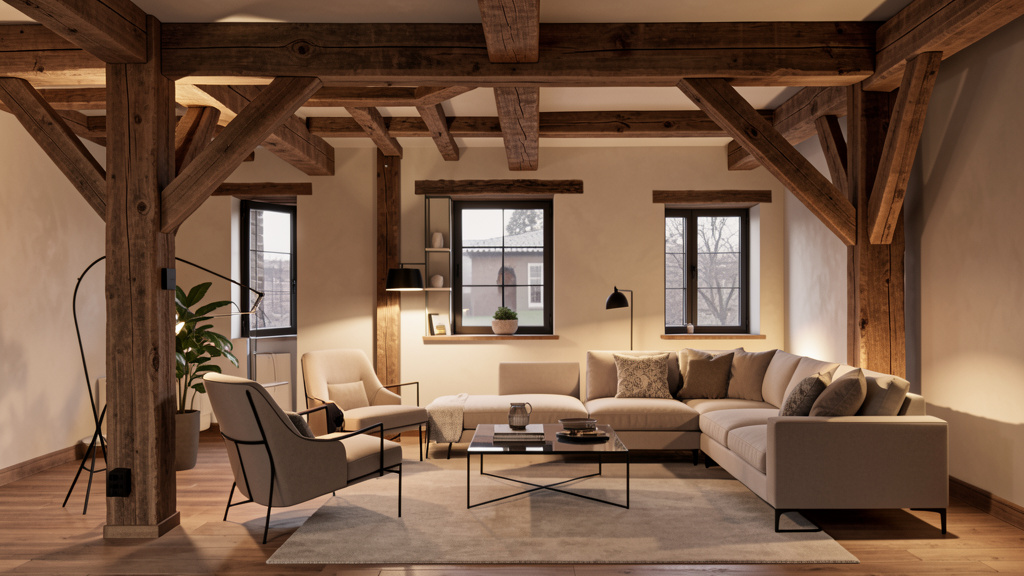
Adaptable Solution for Hybrid Homes: Many homes have architectural bones that lean Traditional (exposed beams, a stone fireplace) but lifestyles that crave Modern Rustic clarity. The solution: Honor the architecture (don’t cover the beams or fireplace), but furnish and accessorize with Modern Rustic principles. Keep furniture lines clean and low. Use a neutral color palette on walls and large furniture. Let the architectural elements provide the “rustic” texture and history; keep everything else serene and uncluttered. This creates a powerful, balanced dialogue between old and new.
The Kitchen: Where Function Forges Feeling
The kitchen is the most used room in most homes. Its design must support daily rituals without sacrificing soul. The differences between styles here are profoundly practical.
Traditional Rustic Kitchen
– Authenticity: Open shelving is common—not just for aesthetics, but born from historical necessity (air-drying dishes, easy access to daily-use pottery). Cabinets, if present, are simple Shaker-style with visible wood grain and matte finishes. The farmhouse sink (apron-front) is deep, often fireclay or cast iron, positioned under a window overlooking the garden.
– Materiality: Butcher block countertops (maple or walnut), requiring regular oiling. Backsplash might be handmade subway tile with visible grout lines, or exposed brick. Floors are wide-plank wood or unglazed terra cotta tile. Hardware is forged iron or antique brass with visible tooling.
– Atmosphere: Warm, inviting, and slightly imperfect. The butcher block shows gentle use—a badge of daily life. The open shelves display well-loved ceramic bowls and cutting boards. Lighting is pendant lights with seeded glass or wrought iron over the island. The space feels like the heart of the home, designed for gathering, cooking together, and lingering over coffee.
– Pitfall to Avoid: Impracticality. Butcher block near the sink can warp; open shelves collect dust and require constant tidying. Solution: Use butcher block only on the island (away from sink), and seal it meticulously. For open shelves, limit them to one wall and use them only for your most beautiful, frequently used items. Choose a durable, easy-clean material (like soapstone) for the main countertop near the sink.
– Illustrative Scenario: Envision a renovated early-20th-century farmhouse kitchen. Original beadboard walls were preserved and painted a soft sage. The deep farmhouse sink is original cast iron. Open shelves hold the homeowner’s collection of vintage blue mason jars and handmade pottery. The worn butcher block island is where family meals are prepped and homework is done. It’s functional, deeply personal, and radiates warmth.
Modern Rustic Kitchen
– Authenticity: Clean lines dominate. Cabinets are flat-panel or simple Shaker style in a matte finish (painted white, gray, or stained light oak). Integrated appliances (panel-ready refrigerator, dishwasher) maintain visual calm. The sink is often apron-front, but in a sleek material like matte black fireclay or stainless steel. Open shelving is used sparingly—perhaps just one floating shelf for displaying a few curated items.
– Materiality: Countertops favor durable, low-maintenance materials with natural appeal: honed granite, quartz with subtle aggregate (mimicking concrete), or soapstone. Backsplash is large-format tile (matte finish) or seamless plaster. Floors are wide-plank engineered wood or large porcelain tiles that look like wood. Hardware is minimalist matte black or brushed brass.
– Atmosphere: Airy, efficient, and serene. Ample task lighting under cabinets. A large central island with seating encourages casual interaction but doesn’t dominate the space. Surfaces are largely clear—utensils stored in drawers, small appliances tucked away. The space feels organized, calm, and ready for both quick weekday breakfasts and relaxed weekend cooking.
– Pitfall to Avoid: Coldness. Too much white and stainless steel feels clinical. Solution: Introduce warmth strategically. A wood-top island (walnut or oak). Open shelving with warm wood tones or textured ceramics. A runner rug in front of the sink in a natural fiber (jute, sisal). Warm white lighting (2700K).
– Illustrative Scenario: Consider a downtown loft kitchen. Cabinets are matte navy blue (a modern twist). Countertops are honed black granite. The single rustic element: a live-edge walnut slab mounted as a floating shelf above the stove, holding three favorite cookbooks and a small plant. The rest is clean, functional, and calm. It supports a busy professional’s need for efficiency while providing a touch of organic warmth.
Budget Path for Kitchen Transformation:
– Traditional Rustic Vibe: Paint existing cabinets a muted earth tone (sage, ochre) with milk paint for texture. Replace hardware with antique brass or iron pulls. Install open shelving using reclaimed wood brackets and sanded planks. Add a vintage-style faucet.
– Modern Rustic Vibe: Paint cabinets a warm white or light gray with a matte finish. Replace hardware with simple matte black bar pulls. Install a new countertop laminate that mimics concrete or soapstone. Add under-cabinet LED lighting with warm bulbs. Style countertops minimally—only a fruit bowl and a cutting board visible.
The Bedroom: Sanctuary of Rest
The bedroom’s sole purpose is restoration. Its design must actively support sleep and relaxation. Atmosphere is paramount here.
Traditional Rustic Bedroom
– Authenticity: The bed is substantial—a four-poster crafted from rough-hewn logs, a wrought iron frame with visible welds, or a platform bed made of reclaimed barn wood. It feels grounded and permanent.
– Materiality: Heavy textiles dominate: a thick wool or quilted bedspread, multiple down pillows, a chunky cable-knit throw at the foot of the bed. Nightstands are solid wood (tree stumps, distressed pine chests). Floors might be bare wood with a thick hooked rug beside the bed. Walls could feature log construction or shiplap.
– Atmosphere: Deeply cozy and sheltering. Heavy curtains block out light completely. Lighting is solely bedside: table lamps with fabric shades casting a warm pool of light perfect for reading. The space feels like a nest—a retreat from the world designed for deep, uninterrupted rest. Ideal for cold climates or those who crave a sense of being “tucked in.”
– Pitfall to Avoid: Overstimulation. Too many patterns (plaid sheets, floral quilt, striped rug) can keep the mind active. Solution: Stick to a cohesive, muted color family. Use texture, not pattern, for interest—a nubby wool blanket, a smooth leather headboard. Ensure all light sources are dimmable and warm.
– Illustrative Scenario: Picture a mountain cabin bedroom. The log bed frame was milled from trees on the property. The quilt is a family heirloom. The only light comes from two antique brass bedside lamps. The heavy wool curtains block the early morning sun. Waking up here feels like emerging from a deep, restorative sleep cocooned in history and comfort.
Modern Rustic Bedroom
– Authenticity: The bed is low-profile with clean lines—a platform bed in light oak, a simple upholstered headboard in linen. It feels light and unobtrusive.
– Materiality: Textiles are high-quality but minimal: high-thread-count cotton or linen sheets in ivory or oat, one textured throw blanket (undyed wool), one or two simple pillows. Nightstands are minimalist (floating wood shelf, sleek metal cube). Floors are light wood with a single, soft wool rug beside the bed. Walls are smooth plaster.
– Atmosphere: Serene, airy, and restorative. Light-filtering linen curtains allow soft morning light. Lighting is layered but subtle: a small wall sconce on each side of the bed (freeing up nightstand space), perhaps a single dimmable overhead light. Surfaces are clear—only a book, a glass of water, a small plant. The space feels like a spa—a calm environment that signals the brain to unwind and prepare for sleep.
– Pitfall to Avoid: Sterility. A completely bare room feels unwelcoming. Solution: Add one or two deeply personal, calming elements. A small framed photograph of a peaceful place. A single stem in a simple vase. A meaningful book on the nightstand. Ensure textures are present (linen sheets, wool rug) to add warmth without visual noise.
– Illustrative Scenario: Imagine a primary bedroom in a suburban home. Walls are painted Sherwin-Williams Accessible Beige. The bed is a low platform in light oak. Bedding is all ivory linen. A single large abstract painting in earth tones hangs above the bed. The only light at night comes from two minimalist brass wall sconces. The room feels like a deep, calming breath—a true sanctuary for rest.
Sleep Environment Note: Creating a restful bedroom environment aligns with widely recognized sleep hygiene principles. Traditional Rustic’s heavy curtains and warm, dim lighting support darkness and warmth cues for rest. Modern Rustic’s emphasis on clutter-free surfaces may reduce pre-sleep mental clutter. Whichever style you choose, prioritize these fundamentals: the ability to achieve darkness, a cool room temperature, and minimal visual distraction. Your style choice should enhance these elements, not compromise them.
The Bathroom: From Rustic Retreat to Spa Sanctuary
Bathrooms are intimate spaces where material choices directly impact daily ritual and well-being. Moisture resistance and maintenance are critical practical considerations layered atop aesthetic choices.
Traditional Rustic Bathroom
– Authenticity: Features that feel discovered, not installed. A clawfoot tub (refinished), a vessel sink carved from stone or wood set on a repurposed wood console table, exposed pipe fixtures in oil-rubbed bronze.
– Materiality: Walls might be shiplap (properly sealed for moisture) or exposed stone. Floors are unglazed terra cotta tile, slate with visible cleft, or wide-plank wood (only if meticulously sealed and in a low-moisture area like a powder room). Hardware is antique-style with visible patina. Textiles are heavy: thick Turkish cotton towels, a braided rug.
– Atmosphere: Feels like a private retreat—a place to soak and disconnect. Lighting is warm and ambient (wall sconces flanking the mirror, candle holders). The space embraces imperfection; the stone sink has natural variations, the wood shows grain. It’s romantic and deeply personal.
– Pitfall to Avoid: Moisture Damage. Wood in high-moisture areas (showers, near sinks) is a major risk without expert sealing. Unglazed tile is porous and stains easily. Solution: Use wood only in powder rooms or as vanity bases with proper marine-grade sealant. Choose glazed tile that mimics terra cotta or slate for wet areas. Ensure excellent ventilation (quiet, powerful exhaust fan).
– Illustrative Scenario: Visualize a renovated cabin powder room. The vanity is a salvaged pine cupboard with the original paint chipped at the edges. The sink is a repurposed galvanized metal bucket. The floor is hexagonal cement tile in a muted pattern. It’s charming, functional, and full of character—perfect for a low-traffic space.
Modern Rustic Bathroom
– Authenticity: Clean lines with organic soul. A freestanding tub with simple, elegant lines (not clawfoot) in matte white or stone resin. A floating vanity in light oak or matte black. Frameless glass shower enclosure. Fixtures are minimalist matte black or brushed brass.
– Materiality: Large-format porcelain tiles that mimic honed concrete, wood, or slate (durable, low-maintenance). Walls might be smooth troweled plaster (in low-moisture areas) or large tiles. Countertops are solid surface, quartz, or honed stone. Textiles are high-quality but minimal: thick, plush towels in neutral tones, a single bath mat.
– Atmosphere: Feels like a high-end spa—calm, clean, and rejuvenating. Layered lighting: recessed for general light, sconces at mirror level for grooming, a dimmable pendant over the tub. Surfaces are clear and easy to clean. The space promotes mindfulness during morning routines and relaxation in the evening.
– Pitfall to Avoid: Coldness. Large tiles and stone can feel chilly underfoot. Solution: Install radiant floor heating (highly recommended for comfort and luxury). Use a plush bath mat. Choose warm-toned tiles (creamy whites, soft grays) over cool blues or stark whites. Add a small wooden stool for texture and function.
– Illustrative Scenario: Picture a primary bathroom in a new home. Walls and floor are large-format porcelain tiles in a warm gray wood-look. The floating vanity is light oak. The freestanding tub sits under a window with a view of trees. A single woven pendant light hangs above. The space feels serene, luxurious, and deeply calming—a true daily escape.
Universal Bathroom Tip Regardless of Style: Prioritize function. Ensure adequate storage (linen closet, medicine cabinet) to keep surfaces clear. Choose water-efficient fixtures. Install grab bars discreetly if needed for aging in place—they can be stylish (matte black, brushed brass) and add safety without compromising aesthetics. Your bathroom should feel like a supportive ritual space, not a source of daily frustration.
Navigating Common Pitfalls: Friction Points and Sustainable Solutions
Even with clear understanding, execution challenges arise. This section addresses the most frequent friction points—where good intentions meet real-world constraints—and provides actionable, sustainable solutions. We also integrate critical considerations often overlooked in design discussions: safety, accessibility, and environmental impact. True expertise lies not just in aesthetics, but in creating spaces that are safe, functional, and responsible for years to come.
The “Theme Park” Trap: When Rustic Feels Like a Costume
This is a common challenge in rustic design: applying motifs without understanding their origin or purpose. Think plastic antlers on a wall in a Florida condo, faux log beams in a cookie-cutter suburban home with no regional connection, or excessive use of burlap and mason jars as decor. The result can feel inauthentic and lack emotional depth.
Why it happens: Social media promotes isolated “rustic elements” divorced from context. Homeowners seek a quick aesthetic fix without considering their home’s architecture, location, or personal story.
Solution Framework:
1. The Origin Check: Before adding any rustic element, ask: “What is the historical or functional origin of this item?” If you can’t answer (e.g., “Why antlers?”), reconsider. Antlers were historically trophies from sustenance hunting in remote areas; using them decoratively without that context can feel hollow. Instead, choose elements with personal meaning: a wooden bowl carved by a local artisan, a photograph of a beloved forest.
2. The Architecture Alignment Test: Does the element respect your home’s bones? Adding heavy timber beams to a 1980s ranch house with 8-foot ceilings can create visual oppression. Instead, honor what exists: refinish original wood floors, highlight existing architectural details with paint or lighting.
3. The Edit Ruthlessly Rule: Traditional Rustic can handle density, but only if items are meaningful. Modern Rustic demands severe editing. If an object doesn’t serve a function or spark genuine resonance (not just “it looks rustic”), remove it. A single, well-chosen rustic element often has more impact than ten scattered motifs.
4. Ethical Sourcing Note: When considering animal-derived elements (antlers, hides), research ethical sourcing options—byproducts of natural culling programs, for instance. Many designers now use high-quality resin replicas that are indistinguishable and align with ethical values without sacrificing aesthetic intent.
Scale and Proportion: Avoiding Visual Overwhelm
Rustic furniture is often substantial. Placing a massive log bed or a heavy timber dining table in a small apartment or a room with low ceilings can create a cramped feeling. Conversely, delicate modern furniture in a vast, high-ceilinged great room can look lost.
Solution Framework:
– Measure and Plan: Create a scaled floor plan (graph paper or free apps). Cut out paper templates of furniture dimensions. Arrange them physically to test flow and proportion before purchasing.
– Scale to Ceiling Height: As a general guide, furniture height should be proportional to ceiling height. In rooms under 9 feet, avoid furniture taller than 42 inches (e.g., low-profile beds, sofas). In rooms over 12 feet (great rooms), substantial pieces are appropriate—this is where Traditional Rustic shines.
– Visual Weight Balancing: Heavy rustic pieces (a solid wood table) need visual “lightness” around them. Pair with chairs that have open frames (windsor chairs, metal chairs with cane seats) rather than four solid wood chairs. In Modern Rustic, use a heavy wood table with minimalist chairs to create intentional contrast.
– The Mirror Trick: In small spaces craving rustic warmth, use a large mirror with a simple reclaimed wood frame. It reflects light and creates the illusion of space while adding authentic texture. Place opposite a window for maximum effect.
Maintenance Realities: Beauty That Lasts
Rustic materials often require specific care. Ignoring this leads to disappointment, damage, and costly repairs. A beautiful reclaimed wood floor ruined by improper cleaning, or a stone countertop stained beyond repair, undermines the entire design.
Material-Specific Care Guide:
– Reclaimed Wood Floors/Furniture: Clean with a barely damp microfiber mop or cloth. Never use steam mops or excessive water. Sweep regularly to prevent grit scratches. Re-oil every 1-2 years with food-grade mineral oil or beeswax polish to maintain luster and protect. Critical Safety Note: Ensure reclaimed wood is certified pest-free and structurally sound. Reputable suppliers kiln-dry wood to eliminate insects and mold. Never source wood from unknown demolition sites due to potential lead paint, asbestos, or structural instability.
– Natural Stone (Countertops, Floors): Seal upon installation and reseal annually (or as recommended by the stone type). Clean with pH-neutral stone soap. Avoid acidic cleaners (vinegar, lemon) which etch marble and limestone. Blot spills immediately. For honed finishes (matte), minor scratches blend into the surface; for polished finishes, scratches are more visible.
– Butcher Block Countertops: Oil weekly for the first month, then monthly with mineral oil or beeswax. Sand out minor cuts and re-oil. Avoid standing water; use cutting boards. Not recommended directly beside sinks without meticulous care.
– Textiles (Wool Rugs, Linen): Vacuum regularly (without beater bar on delicate rugs). Rotate rugs annually for even wear. Professional cleaning every 1-2 years. Linen can be machine washed gentle/cold; air dry to prevent shrinkage. Embrace the natural aging—linen softens, wool develops a patina.
Budget Maintenance Tip: Create a seasonal maintenance calendar. Spring: oil wood surfaces. Fall: deep clean rugs, check stone sealant. This prevents overwhelming annual tasks and preserves your investment. For high-traffic areas with kids/pets, prioritize durable finishes: wire-brushed engineered wood floors (hides scratches), porcelain tile that looks like wood, performance fabric upholstery.
Lighting Mismatch: The Atmosphere Killer
Using cool-white (4000K+) LED bulbs in a rustic space instantly destroys warmth and authenticity. Harsh overhead lighting creates unflattering shadows and feels institutional.
Solution Framework:
– Bulb Temperature is Key: Use only 2700K to 3000K bulbs throughout. This warm white mimics candlelight and sunset. Check packaging carefully—many “soft white” bulbs are still too cool.
– Layer Your Lighting: Never rely on a single overhead light. Combine:
– Ambient: Recessed lights (on dimmers), cove lighting.
– Task: Under-cabinet lights in kitchen, wall sconces at mirrors, adjustable desk lamps.
– Accent: Picture lights, LED strips under shelves, candles.
– Dimmers are Essential: Install dimmer switches on every circuit. This allows you to adjust the mood from bright and energizing (morning) to soft and intimate (evening).
– Fixture Style Alignment: Traditional Rustic: Wrought iron, antique brass, seeded glass, lantern styles. Modern Rustic: Matte black steel, brushed brass, minimalist geometric shapes, woven natural fibers (rattan, seagrass). Avoid shiny chrome or overly ornate crystal in either style.
Sustainability and Ethical Sourcing: Designing with Conscience
Today’s homeowners increasingly seek designs that align with environmental and ethical values. Rustic design, with its emphasis on natural materials, has a unique opportunity—and responsibility—to lead here.
Actionable Sustainable Practices:
– Reclaimed Wood: Diverts waste from landfills, preserves old-growth wood character, and has a lower carbon footprint compared to new lumber. Verify sourcing: Reputable suppliers provide documentation of origin (demolished barns, factories) and ensure wood is de-nailed, cleaned, and kiln-dried for safety. Avoid “reclaimed-looking” new wood—it undermines authenticity.
– Local and Regional Materials: Reduce transportation emissions. Source stone from local quarries, wood from regional sustainable forests (look for FSC certification), textiles from nearby artisans. This also strengthens community ties and ensures materials are suited to your climate.
– Low-VOC and Natural Finishes: Traditional linseed oil, beeswax, milk paint, and lime wash are non-toxic, biodegradable, and create beautiful patinas. Avoid polyurethane and synthetic stains that off-gas VOCs (volatile organic compounds) for years, impacting indoor air quality. Brands like ECOS Paints, Rubio Monocoat (for wood), and Earth Pigments offer high-performance, eco-friendly options.
– Durability Over Disposability: Choose solid wood furniture over particleboard. Invest in quality textiles that last decades. This “buy once, use long” philosophy reduces long-term waste. Repair and refinish instead of replacing.
– Water and Energy Efficiency: In kitchens and baths, choose WaterSense-labeled fixtures. Install LED lighting (with warm bulbs!). Consider radiant floor heating in bathrooms—it’s often more efficient than forced air and adds luxurious comfort. These choices support both planetary health and long-term utility savings.
Material safety standards, such as those established by the Forest Stewardship Council (FSC) for wood sourcing or GREENGUARD certification for low chemical emissions, provide helpful benchmarks for sustainable and healthy material choices. Prioritizing products meeting these standards ensures your design choices support not only aesthetic goals but also occupant well-being and environmental stewardship—a thoughtful approach to contemporary design practice.
Blending the Styles: Creating a Cohesive Hybrid Home
Many homes—and hearts—don’t fit neatly into one category. Perhaps your house has Traditional Rustic bones (exposed beams, stone fireplace) but your lifestyle craves Modern Rustic clarity. Or you inherited cherished antique furniture but live in a sleek new build. Blending is not only possible; when done intentionally, it creates uniquely personal, dynamic spaces. The key is avoiding a haphazard “mix,” which feels chaotic, and instead crafting a deliberate dialogue between old and new.
The 70/30 Rule: Establishing Dominance
Successful blending requires a clear hierarchy. Choose one style to dominate (70% of the visual weight) and the other to accent (30%). This prevents visual competition and creates intentional tension.
– Traditional Rustic Dominant (70%): Architecture and large elements are Traditional (log walls, stone fireplace, wide-plank floors). Modern Rustic accents (30%) provide relief: a minimalist black steel coffee table in the living room, streamlined linen curtains, a single sculptural light fixture. The modern elements prevent the space from feeling heavy or dated.
– Modern Rustic Dominant (70%): Architecture and palette are Modern Rustic (open plan, light walls, clean-lined furniture). Traditional Rustic accents (30%) add soul and history: a single reclaimed wood beam left exposed on the ceiling, an antique quilt folded at the foot of the bed, a vintage wooden dough bowl on the coffee table. The rustic elements prevent sterility and add narrative depth.
Why it works: The dominant style sets the overall emotional tone and spatial flow. The accent style provides focal points of interest and texture. The eye perceives this as intentional curation, not confusion.
Bridging Elements: Creating Visual Harmony
Use specific elements to seamlessly connect the two styles:
– Color as a Bridge: A neutral, earthy color palette (warm whites, taupes, soft grays, sage) works for both styles. Paint walls and large furniture in these bridge colors. Let rustic textures (wood grain, stone) and modern forms (clean lines) provide the distinction within the unified palette.
– Texture as a Translator: A nubby wool rug (rustic texture) placed under a sleek modern sofa (modern form) creates instant harmony. The texture grounds the modern piece; the clean lines prevent the rug from feeling heavy.
– Material Continuity: Repeat one key material throughout. If you use reclaimed wood for an accent wall (rustic), incorporate smaller wood elements elsewhere—a wood-framed mirror, wood-handled utensils in the kitchen (modern application). This creates a visual thread.
– Art and Accessories: Choose art that blends influences—abstract landscapes with earthy tones, black-and-white photography of natural forms. Accessories should feel collected over time, not matched. A modern ceramic vase holding dried grasses; an old wooden crate used as a magazine holder beside a contemporary chair.
Zone Blending: Style by Room Function
Different rooms can lean into different styles based on their purpose and your emotional needs for that space.
– Public Areas (Living Room, Kitchen): Lean Modern Rustic for openness, ease of entertaining, and daily functionality. Clean lines support flow and reduce cleaning burden.
– Private Sanctuaries (Bedroom, Library): Lean Traditional Rustic for deep comfort, enclosure, and emotional warmth. The enveloping quality supports rest and introspection.
– Transition Spaces (Hallways, Entryways): Use bridge elements here. A console table with a clean modern base and a reclaimed wood top. A single textured runner rug. These spaces prepare you for the shift in atmosphere between zones.
Illustrative Hybrid Scenario: A couple renovated a 1950s ranch house with original wood-paneled walls in the den (a Traditional Rustic feature they loved). Instead of covering the panels, they embraced them as the 30% rustic accent. The rest of the main floor (70%) was transformed into Modern Rustic: walls painted warm white, open floor plan, light wood floors, minimalist furniture. In the den, they kept the wood panels but painted them a soft charcoal gray to modernize them slightly, added a sleek black leather sofa, and used the wood texture as the room’s sole rustic element. The result feels intentional, layered, and deeply personal—honoring the home’s history while creating a space that fits their modern life. The wood-paneled den became a coveted cozy retreat, while the open living area felt airy and connected.
Pitfall to Avoid in Blending: Forcing equal representation (50/50). This creates visual tension without resolution. One style must lead. If you feel torn, return to the Three Pillars Framework. Which style’s Atmosphere (Pillar 3) aligns more closely with how you want to feel in your primary living spaces? Let that be your dominant style. Use the other style for meaningful accents that tell your unique story.
Budget-Conscious Paths: Achieving Authenticity Without Breaking the Bank
Authentic rustic design is often perceived as expensive—reclaimed wood, custom furniture, artisan crafts. While high-end executions exist, the soul of rustic design lies in resourcefulness, not price tags. Both Traditional and Modern Rustic have deep roots in making do with what’s available. This section provides tiered strategies to achieve authentic style at any budget level, emphasizing creativity over consumption.
Traditional Rustic on a Budget: The Art of Resourceful Craft
Traditional Rustic’s heritage is literally built on thrift and ingenuity. Channel that spirit.
– Ideal Path (Time-Rich, Budget-Moderate): Source materials directly. Visit local salvage yards, Habitat for Humanity ReStores, demolition sites (with permission), and farm auctions. Look for: old doors (can become tables or headboards), windows (for greenhouse projects or wall art), barn wood (for accent walls), cast-iron hardware. Learn basic woodworking skills (online tutorials abound) to build simple shelves, benches, or frames. Sand and refinish found furniture with linseed oil or milk paint. This path yields unique, meaningful pieces with genuine history and deep satisfaction.
– Budget Path (Time-Moderate, Budget-Low): Use new materials with honest finishes. New pine boards can be distressed: beat them with a chain, hammer nails partway in and pull out to create holes, drag a screwdriver along the grain. Stain with a dark walnut color, then lightly sand edges and high points to reveal the lighter wood underneath (“dry brushing”). Apply milk paint (inexpensive, matte finish) to cabinets or furniture. Create texture on walls with a sponge and diluted paint. Make your own textiles: dye thrifted cotton sheets with tea or coffee for a vintage look; braid old t-shirts into a rug.
– Emergency Path (Time-Poor, Budget-Very Low): Focus on textiles and small accents. Visit thrift stores, flea markets, and online marketplaces. Look for: heavy wool blankets (Navajo-style patterns are common), vintage quilts, burlap sacks (can be sewn into curtains or table runners), cast-iron skillets (for display or use), simple wood crates. Wash and mend textiles. Group items intentionally—a stack of three vintage books, a cluster of three mason jars with wildflowers. Paint one accent wall a deep earth tone (like Sherwin-Williams Urbane Bronze). Swap out shiny modern hardware on cabinets for simple black iron pulls (under $5 each). These small changes instantly layer in rustic texture and warmth without structural changes.
Modern Rustic on a Budget: The Power of Editing and Curation
Modern Rustic’s strength is that it often requires less—fewer items, cleaner lines. Budget constraints can actually enhance authenticity by forcing intentionality.
– Ideal Path (Time-Rich, Budget-Moderate): Invest in one key reclaimed statement piece. Find a solid wood door or large plank at a salvage yard. Sand lightly, apply a matte finish, and mount on hairpin legs (inexpensive online) to create a dining table or console. Source second-hand solid wood furniture (dressers, tables) from online marketplaces or estate sales. Strip old paint/varnish (safely!) and refinish with a light stain or matte white paint. Learn basic upholstery to recover chair seats with linen or wool fabric. Create art: frame pressed leaves, use large-scale black-and-white nature photography printed affordably online.
– Budget Path (Time-Moderate, Budget-Low): Master the art of editing. Remove everything from a room. Clean thoroughly. Return only items that are functional or bring genuine resonance. Paint all walls a consistent warm white (Sherwin-Williams Alabaster is a reliable, affordable choice). Paint existing cabinets the same color for a seamless look. Replace hardware with simple matte black pulls. Use peel-and-stick reclaimed wood-look wallpaper on one accent wall (behind bed or sofa)—it’s removable and low-commitment. Shop accessible retailers for basics: modular units can be painted and fitted with new doors; simple tables can be sanded and stained. Add texture with affordable natural fiber rugs (jute, sisal). Style minimally: one plant, one piece of art, one textured throw.
– Emergency Path (Time-Poor, Budget-Very Low): The 24-Hour Edit. Spend one evening removing all clutter—knick-knacks, excess pillows, items on surfaces. Wipe down all surfaces. Rearrange furniture to improve flow (pull seating away from walls, create conversation areas). Swap out light bulbs for 2700K warm white LEDs. Drape a single chunky knit throw (thrifted or from a discount retailer) over your sofa. Place one large potted plant (snake plant or ZZ plant—nearly indestructible) in a corner. Open curtains fully during the day. This costs almost nothing but instantly shifts the atmosphere toward Modern Rustic clarity and calm. The most powerful tool is often subtraction, not addition.
Universal Budget Wisdom
- Thrift First, Buy Second: Always check thrift stores, ReStores, online marketplaces, and garage sales before buying new. You’ll find unique pieces with character and save significantly.
- DIY Finishes: Learn to refinish wood, paint furniture, sew simple curtains. Online video platforms offer excellent, safe tutorials. Start small.
- Patience is a Strategy: Build your space slowly. Wait for the perfect reclaimed wood table to appear on Marketplace rather than settling for a poorly made new one. A curated space built over time has more soul and authenticity than a fully furnished room bought in a weekend.
- Value Experience Over Objects: Sometimes the best “decor” is an experience. Spend budget on planting a native garden visible from your window, or creating a comfortable outdoor seating area with found stones and thrifted cushions. Connection to the actual outdoors is the ultimate rustic luxury.
Your Questions, Answered
We’ve distilled the most frequent, nuanced questions homeowners face when navigating rustic design—questions born from real confusion, budget constraints, and lifestyle realities. Each answer integrates practical advice, style clarification, and contextual insight to empower your decisions.
Q: What is the single most reliable visual cue to distinguish Traditional Rustic from Modern Rustic at a glance?
A: Look at the walls and large surfaces. Traditional Rustic almost always features textured, non-uniform wall treatments: exposed log walls, shiplap with visible seams and nail heads, stone veneer with deep mortar joints, or heavily distressed plaster. Modern Rustic prioritizes smooth, clean wall surfaces—smooth plaster, large-format tile, or painted drywall in a consistent neutral tone. The texture in Modern Rustic is reserved for accent elements (a single wood beam, a textured rug), not the entire envelope. This wall treatment difference instantly signals the style’s underlying philosophy: embracing raw history versus curating refined warmth.
Q: Can Modern Rustic work in a small apartment or urban condo with no architectural character?
A: Absolutely—and it’s often the ideal choice for these spaces. Modern Rustic’s emphasis on light, neutral palettes, clean lines, and intentional negative space combats the potential claustrophobia of small footprints. Start by painting all walls and trim a cohesive warm white to maximize light reflection. Choose furniture with slender profiles and visible legs (creates visual space underneath). Incorporate rustic texture strategically: a live-edge wood shelf mounted on the wall, a jute rug, a woven pendant light. Avoid bulky Traditional Rustic furniture, which will overwhelm. Use mirrors with simple wood frames to amplify light and space. The goal is to bring the feeling of nature and warmth into the urban environment without adding visual weight. Many successful Modern Rustic apartments prove that soulful design transcends square footage.
Q: Is reclaimed wood necessary for authenticity? What if I can’t find or afford it?
A: Reclaimed wood is a powerful tool for authenticity, but it is not the only path. Authenticity in Traditional Rustic comes from honoring material truth—using wood with visible grain, knots, and honest finishes, whether reclaimed or new. For Traditional Rustic: Use new pine or cedar, but finish it with linseed oil or milk paint to highlight its natural character; distress it lightly to avoid a “new lumber” look. For Modern Rustic: New wood with a wire-brushed texture or a matte finish can beautifully mimic reclaimed wood’s warmth without the cost or sourcing challenges. The critical factor is avoiding deception. Don’t use laminate printed to look like wood grain—it lacks depth and feels cheap. Choose materials honestly: if it’s new, let it look new but warm. Authenticity is felt in the integrity of the material choice, not solely in its age.
Q: How do I incorporate rustic elements without making my contemporary home look mismatched or dated?
A: This is where the 70/30 Rule and Bridging Elements shine. First, ensure your contemporary home’s dominant style (70%) remains intact—clean lines, neutral palette, open flow. Then, introduce rustic elements (30%) as intentional accents that serve a purpose: a reclaimed wood console table in the entryway (functional and textural), a single textured wool rug in the living room, a live-edge wood shelf in the bathroom for towels. Crucially, repeat a unifying element: if you use wood, ensure its tone (light oak, warm walnut) is consistent across accents. Use the same warm white paint throughout. Choose rustic accents with simplified forms—a wood stool with clean lines, not an ornate carved chair. The rustic pieces should feel like thoughtful additions, not random intrusions. When in doubt, start with just one rustic element and live with it for a week before adding more.
Q: Are there specific color palettes that define each style, or is it more about texture?
A: Both style and texture are deeply intertwined with color, but their roles differ. Traditional Rustic palettes are narrative—they tell a story of place and history. Expect deeper, earthier, and often warmer tones: forest green, burnt sienna, ochre, charcoal, cream. Colors are rarely pure; they’re muted by age, smoke, or natural dyes. Texture is abundant and varied (rough wood, nubby wool, rough stone). Modern Rustic palettes are foundational—they create a calm canvas. Built on warm neutrals: whites with yellow/gray undertones (not blue!), soft grays, taupes, beiges. Earthy accents (sage, terracotta, charcoal) are used sparingly for warmth. Texture is curated and balanced against smooth surfaces. The key difference: Traditional Rustic uses color and texture densely to create enveloping warmth; Modern Rustic uses a neutral color base to allow curated texture to provide the warmth without visual noise. If your space feels muddy, you likely have too many competing earth tones (Traditional trap). If it feels cold, you lack sufficient warm neutrals or curated texture (Modern Rustic trap).
Q: What are the biggest mistakes people make when trying to achieve a rustic look on a budget?
A: Three critical pitfalls:
1. Faux Finishes: Using laminate that looks like wood grain, vinyl plank flooring with unrealistic printing, or peel-and-stick stone veneer that lacks depth. These can undermine authenticity instantly. Solution: Choose honest materials—even if simple. Paint existing floors a dark color; use large-area rugs to define zones.
2. Thematic Overload: Buying every “rustic” item from a big-box store (mason jars, burlap, fake antlers) and filling shelves. This creates a costume-like feel. Solution: Edit ruthlessly. Choose one meaningful rustic element per room. A single vintage wood bowl. One wool blanket. Let negative space breathe.
3. Ignoring Scale: Placing oversized, heavy-looking furniture (even if thrifted) in a small room. Solution: Prioritize furniture with slender profiles or open bases (chairs with visible legs). Use mirrors to create space. Remember: Rustic warmth comes from texture and material, not necessarily from bulky furniture.
Q: How does lighting truly differ between the two styles beyond just bulb color?
A: Bulb temperature (2700K-3000K) is essential for both, but fixture style and placement create the atmospheric difference. Traditional Rustic lighting is organic and artisanal: wrought iron with visible hammer marks, lanterns with seeded glass that casts dappled shadows, multiple low-level table lamps creating intimate pools of light. Fixtures often look handmade or antique. Modern Rustic lighting is architectural and minimalist: clean lines in matte black steel or brushed brass, geometric shapes, woven natural fiber pendants (rattan, seagrass), integrated LED strips for subtle ambient glow. Fixtures serve as sculptural elements. Placement differs too: Traditional Rustic avoids bright overhead lights; Modern Rustic uses recessed lighting on dimmers for flexibility, layered with task and accent lighting. The emotional result: Traditional lighting feels like candlelight—warm, shadowy, intimate. Modern Rustic lighting feels like curated daylight—warm but clear, supportive of multiple activities.
Q: Can I blend Traditional Rustic furniture (like an heirloom dining table) into a Modern Rustic home?
A: Yes—this is one of the most powerful and personal ways to blend styles successfully. The heirloom piece becomes your meaningful 30% accent. To integrate it smoothly:
– Refresh the Finish (If Appropriate): If the table is dark and heavy, consider lightly sanding and applying a matte clear coat or a very light wash of white stain to brighten it while preserving wood grain. Only do this if the piece isn’t a valuable antique.
– Contrast with Seating: Pair the substantial traditional table with minimalist chairs—upholstered in neutral linen, black metal frames with cane seats, or sleek wooden Windsor chairs. This creates intentional visual dialogue.
– Unify with Palette: Ensure the table’s wood tone harmonizes with other wood accents in the room (floor, shelves). If it’s a warm oak, use other warm wood tones; avoid clashing with cool gray floors.
– Style Minimally: Keep the table surface clear. Use a simple linen runner, a single ceramic vase with branches. Avoid heavy tablecloths or excessive centerpieces that reinforce the “traditional” feel. Let the table’s craftsmanship be the star. This approach honors heritage while keeping the overall space feeling calm and contemporary.
Q: Is Modern Rustic just a trend that will look dated quickly?
A: Modern Rustic is less a fleeting trend and more an evolution of enduring design principles. It synthesizes timeless elements:
– Biophilia: The innate human connection to nature (wood, stone, plants) is a constant, not a trend.
– Minimalism: The desire for calm, uncluttered spaces responds to our increasingly busy lives—a lasting need.
– Craft Appreciation: Valuing texture, material honesty, and intentional design has deep historical roots.
Because Modern Rustic is rooted in these lasting human needs—not arbitrary aesthetics—it has strong staying power. Its focus on personal meaning and adaptability ensures it evolves with you, rather than feeling locked to a specific decade. Choosing elements that resonate with your values, not just current popularity, is the surest path to a timeless home.
Q: How do seasonal changes affect rustic design choices?
A: Seasonality plays a subtle but meaningful role. In colder months or northern climates, Traditional Rustic’s enveloping warmth (heavy textiles, deep colors, abundant wood) can feel especially comforting. In warmer months or sun-drenched spaces, Modern Rustic’s light palette, breathable textiles (linen, cotton), and connection to outdoor views provide refreshing clarity. Many homeowners adapt seasonally: swapping heavy wool throws for lighter