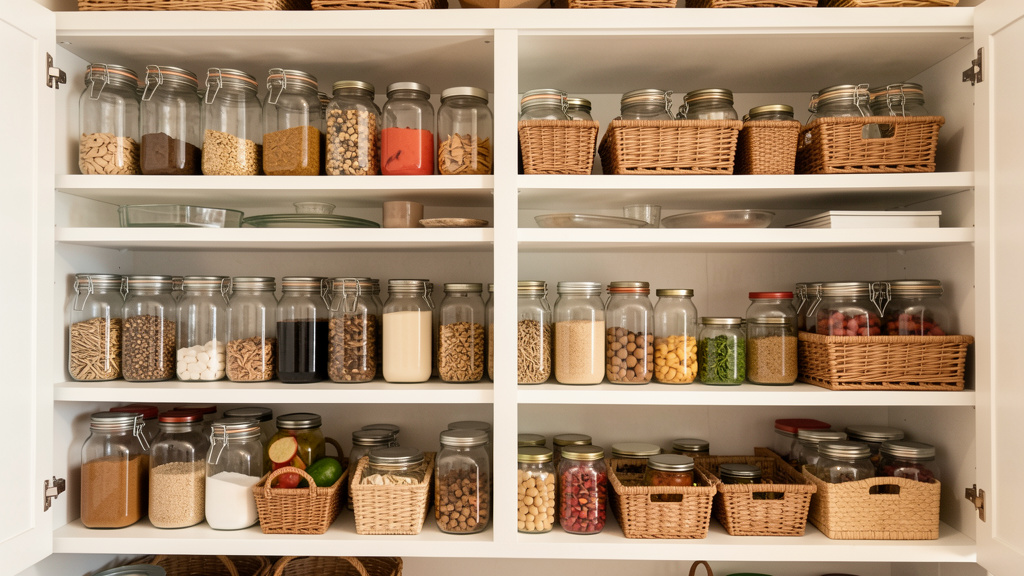
Stop wrestling with expired cans, forgotten leftovers, and chaotic shelves. Discover a practical pantry system designed around how you actually live—reducing waste, saving time, and transforming daily cooking into a calmer, more confident experience.
Imagine opening your pantry door to find exactly what you need in moments. No digging through crowded shelves. No mystery containers. No guilt over overlooked groceries. Instead, a space that feels intuitive, efficient, and genuinely supportive of your rhythm. This isn’t about achieving picture-perfect aesthetics. It’s about designing a food storage ecosystem that works with your habits—not against them. Grounded in principles of behavioral psychology, spatial ergonomics, and observed patterns across diverse households, this guide offers a repeatable framework for creating a pantry that sustains itself long after the initial organization effort. Whether you’re working with a narrow closet, a repurposed cabinet, or a spacious walk-in, you’ll learn to build a system that adapts to your flow, reduces daily friction, and quietly supports mindful eating habits every single day.
Introduction: Why Most Pantries Fail (And How to Break the Cycle)
Walk into any home improvement store or scroll through design feeds, and you’ll see pantries presented as static showcases: uniform containers lined precisely, labels printed identically, shelves glowing under perfect lighting. These images sell an illusion—one that often collapses when real life enters the frame. A child grabs a snack. A rainy Tuesday demands a quick soup. A bulk-store haul arrives unexpectedly. Within days, the “perfect” system buckles under actual use. Jars go unlabeled. Zones blur. Chaos returns, deeper and more frustrating than before.
This cycle isn’t your fault. It stems from a common design oversight in much pantry advice: prioritizing appearance over human behavior. Insights from environmental psychology consistently highlight that storage systems thrive when they honor three core realities:
– Habit inertia often outweighs willpower. If restocking requires complex steps, even the most well-intentioned system may be abandoned.
– Visual clutter contributes to decision fatigue. Hidden items become forgotten items—leading to waste and frustration.
– Household rhythms vary widely. A family managing weekly bulk shopping has different needs than a couple cooking nightly from fresh ingredients.
The most resilient pantries aren’t necessarily the most photogenic—they’re the most forgiving. They anticipate human moments. They accommodate imperfect days. They make the right action (finding ingredients, checking inventory, discarding expired items) the easiest action. This guide shifts focus from “How should it look?” to “How should it work?” We’ll move beyond surface-level tips (“use clear containers!”) to address root causes of pantry dysfunction: unclear flow, rigid zoning, and maintenance friction. By anchoring decisions in observable daily patterns—not aspirational ideals—you’ll build a system that sustains itself through busy seasons, changing diets, and evolving household needs. This is behavioral design for your kitchen’s command center.
The Flow, Function, Flexibility Framework: Designing a Pantry That Adapts to You
Forget rigid rules about shelf heights or container colors. True pantry mastery emerges from a dynamic framework built on three interlocking pillars. This isn’t a checklist—it’s a mindset shift that transforms how you interact with your space daily. Each pillar addresses a critical layer of functionality often overlooked:
- Flow maps your physical movement and cognitive habits
- Function structures zones around actual usage frequency and context
- Flexibility embeds adaptability so the system evolves with your life
When these pillars work together, your pantry becomes quiet infrastructure—like well-designed software that “just works.” You stop managing storage and start using it effortlessly. Let’s explore each pillar with actionable detail, common considerations, and tailored adaptations for every space type. This framework is designed to accommodate diverse scenarios: urban apartments with compact cabinets, suburban walk-ins housing varied supplies, multi-generational homes with differing needs, and rental properties with minimal modification options. The principles remain consistent; only the execution shifts.
Step 1: Map Your Kitchen Flow (The Foundation Most People Skip)
Before measuring shelves or selecting containers, understand the invisible currents of your kitchen. Flow mapping reveals where small frustrations accumulate and where thoughtful adjustments create outsized ease. This step separates functional pantries from decorative ones.
Why this step matters:
A pantry positioned far from your primary prep area adds unnecessary steps. Shelves at awkward heights create strain. Items stored out of logical sequence disrupt cooking rhythm. Flow mapping identifies these micro-frictions before they become daily frustrations. Thoughtful workflow design can meaningfully streamline meal preparation over time.
How to conduct your 72-hour flow observation (no tools required):
1. Track movement patterns: For three days, briefly note each time you access food storage. Ask:
– Where was I coming from? (e.g., “Returning from grocery unpacking,” “Standing at the stove needing spices”)
– What did I retrieve? (Be specific: “1 can of black beans,” “Box of oatmeal”)
– Where did I go next? (“To the sink,” “To the coffee maker”)
– What friction occurred? (“Had to move items to find the beans,” “Container was hard to open”)
2. Identify your “usage zones”: After 72 hours, review your notes. Patterns typically emerge:
– Zone 1 (High Frequency): Items used daily (coffee, tea, breakfast staples, cooking oils, frequently used spices). Ideal location: Eye-to-waist level, closest to your main access point.
– Zone 2 (Medium Frequency): Items used several times weekly (canned tomatoes, pasta, baking supplies, snacks). Ideal location: Waist-to-knee level or secondary shelves.
– Zone 3 (Low Frequency): Items used monthly or seasonally (holiday ingredients, large backup supplies, infrequently used items). Ideal location: Top shelves, deeper sections, or less accessible areas.
3. Map physical pathways: Stand in your kitchen. Trace the path between refrigerator, stove, and sink. Where does your pantry door open? Does it block traffic? Is the most-used shelf visible immediately upon opening? Sketch a simple diagram noting:
– Door swing direction
– Distance from key work zones
– Obstructions (handles, light switches, furniture)
Example flow observation scenarios:
– The “After-School Rush” Household: Observation revealed frequent afternoon snack access. Solution: Created a dedicated “grab-and-go” zone at child-accessible height (24–36 inches) with pre-portioned snacks in open bins—minimizing congestion.
– The “Weekend Meal Prepper”: Heavy use of baking supplies on Sundays, but stored on high shelves. Solution: Dedicated a waist-level shelf section for meal prep ingredients, reducing strain and saving time.
– The “Compact Apartment Cook”: With only a 12-inch deep cabinet, items constantly disappeared into the back. Solution: Added tiered acrylic risers and a small turntable. Every item became visible at a glance—eliminating “pantry archaeology.”
Common flow mapping considerations:
– ✦ Honor your actual habits: A layout ideal for someone else may create friction for you. Design for who you are today.
– ✦ Include all household users: If children, elders, or others use the space, their reach and patterns matter. A system only one person can navigate won’t endure.
– ✦ Let observation guide design: Guessing habits leads to systems built for aspiration. Data reveals reality—and that’s where sustainable design begins.
Adapting flow for challenging spaces:
– Narrow closet pantries (under 24″ deep): Prioritize vertical accessibility. Use shelves no deeper than 10 inches. Mount frequently used items (spices, oils) on the door to keep them visible without opening shelves.
– Corner pantries: Identify the “less accessible” area behind the door swing. Reserve for Zone 3 items. Consider a turntable or pull-out system to bring Zone 1 and 2 items into easy reach.
– Open shelving pantries: Flow is visual. Group items thoughtfully. Place Zone 1 items at the front edge; Zone 3 items slightly recessed.
Flow mapping transforms pantry design from guesswork into intentional planning. It answers: Where does effort accumulate in my current system? By designing around verified movement patterns—not theoretical ideals—you create a foundation where efficiency feels natural. This step alone resolves many common pantry frustrations before adjusting a single shelf.
Step 2: Define Your Core Function Zones (Where Logic Meets Layout)
With your flow observation complete, translate insights into physical zones. Move beyond generic categories like “canned goods” or “baking.” True functionality emerges when zones align with how you use items together and how often you interact with them. This step builds intuitive logic directly into your storage.
Why rigid categories can fall short:
Storing all canned goods together seems logical—until you’re making chili and need beans, tomatoes, and corn scattered across shelves. Grouping by meal context or usage sequence reduces steps, supports food safety (e.g., keeping raw ingredients separate from ready-to-eat items), and mirrors how we naturally retrieve ingredients. Spatial grouping by function can support quicker identification compared to purely categorical sorting.
The 5 Universal Function Zones (customize based on your flow observation):
1. The Launch Zone (Zone 1): Your daily ritual hub.
– Contents: Coffee/tea station, breakfast staples, cooking oils, vinegars, most-used spices, reusable shopping bags.
– Design logic: Positioned at eye-to-waist level, closest to the door or primary access point. Everything needed for morning routines or quick meals lives here.
– Tip: Include a small wipeable surface for grocery notes—keep it in the zone to avoid walking away mid-task.
- The Meal Assembly Zone (Zone 2): Where ingredients converge.
- Contents: Grouped by meal type or cooking method:
- Pasta Night: Pasta shapes, sauces, Parmesan, olive oil
- Soup Station: Canned tomatoes, broth boxes, lentils, dried herbs
- Baking Corner: Flour, sugar, baking powder, vanilla
- Design logic: Store complete “meal kits” together. When making tacos, all components live side-by-side. This reduces mental load and prevents forgotten ingredients.
-
Tip: Use shallow bins or divided trays to keep meal groups visually distinct. Label bins with meal names (“Taco Tuesday,” “Oatmeal Fixings”).
-
The Smart Reserve Zone (Zone 3): Bulk storage with intention.
- Contents: Larger bags of rice/pasta, backup supplies, seasonal items, infrequently used appliances.
- Design logic: Top shelves, deep cabinets, or underutilized corners. Important nuance: Transfer bulk items into clear, airtight containers before storing. Why?
- Helps deter pests
- Allows visual inventory (“Do I need more rice?”)
- Protects food quality
- Enables efficient stacking
-
Tip: Place Zone 3 items behind Zone 2 items on the same shelf. When you pull forward the “Soup Station” bin, the bulk rice container is revealed—no climbing required.
-
The Fresh Extend Zone (Zone 4): Bridging pantry and produce storage.
- Contents: Root vegetables (potatoes, onions, garlic*), winter squash, apples, citrus, bread (if not refrigerated).
- Design logic: Critical distinction: Potatoes and onions must be stored separately (onions emit gases that encourage sprouting in potatoes). Use breathable baskets or mesh bins in a cool, dark, well-ventilated area. Avoid heat sources (dishwasher, oven) or sealed plastic (traps moisture).
-
Tip: Line baskets with newspaper for easy cleanup. Check weekly for soft spots—remove immediately to protect other produce.
-
The Command Center Zone (Zone 5): The system’s maintenance hub.
- Contents: Grocery list area, meal planning space, expiration tracker, pantry inventory notes.
- Design logic: Mount this inside the pantry door or on an adjacent wall. It’s not storage—it’s system feedback. A system without simple maintenance cues can gradually drift.
- Tip: Use a magnetic board divided into sections: “Eat Soon,” “Grocery Add,” “This Week’s Meals.” Update during brief weekly resets.
Zone implementation insight: Container strategy
Containers serve function first. Choose based on purpose, not uniformity alone:
| Container Type | Best For | Why It Works | Budget-Friendly Alternative | Consideration |
|---|---|---|---|---|
| Clear Airtight Bins (Square) | Dry goods (flour, sugar, rice) | Stack efficiently; visibility prevents duplicates; seals out moisture | Repurpose clean glass jars with secure lids | Avoid opaque containers for staples—you may forget contents |
| Turntables (Lazy Susans) | Spices, oils, condiments | 360° access eliminates “back row” items; ideal for corners | Small plastic plates on a base | Avoid overloading—keep to one layer for easy turning |
| Tiered Shelf Risers | Canned goods, jars, small boxes | Creates visibility; no digging; maximizes vertical space | Sturdy cardboard boxes covered neatly | Arrange shortest items in front for full visibility |
| Open-Front Bins (Fabric/Mesh) | Snacks, produce, meal kits | Allows quick visual scan; breathable for produce; defines zones | Shoeboxes wrapped decoratively | Avoid deep bins where items hide at the bottom |
| Pull-Out Baskets/Drawers | Deep shelves, base cabinets | Brings back items forward; reduces strain | Slide sturdy boxes on baking sheets (DIY) | Ensure smooth movement to prevent spills |
Note on potatoes/onions: Store potatoes in complete darkness (light exposure can cause greening). Onions prefer cool, dry, ventilated spaces. Never store together.
Zone customization considerations:
– For households with dietary needs: Create a dedicated zone with distinct visual cues (e.g., specific colored containers). Place at a consistent, known height. Include simple icons for quick recognition.
– For minimalist approaches: Consolidate zones. Merge Launch and Meal Assembly into one “Daily Essentials” area. Limit bulk storage to prevent overstocking.
– For frequent entertaining: Add a “Hosting Zone” with mixers, crackers, serving items. Store flat items vertically for instant visibility.
Zones work best when they reflect your cooking language. If you rarely bake, don’t dedicate prime space to baking supplies. If smoothies are your breakfast, create a “Smoothie Station.” Let your observation data—not external ideals—guide zone creation. This is where generic advice ends and personalized functionality begins.
Step 3: Engineer Flexibility Into Every Element (Future-Proof Your System)
A rigid system struggles with life’s unpredictability. Flexibility is the quiet ingredient that keeps pantries functional through holidays, dietary shifts, guest visits, and evolving needs. This isn’t about “leaving empty space”—it’s about designing adaptable infrastructure that responds to change without requiring a full reset.
Why flexibility supports longevity:
Households change. Diets evolve. Seasons shift. A pantry designed for one phase may not serve the next. Flexibility transforms your pantry from a static snapshot into a responsive ecosystem. It reduces the mental burden of adaptation—because the system anticipates change.
The 4 Flexibility Levers (implement at least two):
1. Adjustable Shelving:
– Why it works: Fixed shelves often waste vertical space. Adjustable systems let you customize heights for cereal boxes today and taller items tomorrow.
– Implementation: Install shelf standards (metal tracks) on side walls. Keep 1–2 extra shelves stored nearby for quick reconfiguration.
– Budget path: Use tension rods as temporary dividers to create custom-height sections within existing shelves.
– Consideration: Measure your tallest regular items before installing. Leave slight clearance above for easy removal.
- Modular Container Systems:
- Why it works: Uniform container sizes allow infinite reconfiguration. Swap a “Snack Bin” for a “Soup Bin” in seconds without new purchases.
- Implementation: Choose one container system where components nest and interchange. Label bins with removable stickers—not permanent markers.
- Budget path: Standardize on one size of repurposed containers (e.g., consistent deli containers). Uniformity creates flexibility.
-
Consideration: Leave a small percentage of bins intentionally empty. These become “floating zones” for seasonal items or unexpected additions.
-
Mobile Elements:
- Why it works: Casters transform static storage into dynamic assets. Roll a snack cart to the living room. Bring a spice caddy to the stove.
- Implementation: Place heavier items (bulk grains) on locking caster carts. Use tiered rolling carts for project-based zones (meal prep, baking).
- Budget path: Attach furniture sliders to sturdy boxes for temporary mobility.
-
Consideration: Ensure casters lock securely to prevent unintended movement.
-
Visual Feedback Systems:
- Why it works: Flexibility requires awareness. Simple visual cues signal when the system needs gentle adjustment.
- Implementation:
- The “Eat Soon” bin: A dedicated container (e.g., red bin) for items nearing expiration. Place at eye level.
- Inventory thresholds: A small sticker indicating “Restock when below this line.”
- Seasonal tags: Removable tags on shelves: “Winter: Hot Cocoa,” “Summer: Picnic Supplies.”
- Budget path: Use colored washi tape on shelves to mark zones or thresholds. Easily repositioned.
- Consideration: Review visual cues during your brief weekly reset. If the “Eat Soon” bin is consistently full, it may signal a need to adjust shopping habits.
Flexibility in practice: Example adaptations
– The New Parent Shift: After baby arrived, a dedicated spice zone became less relevant. Using modular bins, the space was quickly reconfigured for baby food pouches and quick-access breakfast items. No new purchases—just thoughtful rearrangement.
– The Dietary Adjustment: When adopting new dietary needs, adjustable shelves allowed creation of a distinct zone with clear visual cues. The existing infrastructure adapted without discarding functional elements.
– The Holiday Season: A stored rolling cart is brought out two weeks prior to holidays, restocked with seasonal items, and temporarily expands the pantry’s capacity. Post-holiday, it resets in minutes.
Balancing flexibility and structure:
Flexibility shouldn’t mean disorder. Gentle guardrails support consistency:
– Guideline: No single zone should dominate the entire space. Prevents one category from overwhelming others.
– Brief check-in: During your reset, ask: “Did any zone feel cramped or underused this month?” Adjust proactively.
– Breathing room: Design core zones to hold typical inventory comfortably. Intentional space allows for life’s variations.
The Fundamental Principle: A pantry should recede into the background of your life—so intuitive that you focus on what you’re creating, not where things are stored. Flexibility isn’t about constant change; it’s about building resilience so the system requires less of your mental energy over time.
Solving Real-World Pantry Scenarios: From Cramped Closets to Walk-In Spaces
Theory becomes meaningful when applied to your specific reality. Below, we explore five common pantry scenarios with tailored applications of the Flow, Function, Flexibility framework. Each solution includes practical strategies and friction-point considerations. No space is too small or too challenging—only awaiting thoughtful adaptation.
Scenario 1: The Narrow Closet Pantry (18–24″ Deep, Standard Door)
Common frustration: “Everything disappears into the back. I buy duplicates because I can’t see what I have. Opening the door blocks the hallway.”
Flow Observation Insights:
– High traffic during morning routines and after-school hours
– Door swing may obstruct kitchen pathways
– Deep shelves create visibility challenges
Function Zone Adaptation:
– Launch Zone: Door-mounted racks at eye level (spices, oils, coffee pods). Accessible without opening shelves.
– Meal Assembly Zone: Shelves reduced to 10″ depth using dividers. Tiered risers ensure front-row visibility.
– Smart Reserve Zone: Top shelf only—reserved for rarely used items in clear bins.
– Fresh Extend Zone: Relocate potatoes/onions to a cool, dark spot elsewhere (insufficient ventilation here).
– Command Center: Magnetic board on outside of door—visible without opening, preventing hallway blockage.
Flexibility Engineering:
– Install vertical standards on side walls for adjustable shelves
– Use shallow pull-out baskets on lower shelves for heavier items
– Attach over-door hooks for reusable grocery bags—accessible during unpacking
– Consideration: If possible, adjust door hinges so it swings into the pantry. If not, install a door stop to limit swing.
Tip for Narrow Spaces:
Add a slim battery-operated motion-sensor light inside the top of the door frame. It illuminates the space upon opening—no fumbling for switches. Test visibility: Stand outside the open door. Can you identify key items on every shelf within seconds? Adjust lighting or shelf depth if needed.
Scenario 2: The Deep Reach-In Pantry (Standard Cabinet, 12–14″ Deep)
Common frustration: “I have to unload front items to reach what’s behind. Spices get lost. It feels like a dumping ground.”
Flow Observation Insights:
– Primarily used for quick grabs (snacks, coffee)
– Deep shelves encourage “shove and forget” behavior
– Poor lighting hides contents
Function Zone Adaptation:
– Launch Zone: Convert entire cabinet to this zone. Focus on essentials only.
– Critical restructure: Remove existing shelves. Install:
– One turntable on bottom shelf for oils/vinegars
– Tiered shelf risers on middle shelf for canned goods/jars
– Door-mounted spice rack
– Top shelf: shallow bin for coffee/tea station
– Simplification: This space is too compact for multiple zones. Consolidate to high-frequency essentials.
Flexibility Engineering:
– Use uniformly sized containers so nothing hides behind taller items
– Label containers on the front edge—visible when door is closed
– Line shelves with non-slip liner to prevent items sliding backward
– Consideration: Conduct the “Three-Second Test”: Open the pantry. Can you identify three specific items instantly? If not, adjust visibility elements.
Scenario 3: The Walk-In Pantry (6’x8′ or Larger)
Common frustration: “It feels overwhelming. I walk in circles looking for things. Hard to maintain.”
Flow Observation Insights:
– Multiple users with varying habits
– Distance from main kitchen can lead to forgotten items
– Ample space may encourage overstocking
Function Zone Adaptation (Zoned Layout):
– Left Wall (Entry Side): Launch Zone at eye level. Command Center board nearby.
– Right Wall: Meal Assembly Zones grouped by cooking style (Italian, Mexican, etc.) in labeled bins.
– Back Wall: Smart Reserve Zone on adjustable shelves. Fresh Extend Zone in ventilated baskets on lower shelves.
– Center (if space allows): Mobile cart for meal prep—holds cutting board, oils, tools. Rolls to stove when needed.
– Consideration: If feasible, add a small hand-washing station to reduce cross-contamination trips.
Flexibility Engineering:
– Use freestanding shelving units instead of built-ins. Rearrange zones seasonally.
– Implement a shared “Pantry Notes” clipboard by the door for items used up or nearing expiration.
– Zone lighting: Under-shelf LED strips for each section. Motion sensors prevent lights left on.
– Consideration: Place a mirror on the inside of the door. It reflects light deeper into the space and creates psychological spaciousness.
Tip for Large Pantries:
Create “micro-zones” within zones. Instead of one massive “Snack Zone,” divide into “Kid Snacks” (lower shelves), “Adult Snacks” (eye level), and “On-the-Go” (by the door). Schedule a brief 10–15 minute “zone reset” weekly—assign one area per person to maintain shared ownership.
Scenario 4: The Rental-Friendly Pantry (Zero Permanent Changes)
Common frustration: “I can’t drill holes or install shelves. Landlord says no modifications. It’s a mess I can’t fix.”
Flow Observation Insights:
– Temporary living situation may reduce motivation
– Fear of damage fees limits solutions
– Often paired with limited existing storage
Function Zone Adaptation (Portable Systems):
– Launch Zone: Over-door organizer (tension rod style, no screws) for spices/oils. Freestanding coffee station cart beside pantry.
– Meal Assembly Zone: Stackable clear bins placed directly on existing shelves. Group meal components inside each bin.
– Smart Reserve Zone: Large lidded storage tote placed on pantry floor or nearby closet.
– Fresh Extend Zone: Breathable produce basket on countertop near pantry (not inside—ventilation critical).
– Command Center: Removable adhesive whiteboard on adjacent wall (tested safe for paint).
Flexibility Engineering:
– All solutions must pass the “Move-Out Test”: Can it be removed quickly with zero damage?
– Tension rods instead of mounted racks
– Removable adhesive hooks for lightweight items
– Freestanding shelving units that fit inside pantry
– Non-slip shelf liners that peel off cleanly
– Use washi tape for temporary zone labels—removes without residue
– Consideration: Photograph the pantry before moving in. Document existing conditions. Your system should leave the space tidy.
Tip for Renters:
Focus on “surface solutions” requiring zero installation:
1. Empty entire pantry
2. Wipe shelves clean
3. Line shelves with removable contact paper
4. Place items in uniform clear bins
5. Add a small battery-operated light on top shelf
This creates visual order with zero permanence. Landlords often appreciate the care—and you take the system with you.
Scenario 5: The Multi-Generational Household Pantry
Common frustration: “Different storage habits clash. Dietary needs vary. Teenagers leave half-empty bags.”
Flow Observation Insights:
– Conflicting storage philosophies
– Varying physical abilities (reach heights, vision)
– Diverse dietary requirements
Function Zone Adaptation (Inclusive Design):
– Visual Zone Cues: Assign colors/icons to dietary needs:
– Green bin = Gluten-Free
– Blue bin = Specific dietary consideration
– Red bin = Allergy Alert zone
– Yellow bin = Cultural staples
– Height-Zoned Accessibility:
– Lower shelves (knee to waist): Child-accessible snacks, heavy items
– Middle shelves (waist to chest): Daily essentials for all adults
– Upper shelves (chest+): Items used by able-bodied adults
– Personal Zones: Assign one small bin per household member for unique staples. Reduces friction.
Flexibility Engineering:
– Brief “Pantry Check-in”: Quick family meeting to review Command Center board. Assign simple reset tasks.
– Universal labeling: Use picture icons with text for clarity across ages/languages (🍎 = apples).
– Shared digital note: A free app or shared document where anyone can add “Need oat milk” in real-time.
– Consideration: Place a small step stool inside the pantry (if space allows) with non-slip feet. Makes high shelves safely accessible—and signals the space is designed for everyone.
Tip for Harmony:
Create a simple “Pantry Agreement”—a one-page note posted visibly:
– “All bags clipped or transferred to bins”
– “Place used items in ‘Reset Bin’ by sink—don’t reshelve mid-cooking”
– “Check ‘Eat Soon’ bin before adding new groceries”
Frame positively: “Our shared commitment to a calm kitchen.” Revisit occasionally. Small agreements prevent big conflicts.
The Unseen Essentials: Lighting, Labeling, and Maintenance Rituals
A pantry can have perfect zones and flexible infrastructure, yet still falter without attention to three quiet success factors: light that reveals, labels that communicate, and rituals that sustain. These elements operate beneath awareness—until they’re missing. Poor lighting leads to overlooked items. Unclear labels trigger frustration. No maintenance routine invites regression. Let’s address these essentials with practical precision.
Lighting: Illuminating Every Corner Thoughtfully
Lighting is the nervous system of your pantry. It transforms guessing into knowing. Yet many pantries rely solely on a single overhead bulb that casts deep shadows—a common cause of forgotten food.
A Layered Lighting Approach (Adaptable to Any Budget):
1. Ambient Layer (Base Illumination):
– Ideal: Recessed LED downlight centered in ceiling.
– Budget: Battery-operated LED puck lights (3000K “warm white”) stuck to ceiling with removable adhesive.
– Consideration: Warm white (2700K–3000K) enhances natural food colors. Avoid cool white—it can feel clinical.
- Task Layer (Shelf-Specific):
- Ideal: LED strip lights mounted under each shelf front. Motion-activated.
- Budget: Stick-on LED tap lights under front edge of shelves. One per shelf.
-
Consideration: Lights should face downward, not outward. Prevents glare when opening the door. Test: Stand where you’d access shelves. Do lights illuminate items, not your eyes?
-
Accent Layer (Problem Areas):
- For deep pantries: Small LED spotlight aimed at back wall.
- For corners: Flexible gooseneck light clipped to shelf edge.
- Budget: Clip-on book light with warm LED bulb.
Lighting Implementation Guide (No Electrician Needed):
– Step 1: Empty pantry completely.
– Step 2: Map shadow zones. Close door, turn on existing light. Note where darkness pools.
– Step 3: Prioritize task lighting first. Install under-shelf lights on shelves holding Zone 1 and 2 items.
– Step 4: Add ambient layer if needed. For walk-ins, place puck lights at intervals along ceiling perimeter.
– Step 5: Test with door open and closed. Adjust angles until every shelf is evenly lit.
– Tip: Choose lights with automatic shutoff (30–60 seconds). Prevents battery drain. For plug-in options, use low-voltage LED strips with transformers—no complex wiring.
Lighting Considerations:
– ✦ Bulb temperature: Warm white (2700K–3000K) is generally preferred for food spaces.
– ✦ Glare avoidance: Never mount lights at direct eye level when opening the door.
– ✦ Shadow reduction: Single central lights guarantee shadows in deep shelves. Layering is highly recommended.
– ✦ Color accuracy: If possible, choose LEDs with a high Color Rendering Index (CRI 90+). Lower CRI can distort food colors.
Thoughtful lighting supports visibility, which in turn helps reduce waste by making contents and dates clear. This isn’t just ambiance—it’s functional infrastructure.
Labeling: Communication That Prevents Friction
Labels exist to reduce cognitive load. An effective label answers three questions instantly: What is this? How much is left? When was it opened? Yet many labels focus solely on aesthetics (“Oats” in script), ignoring functional communication.
The Functional Label Framework:
1. Content Identification:
– Do: “Rolled Oats (GF)”
– Don’t: “Oats” (Is it quick oats? Steel-cut? Gluten status?)
– Why: Specificity prevents cooking errors and supports dietary needs. Include critical attributes.
- Quantity Indicator:
- Do: Draw a horizontal line inside container at “Min. Level” (e.g., “Restock when below line”).
- Don’t: Rely on memory to track quantities.
-
Why: Visual thresholds prompt restocking before you run out mid-recipe.
-
Freshness Anchor:
- Do: Note “Opened: [Date]” on container with dry-erase marker. For dry goods, add “Use By: [Date + estimated months]”.
- Don’t: Assume “best by” dates on original packaging transfer accurately after transferring.
- Why: Transferred items lose original dates. Tracking opened dates supports food safety and reduces waste.
Labeling System Options (Match to Your Style):
| System | Best For | Implementation | Maintenance Effort |
|——–|———-|—————-|———————|
| Chalkboard Labels | Frequent changers | Stick-on chalkboard stickers. Write with chalk pens. | Higher (rewrite weekly) |
| Dry-Erase Labels | Most households | Vinyl labels with matte finish. Fine-tip dry-erase markers. | Moderate (update during resets) |
| Printed Labels | Set-and-forget users | Print on label maker. Laminate if humid. | Lower (replace only when contents change) |
| No Labels | Ultra-minimalists with very few items | Rely on container shape/color + strict zone placement | Very Low (requires perfect system adherence) |
Labeling Tips:
– Place labels on the front edge of containers—not the top. Visible when shelves are full.
– Use readable font size: Minimum 18pt for clarity.
– For households with children or vision considerations: Add simple icons below text (🌾 for grains).
– Nuance: Label the zone, not just containers. A small sign on the shelf edge: “BREAKFAST ZONE” reinforces the system.
When Labels May Not Be Needed:
– Single-item zones (e.g., one bin holding only coffee pods)
– Transparent containers where contents are unmistakable
– Temporary “Eat Soon” bins (the container color serves as the cue)
Over-labeling creates visual noise. Label only where ambiguity exists.
The 10-Minute Weekly Reset Ritual (Your Maintenance Engine)
No system sustains itself without gentle maintenance. But “deep cleaning” feels overwhelming. The solution: a micro-ritual so small it’s effortless, yet consistent enough to prevent chaos. This isn’t spring cleaning—it’s system hygiene.
The Reset Sequence (Do briefly each week):
1. Scan & Toss (3 minutes):
– Open pantry. Scan for expired items or “orphans” (half-used bags, unmarked containers).
– Place expired items directly in compost/trash. Place orphans in “Reset Bin” by sink.
– Tip: Keep a small handheld vacuum nearby for quick crumb cleanup.
- Restock & Rotate (4 minutes):
- Transfer items from “Reset Bin” into proper zones.
- Practice FIFO (First In, First Out): Move older items to front, new groceries to back.
-
Check “Min. Level” lines. Add items to grocery list if below threshold.
-
Reset Feedback Systems (3 minutes):
- Update Command Center board: Clear “Grocery Add” list, refresh “Meal Plan” section.
- Wipe down one shelf (rotate shelves weekly).
- Check “Eat Soon” bin—consume or repurpose items inside.
Why This Ritual Works:
– Time-boxed: 10 minutes feels achievable, even on busy weeks.
– Habit-stacking: Attach to an existing routine (e.g., “After Sunday dinner cleanup”).
– Prevents accumulation: Small weekly effort avoids massive monthly overhauls.
– Family-inclusive: Assign one step per person (“You scan, I restock”).
Troubleshooting Reset Challenges:
– Challenge: “I keep forgetting.”
Consideration: Set a gentle phone reminder titled “Pantry Peace.” Place reset supplies visibly inside pantry door.
– Challenge: “It takes longer than 10 minutes.”
Consideration: You’re doing too much. Strictly time each phase. Save deep cleans for quarterly.
– Challenge: “Family won’t participate.”
Consideration: Start solo. After consistent calm emerges, invite others: “Want to try the 3-minute scan with me?” Show benefits gently.
The Quarterly Refresh (Approx. 60 Minutes):
Four times a year, expand the ritual:
1. Empty entire pantry. Wipe all shelves with a mild vinegar solution.
2. Audit zones: Are any consistently underused or overflowing? Adjust shelf heights or bin allocations.
3. Check container integrity: Replace cracked bins, refresh labels.
4. Review flow observation: Have habits changed? Update zones accordingly.
This prevents slow system drift. Think of it as a “pantry check-up”—addressing small shifts before they become frustrations.
Navigating Common Friction Points (And How to Turn Them Into Advantages)
Even well-designed systems encounter friction. The difference between a struggling pantry and a resilient one lies in anticipating these moments and engineering gentle solutions before frustration sets in. Below, we address seven universal friction scenarios with actionable pivots—transforming obstacles into opportunities for deeper functionality.
Friction Point 1: “I Keep Buying Duplicates Because I Can’t See What I Have”
Root Cause: Poor visibility (deep shelves, opaque containers, inadequate lighting) combined with no inventory feedback.
The Visibility Triad Approach:
1. Container Transparency: Transfer dry goods into clear containers where practical. Prioritize Zone 1 and 2 items first if budget-limited.
2. Strategic Lighting: Install under-shelf lights focused on container fronts. Light should illuminate contents—not create glare.
3. Inventory Thresholds: Place a colored sticker at the “min. level” inside each container. When contents drop below, it’s time to note for groceries.
Advanced Consideration: Implement a “Shadow Outline” for frequently duplicated items. Trace the outline of your olive oil bottle on shelf liner paper. When the item is missing, the shadow is visible—a silent restock cue.
Why it works: This triad addresses visibility from three angles: physical (containers), environmental (lighting), and cognitive (thresholds). Combining visual cues can significantly reduce duplicate purchases.
Friction Point 2: “My Pantry Looks Perfect for a Week, Then Descends Into Chaos”
Root Cause: System requires unsustainable effort. Over-engineered zones, complex labeling, or containers hard to refill.
The Friction Audit:
Ask these questions about every element:
– Refill Friction: “Does putting groceries away take noticeably longer than before?” If yes, simplify.
– Access Friction: “Do I avoid using an item because it’s hard to reach or open?” If yes, relocate or change container.
– Decision Friction: “Do I hesitate where to put something new?” If yes, clarify zone boundaries.
The 80/20 Simplification Guideline:
Identify the 20% of items used 80% of the time (your flow observation data). Design the system primarily for these items. Let less-used items live in a “Miscellaneous” bin. Perfectionism often undermines sustainability. A slightly imperfect system used consistently is more valuable than a perfect system abandoned quickly.
Example: Someone spent hours labeling 50 spice jars. She stopped using the system because refilling felt tedious. Pivot: She kept only her top 15 spices in labeled jars on a turntable. The rest went into a single unlabeled bin. Usage compliance improved immediately. The “perfect” system was the barrier.
Friction Point 3: “Different Family Members Undo My System”
Root Cause: The system serves one person’s preferences, not the household’s collective reality.
The Inclusive Design Approach:
1. Co-Create Zones: Hold a brief family conversation. Ask each person: “What’s one pantry frustration you have?” and “What’s one thing that would make your life easier?”
2. Assign Ownership: Give each person responsibility for one zone (e.g., teen manages snack zone; partner manages coffee station). Ownership fosters care.
3. Build in Forgiveness: Design zones that tolerate minor imperfection. Open-front bins hide slight misalignment. Tiered risers keep items visible even if not perfectly straight.
4. Positive Reinforcement: Notice and thank specific actions: “I saw you refilled the oat bin—thank you! It made my morning smoother.”
Critical Mindset Shift: View “undoing” as feedback, not sabotage. If your teenager consistently moves snacks to a different shelf, that shelf is the real snack zone. Adapt the system to observed behavior—not an ideal map. Flexibility includes adapting to human patterns.
Friction Point 4: “I Don’t Have Time for Weekly Resets”
Root Cause: Reset ritual feels disconnected from daily life or too time-consuming.
The Micro-Integration Strategy:
– During Grocery Unpacking: Spend 60 seconds placing new items correctly as you unpack. Toss expired items immediately. Add missing items to Command Center board.
– While Waiting: Use “in-between” moments (water boiling, oven preheating) for one reset task: “While pasta cooks, I’ll wipe down the Launch Zone shelf.”
– The One-Touch Rule: Handle each item only once. When taking coffee, if the bin is low, add “coffee” to the board immediately. Prevents mental note overload.
Psychological Shift: Reframe “reset” as “pantry peace.” Focus on the outcome (calm, efficiency) not the task. Set a timer for 7 minutes—most resets finish faster than expected. The perceived burden is often larger than reality.
Friction Point 5: “Pests Keep Getting In (Flour Moths, Weevils)”
Root Cause: Original packaging (cardboard boxes, thin plastic bags) offers minimal pest resistance.
The Preventive Protocol:
1. Immediate Action: At first sign of pests, remove all items. Discard infested goods in outdoor trash.
2. Deep Clean: Vacuum every crevice. Wipe shelves with a 50/50 vinegar-water solution.
3. Preventive Transfer: All dry goods should go into airtight containers before re-entering pantry. Prioritize:
– Flours, grains, cereals, pasta, pet food
– Nuts, seeds, dried fruit
4. Natural Deterrents: Place 2–3 dried bay leaves inside containers (natural repellent). Replace every few months.
5. Quarantine New Bulk Purchases: Freeze flour/grains for 48 hours before pantry storage. Helps eliminate hidden eggs.
Critical Note: Glass or thick PET plastic containers with secure lids are essential. Thin containers may have microscopic gaps. Test containers: Submerge lid in water, squeeze—if bubbles escape, it’s not airtight. Prevention is far easier than eradication.
Friction Point 6: “My Pantry Feels Cold and Institutional”
Root Cause: Overemphasis on uniformity (all white bins, identical labels) strips away personality.
The Humanizing Touches:
– Texture: Mix container materials—wooden crates for produce, woven baskets for bread, ceramic canisters for coffee.
– Color Psychology: Use warm neutrals (terracotta, olive, cream) instead of stark white. Add one accent color that brings joy (mustard yellow bin for snacks).
– Personal Artifacts: Place a small framed photo on a high shelf. Display a favorite vintage cookbook spine-out.
– Scent: Tuck a sachet of dried lavender or cedar blocks in a corner (natural deterrent + calming aroma).
Key Principle: Function first, but humanity matters. A pantry should feel like your space—not a showroom. If a slightly mismatched container brings you joy and doesn’t break the system, keep it. Sustainability requires emotional connection.
Friction Point 7: “I’m Overwhelmed Starting From Scratch”
Root Cause: Viewing the project as one massive task (“I need to organize my entire pantry today”).
The 15-Minute Launch Plan:
1. Today: Empty only the top shelf. Wipe it clean. Place one Zone 1 item back (your coffee). Done.
2. Tomorrow: Empty the shelf below. Install one tiered riser. Place canned tomatoes and beans. Done.
3. Day 3: Add under-shelf LED light to that section.
4. Day 4: Create “Eat Soon” bin with items expiring soon.
5. Day 5: Place Command Center board on door.
Why it works: Micro-actions build momentum without burnout. Each small win reinforces capability (“I did this—I can do the next part”). After five days, you’ve built foundational elements without a single marathon session. Progress compounds. Start where friction hurts most—not where it looks easiest.
Your Pantry Design Questions, Answered
Real questions from real households—answered with precision, nuance, and actionable clarity. No fluff, no marketing speak.
Q: What’s the single most important upgrade for a pantry on a tight budget?
A: Lighting. A modest battery-operated LED puck light placed strategically addresses the #1 cause of pantry dysfunction: invisibility. Before buying containers or shelves, ensure you can see every item clearly. Test your current setup: Open the pantry in typical lighting. Can you read labels on back items? If not, lighting is your priority. It offers significant functional improvement per dollar spent.
Q: Should I store potatoes and onions together to save space?
A: No. Onions emit gases and moisture that accelerate sprouting and spoilage in potatoes. Store them separately in cool, dark, well-ventilated areas: potatoes in complete darkness (light exposure can cause greening), onions in mesh bags or breathable baskets. If space is very limited, prioritize potato darkness—place onions in the least humid spot available. Never store either in sealed plastic bags—they require airflow.
Q: How do I organize a pantry when I have specific dietary needs or allergies in the house?
A: Implement a layered approach:
1. Physical Separation: Dedicate a consistent shelf height for allergy-safe items. Use distinct colored containers.
2. Visual Signaling: Place a clear icon on the shelf edge and containers. Use picture-based labels for quick recognition.
3. Protocol Integration: Add “Check designated zone” to your weekly reset. Store items containing allergens in sealed bins on a separate shelf—never above allergy-safe zones. Resources from organizations like Food Allergy Research & Education (FARE) offer additional household protocols.
Q: Are glass containers worth the investment over plastic?
A: It depends on your priorities:
– Choose glass if: You prioritize visibility, durability long-term, and aesthetics. Ideal for staple dry goods stored long-term. Considerations: heavier, breakable, higher initial cost.
– Choose BPA-free PET plastic if: You need lightweight, shatter-resistant, budget-friendly options. Ideal for kids’ zones, mobile carts, or temporary setups. Considerations: may stain over time; check for secure seals.
Critical nuance: Container material matters less than airtightness. A well-sealed plastic container outperforms a glass jar with a loose lid. Test seals before purchasing in bulk. Many households use a hybrid approach successfully.
Q: How often should I actually reorganize my pantry?
A: Avoid “reorganizing” as a major event—it implies starting over. Instead, maintain through micro-actions:
– Daily: Return items to zones during unpacking/cooking
– Weekly: 10-minute reset ritual (scan, restock, refresh board)
– Quarterly: 60-minute refresh (wipe shelves, audit zones, check containers)
– Annually: Review flow observation—have habits changed? Adjust zones if needed
True organization is embedded maintenance. If you feel the need to “reorganize” frequently, your system may have too much friction. Simplify zones or containers.
Q: What’s the best way to store bulk items like a large bag of rice?
A: Transfer immediately from original packaging:
1. Short-term (1–3 months): Use a large airtight container with a secure lid. Place bay leaves inside as a natural deterrent.
2. Long-term (3+ months): Divide into smaller portions. Store one month’s supply in pantry container; freeze remaining portions in labeled freezer bags. Thaw as needed.
3. Critical step: Label container with “Opened: [Date]” and estimated “Use By” timeframe. Grains can degrade in quality over time. Freezing extends usability.
Q: My pantry is next to the dishwasher—will heat/humidity damage food?
A: Heat and humidity can accelerate spoilage and attract pests. Mitigate thoughtfully:
– Short-term: Place a small silica gel desiccant pack inside the pantry. Replace periodically.
– Medium-term: Monitor humidity if possible. Keep pantry area as dry as feasible.
– Long-term: Relocate heat-sensitive items (flour, nuts, chocolate) to a cooler cabinet. If renovating later, consider insulation between walls. Avoid storing potatoes, onions, or bread here—they are humidity-sensitive.
Q: How do I involve young children in pantry organization without creating chaos?
A: Design for participation, not perfection:
– Child-Height Zone: Dedicate lower shelves (18–30 inches) to pre-portioned snacks in open bins. Label with pictures (🍎 = apple slices).
– Clear Boundaries: Use colored tape on floor to mark “snack zone.” Teach: “Only take from here.”
– Simple Tasks: “Can you put the apple slices in the red bin?” not “Organize the pantry.”
– Positive Reinforcement: “Thank you for putting snacks away! Now we have room for tomorrow’s oranges.”
Start with one responsibility. Mastery builds confidence. Design zones that tolerate minor imperfection—chaos is part of learning.
Q: Is it worth installing pull-out shelves in deep cabinets?
A: For shelves deeper than 12 inches, pull-outs can significantly improve usability. They eliminate hard-to-reach areas, reduce strain, and make inventory visible. Prioritize installation on:
– Lower shelves (heavy items like canned goods)
– Shelves at awkward heights
Budget alternative: Slide sturdy cardboard boxes on baking sheets to create DIY pull-outs. Test first: Can you pull the box forward smoothly without items toppling? If yes, it’s a valid temporary solution.
Q: What’s the biggest mistake people make when designing a new pantry?
A: Prioritizing aesthetics before function. Choosing beautiful glass-front cabinets that require perfect labeling, or fixed shelves that don’t match container heights. Always start with your flow observation. Design the system first (zones, container sizes, maintenance rituals), then select cabinetry that supports it. A functional pantry in simple shelving outperforms a “dream” pantry with poor workflow. Form follows function.
Q: How do I handle pantry organization when my diet changes frequently?
A: Build a “modular core” system:
1. Permanent Zones: Keep Launch Zone (coffee, oils) and Command Center consistent.
2. Swappable Bins: Use identical empty bins labeled “Current Focus.” When needs shift, simply restock these bins.
3. Digital Inventory: Maintain a notes file: “Current Staples.” Copy/paste to grocery list when shifting.
4. Donation Protocol: Before changing focus, donate unopened non-perishables that won’t be used. Prevents clutter buildup.
Flexibility is engineered through container uniformity and mental frameworks—not physical overhauls.
Q: Can a poorly organized pantry contribute to food waste?
A: Yes. Research indicates that household food waste correlates with storage visibility and organization. Forgotten items expire. Duplicate purchases lead to overstocking. Poor rotation (new items placed in front of old) accelerates spoilage. A functional pantry system is a practical waste-reduction tool. Households can waste a significant amount annually on uneaten food—much of it pantry items. Thoughtful organization supports both mindfulness and resourcefulness.
Conclusion: Your Path to a Pantry That Works While You Live
You now hold a complete framework—not just tips, but a repeatable system for designing food storage that aligns with human behavior, not against it. Let’s crystallize the journey ahead with clarity and compassion.
The Three Pillars Recap:
1. Flow Mapping transforms guesswork into intention. Your observation reveals where small adjustments create meaningful ease. This isn’t busywork—it’s the foundation that makes every subsequent decision purposeful.
2. Function Zoning replaces arbitrary categories with intuitive logic. Grouping items by how you use them together reduces steps, minimizes frustration, and supports your natural rhythms.
3. Engineered Flexibility builds resilience. Adjustable elements, modular containers, and gentle feedback systems ensure your pantry evolves with life’s changes—without demanding heroic effort to maintain.
These pillars work together. Flow informs zones. Zones benefit from flexibility. Flexibility sustains flow. Honor all three, and you create infrastructure that operates quietly in the background of your life—freeing mental energy for what truly matters: connection, creativity, and nourishment.
The 24-Hour Rule: Your Tiny, Powerful First Step
Do not attempt to overhaul your entire pantry tomorrow. Momentum begins with micro-action. Within the next 24 hours, complete only this:
➡️ Place a small sticky note on your pantry door that says: “What disappeared today?”
Tomorrow evening, when you can’t find the cinnamon or realize you’re out of coffee filters, write it on the note. Do this for three days. This single act launches your flow observation with zero effort. It gathers real data about your friction points—data that will inform every decision moving forward. No buying containers. No emptying shelves. Just gentle observation. This tiny action breaks the paralysis of “where to start” and builds immediate momentum. Trust the process.
The Bigger Picture: Beyond the Pantry Door
A thoughtfully designed pantry is never just about storage. It’s a quiet act of self-care. It’s the reduction of daily friction that accumulates into profound calm. It’s the confidence of knowing you have what you need. It’s the mindful prevention of waste—of food, resources, and mental energy. In a world of constant demands, your pantry can become a sanctuary of order, a small domain where intentionality reigns.
This system respects your humanity. It accommodates imperfect days. It forgives forgotten items. It adapts when life shifts. You are not designing for a magazine spread—you are designing for Tuesday nights when you’re tired, for Saturday mornings with hungry children, for the quiet satisfaction of finding exactly what you need without a second thought.
Start small. Celebrate micro-wins. Adjust as you learn. Your pantry doesn’t need to be perfect—it needs to be yours. And in its quiet functionality, it will support you long after the initial effort fades into effortless habit.
Explore Our Complete Home Organization System:
Kitchen Workflow Optimization: Designing a Cooking Circuit That Flows | Reducing Food Waste at Home: A Practical Guide from Fridge to Compost | The Mindful Kitchen: Creating Calm in Your Most Used Room | Sustainable Pantry Staples: Building a Resilient Food Supply | Small Space Storage Hacks: Making Every Inch Work Harder | The 10-Minute Daily Reset: Rituals for a Calm Home | Behavioral Design for Homes: Engineering Spaces That Support Your Best Self