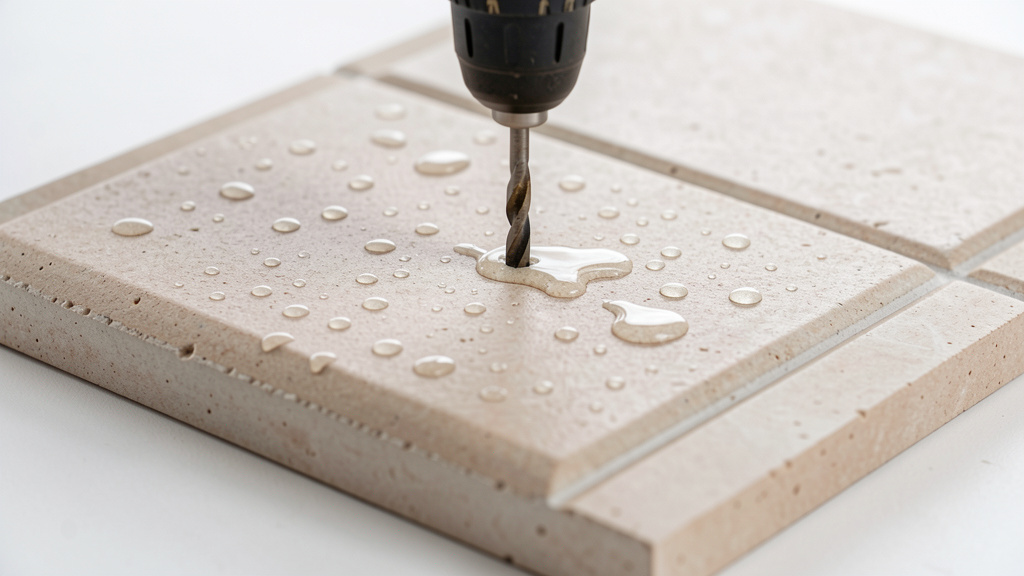
Your Step-by-Step Framework for Flawless Holes in Ceramic, Porcelain, Glass, and Natural Stone—Grounded in Material Science and Practical Technique
Drilling into tile sends a wave of anxiety through even experienced DIYers. That sharp crack followed by the sinking realization of a ruined backsplash or shower wall is a universal fear. Yet flawless tile drilling isn’t magic—it’s method. This guide transforms uncertainty into confidence by revealing the precise sequence of preparation, tool selection, and technique that prevents cracks across every tile type. You’ll learn why standard drilling fails on glazed surfaces, how to match bits to material properties, and the subtle pressure adjustments that make or break success—turning a high-stakes task into a predictable, repeatable process.
Introduction: Why Tile Drilling Fails (And How to Prevent It)
Tile cracking during drilling stems from fundamental mismatches between technique and material properties. Glazed ceramic and porcelain tiles possess a hard, brittle surface layer fused to a slightly more flexible body. When a drill bit impacts this surface without proper preparation, stress concentrates at the point of contact, creating micro-fractures that propagate instantly—a phenomenon consistent with principles of brittle material behavior. Natural stone tiles like marble or travertine contain inherent veins and fissures that act as natural fracture pathways under uneven pressure. Glass tiles, while visually stunning, demand exceptional precision due to their homogeneous yet fragile structure.
Understanding these mechanisms is the first step toward prevention. Common challenges in DIY tile drilling often stem from three areas: incorrect bit selection for the specific tile surface, improper speed control generating excess heat or vibration, and inadequate stabilization allowing bit slippage. This guide provides a systematic framework aligned with established material science principles and widely adopted professional practices. By aligning your approach with the physical properties of tile—not against them—you shift from hoping for success to engineering it. Whether mounting a towel bar in a porcelain shower, installing a soap dispenser in glass mosaic tile, or anchoring shelving through natural stone, the core principles remain consistent: respect the material, prepare meticulously, and execute with controlled precision.
The Precision Drilling Framework: Preparation, Execution, Verification
Success in tile drilling hinges on a three-layer framework addressing every variable before the drill touches the surface. This isn’t merely a sequence of steps—it’s a cognitive model reframing drilling from a mechanical action into a controlled material interaction. Each layer builds upon the previous one, reducing uncertainty and creating reliable outcomes. Thorough preparation significantly reduces failure risk, as each layer addresses critical factors that, if overlooked, can compromise results.
Layer 1: Material Intelligence & Site Preparation (The Foundation)
Before selecting tools, diagnose the tile’s identity and environment. This phase prevents the majority of drilling failures by ensuring your technique matches the material’s physical reality.
Step 1: Identify Your Tile Type with Certainty
Tile isn’t tile. Misidentification is a frequent root cause of drilling difficulties. Use this diagnostic protocol:
- Visual Inspection: Examine the tile edge (if accessible behind an outlet cover or at a grout line).
- Ceramic: Typically shows a reddish-brown or white bisque (body) beneath a thinner glazed surface. Glaze may feel slightly textured.
- Porcelain: Dense, uniform color throughout the body (often gray, white, or beige). Glaze is glass-like and extremely smooth.
- Glass: Translucent or transparent. May have a metallic backing (mirror tile) or embedded patterns. Edges feel sharp and cool.
- Natural Stone (Marble, Travertine, Slate): Visible crystalline structure, color variations, veins, or pits. Travertine has characteristic honeycomb voids; slate shows layered cleavage.
-
Mosaic Sheets: Confirm substrate material—glass mosaics on mesh backing require different handling than ceramic mosaics.
-
The Magnet Test (Supplemental Check): Run a small magnet along the tile surface. Some porcelain formulations contain trace iron oxide and may show slight attraction. Important: This is not a definitive test—many porcelains show no reaction. Use only as a secondary indicator alongside visual analysis.
-
Manufacturer Documentation: Check original packaging, invoices, or contact the supplier. Many tiles have model numbers etched on the back. Searching online for “[Brand] [Model Number] specifications” often reveals critical details like composition and surface treatment.
Why this matters: Porcelain’s density requires carbide-tipped or diamond bits; standard masonry bits may shatter its surface. Glass demands specialized spear-point bits. Natural stone veins require drilling across fractures, not parallel to them. Confident identification guides every subsequent decision.
Step 2: Map Hidden Hazards Beneath the Surface
Tiles conceal critical infrastructure. Drilling blindly risks damage:
- Electrical Wiring: Use a non-contact voltage tester before marking your hole. Sweep slowly around your intended drill point. For added safety, turn off the circuit breaker serving that wall section.
- Plumbing Pipes: Listen for water flow. Tap the wall—hollow sounds suggest cavities; solid thuds may indicate pipes or blocking. In wet areas, assume pipes run vertically near fixtures.
- Structural Elements: Locate studs using a magnetic or electronic stud finder. Insight: Drilling into a stud behind tile requires appropriate anchors (toggle bolts vs. plastic sleeves) but doesn’t inherently increase crack risk if the tile is well-supported. Drilling between studs into hollow wall requires precise hole sizing for anchors to grip effectively.
- Tile Adhesion Quality: Press firmly around your drill point. Spongy movement suggests poor mortar adhesion—a significant crack risk. If detected, reinforce from behind if possible, or select an alternate location. Avoid drilling into loose tile.
Step 3: Create a Non-Slip Drilling Platform
Slippage initiates cracks. Eliminate it completely:
- Masking Tape Crosshatch: Apply two layers of high-adhesion painter’s tape in a crisscross pattern over the drill point. This provides initial bite for the bit tip. Refinement: Score a tiny “X” through the tape at the exact center with a utility knife—this creates a micro-groove for alignment without compromising tape integrity.
- Alternative: Sandpaper Anchor: For extremely smooth surfaces (polished porcelain, glass), temporarily adhere a 1-inch square of 80-grit sandpaper over the drill point using removable poster tack. Remove carefully after drilling.
- Stabilization Jig (For Critical Placements): Clamp a small block of scrap wood with a pre-drilled pilot hole aligned to your mark. The wood guides the bit vertically and absorbs initial vibration. Essential for drilling near tile edges (<1 inch).
Common Preparation Pitfalls to Avoid:
– Skipping hazard mapping “because it’s just a small hole”
– Using duct tape instead of painter’s tape (residue risk, inconsistent adhesion)
– Assuming all white tiles are ceramic (many modern tiles are dense porcelain)
– Drilling centered on grout lines (grout lacks structural integrity for anchors)
Layer 2: Tool Selection & Calibration (The Precision Engine)
Your tools extend your technique. Mismatched equipment increases failure risk regardless of skill. This layer transforms generic advice into actionable, context-specific selection.
Drill Bit Deep Dive: Matching Geometry to Material Properties
Not all “tile bits” perform equally. Bit geometry determines how force distributes across the tile surface.
| Bit Type | Best For | Critical Features | Speed Setting (RPM) | Key Technique Tip |
|---|---|---|---|---|
| Carbide-Tipped Spear Point | Glazed Ceramic, Porcelain | Sharp spear tip centers instantly; carbide withstands abrasion | 200-400 RPM | Start vertically; ensure hammer function is disengaged |
| Diamond Hole Saw | Large holes (>1/2″), Glass, Stone | Diamond grit cuts via abrasion | 100-300 RPM + water cooling | Use pilot drill; maintain light, consistent pressure |
| Diamond Core Bit (with pilot) | Glass tiles, Marble, Travertine | Hollow core removes minimal material | 150-250 RPM + water | Drill halfway, reverse briefly to clear debris |
| Masonry Bit (Carbide Tip) | Un-glazed Quarry Tile, Terracotta | Aggressive flute design | 300-500 RPM | Confirm tile is unglazed before use |
| Standard Twist Bit | Not recommended for glazed tile | Sharp point concentrates stress | N/A | High risk of cracking or slippage |
Why spear point bits excel for standard holes: The spear tip creates a micro-indentation on contact, channeling rotational force downward rather than laterally. This prevents the bit from skating across the glaze—a common crack initiator. Carbide tips maintain effectiveness against hard glazes where steel bits dull quickly, potentially causing heat buildup.
Diamond bits explained: Diamond-coated bits abrade the surface through microscopic grinding. This generates heat, making water cooling essential for holes over 1/4 inch. Dry drilling glass or stone with diamond bits risks thermal stress cracks. A spray bottle for intermittent misting is highly recommended.
Drill Selection: Control Over Power
– Cordless Drill/Driver: Ideal for most tile drilling. Set to lowest torque setting and drill mode (NOT hammer mode). Choose a model with variable speed trigger control.
– Corded Drill: Acceptable if it offers smooth variable speed control (0-500 RPM range). Avoid models with only “on/off” triggers.
– Rotary Tool (Dremel): Suitable only for very small holes (<3/16″) in glass or ceramic with diamond points. Requires exceptional steadiness; not recommended for beginners.
– Hammer Drill: Not suitable for tile drilling. The percussive action transmits shockwaves through brittle tile. Always verify your drill is in pure rotation mode—test on scrap wood first.
Essential Accessories Checklist
– Spray Bottle with Water: Critical for cooling diamond bits and suppressing dust.
– Center Punch (Optional): Creates a precise dimple for bit alignment on hard surfaces. Use lightly—excessive force can chip glaze.
– Depth Stop: Attach to drill chuck or mark bit shaft with tape to control drilling depth.
– Vacuum Attachment: Small shop vac with brush nozzle captures dust during drilling.
– Safety Gear: ANSI-approved safety glasses, N95 respirator for dust, cut-resistant gloves.
Tool Calibration Protocol:
1. Install bit securely in chuck; tighten firmly.
2. Set drill to lowest speed setting. Test trigger sensitivity on scrap wood—ensure smooth start.
3. Confirm hammer function is disengaged (consult drill manual; listen for absence of clicking).
4. Attach depth stop if drilling multiple holes.
5. Fill spray bottle; position within easy reach.
Layer 3: Execution Protocol & Verification (The Controlled Interaction)
Execution is about managing energy transfer—not applying force. Follow this sequence deliberately.
Step 1: Mark and Anchor
– Use a fine-tip permanent marker for the center point.
– Apply your chosen stabilization method (tape crosshatch or sandpaper anchor).
– Position drill bit vertically. Use a small level against the drill body to confirm alignment. Critical: Even slight angles increase lateral stress significantly.
Step 2: The Initiation Sequence (Most Critical Phase)
– Place bit tip precisely on mark. Apply minimal initial pressure.
– Start drill at lowest possible speed (barely engaging trigger).
– Maintain position for 3-5 seconds until the bit creates a visible dimple. You may feel slight resistance.
– Why this works: Low RPM allows the spear tip to engage the surface gradually without generating heat or vibration. Rushing this phase invites slippage.
Step 3: Progressive Penetration
– Once bit is seated (after ~1/16 inch depth), gradually increase speed to medium-low (300-400 RPM for carbide bits).
– Apply light, consistent pressure—let the bit do the work.
– For holes deeper than 1/4 inch: Briefly reverse drill direction every 10 seconds to clear debris. Pause to mist with water if using diamond bits.
– Listen and feel: A steady “hissing” sound indicates proper cutting. Chattering or vibration means STOP—reassess alignment or bit condition.
– At 1/8 inch depth, carefully remove tape/sandpaper anchor. Continue drilling smoothly.
Step 4: Breakthrough Management
– As the bit exits the tile backside (sudden reduction in resistance), immediately reduce pressure.
– Continue drilling slowly for 1-2 seconds to cleanly sever the last material.
– Why this prevents “blowout”: Excess pressure at breakthrough can cause the bit to catch and tear the tile underside, creating radiating cracks. Light pressure allows clean separation.
Step 5: Post-Drill Verification
– Inspect hole edges under bright light. Run a fingernail gently around the perimeter—should feel smooth.
– Check tile surface around hole for hairline cracks (use magnification if needed).
– Clean hole with compressed air or vacuum before inserting anchor.
– If minor cracks appear:
1. Stop immediately.
2. Clean area thoroughly.
3. Fill crack with clear epoxy resin designed for ceramics.
4. Allow full cure per product instructions.
5. Re-drill slowly through cured epoxy using the same bit.
Note: This is a salvage technique. Prevention through proper technique remains ideal.
The Fundamental Principle: Tile drilling succeeds through controlled energy transfer. Every action—from tape application to pressure modulation—converts rotational energy into precise material removal while minimizing lateral stress, heat buildup, and vibration. Master this principle, and you master the outcome.
Tile-Specific Drilling Protocols: Adapting the Framework
While the Precision Drilling Framework applies universally, material nuances demand tailored adjustments. This section provides explicit protocols for common scenarios.
Drilling Porcelain Tile: Conquering Extreme Density
Porcelain’s low porosity and high density present unique challenges. Standard bits may dull quickly, generating heat that risks cracking.
Protocol Adjustments:
– Bit Selection: Carbide-tipped spear point bits specifically rated for porcelain. Diamond core bits for holes >3/8 inch.
– Speed Control: Maintain 200-300 RPM. Higher speeds may cause bit glazing (smoothing from heat) and slippage.
– Cooling: Mist water intermittently during drilling. Porcelain conducts heat poorly; localized overheating creates stress points. Keep a damp sponge nearby.
– Pressure Technique: Consider “pulse drilling”—light pressure for 5 seconds, brief release to allow heat dissipation. Repeat.
– Edge Drilling Warning: Avoid drilling within 1/2 inch of tile edges. Material lacks support at boundaries; stress concentrates easily. If mounting requires edge proximity, explore adhesive anchors.
– Practical Example: Installing a grab bar in a porcelain shower wall. Confirm hole locations are centered on studs and at least 1 inch from tile edges. Use appropriate carbide bit. Drill slowly with intermittent water misting. Insert corrosion-resistant anchors rated for wet areas. Test anchor security before final installation.
Drilling Glass Tile: Eliminating Shatter Risk
Glass tile’s homogeneity means cracks propagate rapidly. Success requires eliminating vibration and thermal shock.
Protocol Adjustments:
– Bit Selection: Diamond-tipped spear point bits only. Carbide bits risk shattering glass. For mosaic sheets, drill through individual tiles—not the mesh backing.
– Stabilization Upgrade: Use the wood block jig method. Clamp a scrap wood block with a pre-drilled guide hole aligned to your mark. This eliminates hand tremor.
– Speed & Pressure: 100-150 RPM maximum. Pressure should be barely perceptible—like resting a pencil on the surface.
– Cooling Protocol: If feasible, create a small dam with plumber’s putty around the drill area and fill with water. Otherwise, have an assistant drip water continuously onto the bit.
– Breakthrough Caution: Glass is thinnest at the exit point. Reduce speed and pressure significantly as the bit emerges.
– Critical Exception: Mirrored glass tile involves complex stress dynamics from the metallic backing. Professional assistance is strongly recommended.
– Illustrative Contrast: Attempting glass tile drilling with a standard carbide bit at high speed often results in radial cracks. This outcome is typically preventable with correct bit selection, low speed, and stabilization.
Drilling Natural Stone Tile: Navigating Veins and Fissures
Marble, travertine, slate, and limestone contain natural variations. Drilling parallel to a vein significantly increases crack risk.
Protocol Adjustments:
– Pre-Drill Vein Mapping: Examine tile under raking light (shine flashlight sideways). Trace visible veins/fissures lightly with a dry-erase marker. Plan hole location to cross veins perpendicularly.
– Bit Selection: Diamond core bits are preferred. For small holes (<1/4″), use carbide spear bits with caution.
– Speed & Cooling: 150-250 RPM with intermittent water cooling. Stone dust is abrasive; clearing debris prevents bit binding.
– Travertine-Specific Protocol: Fill visible voids near the drill site with plumber’s putty before drilling. This prevents bit catching. Remove putty after drilling.
– Slate Cleavage Warning: Avoid drilling perpendicular to slate’s natural cleavage planes (visible layered structure). Drill parallel to layers where possible.
– Marble Sensitivity: Use pure water for cooling. Avoid acidic solutions which can etch marble surfaces.
– Real-World Application: Installing a toilet paper holder on travertine wall tile. Select a dense area between major voids. Fill minor pits near the drill point with putty. Use an appropriately sized diamond core bit with pilot. Drill slowly with water misting. Clean hole thoroughly before inserting a non-staining anchor.
Drilling Ceramic Tile: The “Standard” Case with Nuances
While ceramic is generally more forgiving than porcelain, glazed surfaces still require care. Common pitfalls include underestimating glaze hardness and drilling over poorly adhered areas.
Protocol Adjustments:
– Glaze Hardness Check: Scratch an inconspicuous area (inside cabinet) with a carbide scribe. If it marks easily, standard carbide bits may suffice. If resistant, treat as porcelain.
– Hollow Spot Detection: Tap tile firmly. A hollow “drum-like” sound suggests poor mortar adhesion beneath. Avoid drilling here. Select an alternate location or reinforce from behind.
– Speed Range: 300-400 RPM is often suitable for glazed ceramics. Reduce speed if the bit chatters.
– Grout Line Avoidance: Keep holes at least 1/4 inch away from grout lines. Grout lacks structural integrity for reliable anchoring.
– Practical Consideration: For non-critical, low-stress applications (e.g., temporary hook), a sharp masonry bit might work on softer ceramic with extreme care. However, carbide spear bits offer greater reliability for minimal additional cost.
Advanced Scenarios: Angled Holes, Large Openings, and Problem Solving
Real-world projects often involve complex challenges. These protocols address nuanced situations.
Drilling Angled Holes (e.g., for Shower Caddies)
Mounting hardware sometimes requires non-perpendicular angles, increasing crack risk due to uneven force distribution.
Angled Drilling Protocol:
1. Create a custom angle guide: Cut a wood block to your exact required angle. Clamp securely to tile.
2. Pre-drill a guide hole through the wood block at the target angle.
3. Insert drill bit through the guide hole. The wood stabilizes the bit during initiation.
4. Drill at lowest possible speed (150-200 RPM) with minimal pressure.
5. Critical: Use a bit slightly smaller than your anchor. Angled holes experience higher shear stress; precise sizing supports anchor integrity.
6. Verify angle with a protractor before drilling.
Why this works: The wood block absorbs lateral forces that would otherwise transfer directly to the tile surface. Without this guide, bit slippage is highly probable on angled approaches.
Creating Large Openings (Electrical Boxes, Pipes)
Cutting large holes requires shifting from drilling to controlled grinding.
Diamond Hole Saw Method:
– Select hole saw size matching your requirement (e.g., 2-1/8″ for standard electrical box).
– Attach pilot drill bit to hole saw arbor.
– Mark circle precisely using a compass cutter or template.
– Apply tape crosshatch over the entire circle area.
– Start with pilot hole at center using standard spear bit protocol.
– Once pilot hole is through, attach hole saw.
– Drill at 100-200 RPM with intermittent water cooling. Spray bottle in one hand, drill in the other.
– Apply light, even pressure. Let diamond grit do the work.
– Lift hole saw slightly every 15 seconds to clear slurry.
– Complete the circle patiently. Do not force.
– Clean edges with a diamond file if needed.
Alternative: Rotary Tool with Diamond Wheel (For Irregular Shapes):
– Trace outline precisely with marker.
– Use variable-speed rotary tool at medium speed.
– Maintain continuous water drip onto the cutting area.
– Make multiple light passes rather than one deep cut.
– Wear full-face shield—flying debris risk is higher.
– Safety Note: This method generates significant dust. Use with robust dust extraction or outdoors. Not recommended for beginners.
Salvaging a Cracked Tile: Damage Control Protocol
Despite precautions, issues can occur. Immediate, calm action may prevent total replacement.
Micro-Crack Containment (Hairline cracks near hole):
1. Stop drilling immediately.
2. Clean area thoroughly with isopropyl alcohol.
3. Inject clear, flexible epoxy into the crack using a syringe tip.
4. Wipe excess carefully. Cure per product instructions.
5. Once cured, carefully re-drill through the epoxy-filled area using the same bit at lowest speed. The epoxy stabilizes the fracture zone.
6. Proceed with anchor installation.
Significant Crack Protocol (Cracks extending noticeably):
– Do not attempt repair. Continuing risks further damage.
– Remove damaged tile carefully:
a. Cut grout around tile with oscillating tool and grout blade.
b. Place masking tape over tile surface to contain fragments.
c. Drill multiple small holes (1/8″) across the tile surface to weaken structure.
d. Gently tap center with hammer and chisel to break into pieces.
e. Remove fragments, clean substrate thoroughly.
– Install replacement tile. Helpful Practice: Retain extra tiles from original installation for repairs. Color lots vary.
– Reflective Step: Consider what may have contributed—bit condition, speed, tile adhesion? Documenting insights supports future success.
Safety First: Protecting Yourself and Your Space
Tile drilling involves specific hazards. Proactive safety measures prevent injury and property damage.
Respiratory Protection
Porcelain, ceramic, and stone tiles can produce respirable crystalline silica dust. Safety guidelines emphasize respiratory protection during drilling activities.
– Minimum: N95 respirator mask (properly fitted).
– Recommended: P100-rated half-face respirator with appropriate filters.
– Best Practice: Use a drill with a dedicated dust extraction attachment. Creates negative pressure at the drill point, capturing most dust at the source.
– Important Reminder: Silica particles remain airborne and pose health risks. Ventilation alone is insufficient protection. Prioritize respiratory safety.
Eye and Hand Protection
– Safety Glasses: ANSI Z87.1-rated impact-resistant glasses. Tile fragments can eject during breakthrough.
– Cut-Resistant Gloves: Protect against sharp tile edges during handling and cleanup. Avoid bulky gloves while operating the drill—wear only during tile removal or debris handling.
– Hearing Protection: Generally not required for low-RPM tile drilling, but use if drilling multiple holes or in echo-prone spaces.
Workspace Preparation
– Cover surrounding areas with plastic sheeting taped securely. Tile dust is extremely fine.
– Place drop cloth on floor extending several feet from the work area.
– Remove nearby objects (toiletries, decor) that could be damaged by dust.
– Ensure adequate lighting—use a headlamp or clamp light to eliminate shadows at the drill point.
– Keep children and pets out of the work area entirely.
Electrical Safety
– Verify circuit is OFF at the breaker panel using a non-contact voltage tester at the drill location. Test before and after turning off the breaker.
– Use GFCI-protected outlets for corded drills in wet areas (bathrooms, kitchens).
– Inspect drill cord for damage before use.
– Keep cords clear of the drill path to prevent tripping.
Your Questions, Answered
Q: Can I use a regular metal drill bit on tile?
A: Standard high-speed steel (HSS) twist bits are not designed for hard, brittle surfaces like glazed tile. Their geometry concentrates force, significantly increasing the risk of cracking or slippage. Carbide-tipped or diamond bits are engineered to distribute force appropriately for these materials. Industry testing indicates standard bits are highly likely to cause damage on glazed surfaces.
Q: My drill doesn’t have a low-speed setting. Can I still drill tile safely?
A: Proceed with caution. Use the variable speed trigger to maintain minimal rotation—barely depressing the trigger. Practice extensively on scrap tile first to develop trigger control. Renting a drill with smooth variable speed control is a prudent investment that prevents costly tile damage. If attempting with limited control, the wood block jig method provides maximum stabilization, and drilling in very short bursts (2 seconds on, 5 seconds off) may help.
Q: Do I need to use water when drilling with a carbide spear bit?
A: For small holes (<1/4 inch) in ceramic, water is optional but beneficial for cooling and dust control. For larger holes, porcelain, stone, or glass, intermittent water application is strongly recommended. Heat buildup dulls bits and creates thermal stress in the tile. A spray bottle used periodically keeps the bit cooler and suppresses dust. For diamond bits, consistent moisture is essential—dry drilling risks bit damage and tile cracking.
Q: What if my bit gets stuck halfway through the tile?
A: Never force it. Stop drilling immediately. Reverse the drill direction slowly while applying slight outward pressure. If it doesn’t release, stop. Carefully remove the drill. Apply penetrating oil around the bit shaft and let sit briefly. Try reversing again gently. If still stuck, professional assistance may be needed. Prevention is key: clear debris frequently by reversing the bit during drilling.
Q: Can I drill through tile that’s already cracked?
A: Only if the crack is very minor, stabilized with epoxy, and the drill hole is centered well away from the crack path. Drilling near existing cracks often causes propagation. For tiles with visible cracks extending toward your intended drill point, replacement is the safer option. Attempting to drill compromised tile risks further damage.
Q: How do I know when my drill bit is dull?
A: Signs include: noticeably longer drilling time, excessive heat generation (bit becomes hot quickly), visible wear or rounding of the cutting tip, chattering/vibration during drilling, or the bit “polishing” the surface without penetrating. Bits have a limited lifespan, especially in dense materials. When performance declines, replacing the bit is often more efficient than struggling with a worn one.
Q: Is it safer to drill before or after grouting the tile?
A: Always drill after grout is fully cured (typically 72 hours). Drilling before grouting risks: bit catching on uneven tile edges, vibrations loosening adjacent unset tiles, and grout filling your drilled hole. Fully cured grout provides lateral support to tile edges during drilling, reducing crack risk. Ensure grout is completely hardened before proceeding.
Q: Can I use a hammer drill on tile if I turn off the hammer function?
A: Only if you can fully verify the hammer mechanism is disengaged. Many hammer drills have a separate mode switch. Test the drill on scrap wood first—listen and feel for any clicking or percussive sensation. If any hammer action remains, do not use it. Residual vibration can initiate cracks. A standard drill/driver is generally the safer, more predictable choice for tile work.
Q: What anchor should I use after drilling the hole?
A: Anchor selection depends on the load and wall construction:
– Light duty (toothbrush holder, small hook): Plastic sleeve anchors designed for tile applications.
– Medium duty (towel bar, soap dispenser): Hollow-wall anchors like toggle bolts for drywall cavities; molly bolts if hitting a stud.
– Heavy duty (grab bars, shelves): Must anchor into wall studs. Use corrosion-resistant screws long enough to penetrate the stud adequately. Verify stud location before drilling tile.
Critical: Avoid standard plastic anchors in hollow wall behind tile for anything beyond very light loads—they may pull out. When uncertain, select an anchor rated for higher load capacity than needed.
Q: Why does my hole look perfect but the anchor won’t go in?
A: Common causes: 1) Bit wandered slightly, creating a tapered hole. Solution: Gently ream the hole with the bit at low speed without pressure. 2) Tile dust/debris packed tightly in the hole. Solution: Clean thoroughly with compressed air, a vacuum nozzle, or a stiff brush. For deep holes, a pipe cleaner on a toothpick can extract debris. Always test-fit the anchor before final installation.
Q: Can I drill through mosaic tile sheets without damaging surrounding tiles?
A: Yes, with precision. Identify the exact tile to drill. Apply tape anchor only over that single tile. Use a bit size matching your anchor precisely—oversized bits risk cracking adjacent tiles. Drill slowly with minimal pressure. For glass mosaics, the wood block jig method is highly recommended for stability. Work patiently; rushing increases slippage risk onto neighboring tiles. If the mosaic is on mesh backing, ensure the bit penetrates only the target tile.
Q: Does ambient temperature or humidity affect tile drilling?
A: Extreme cold can make some tiles slightly more brittle; very high humidity may affect dust control but doesn’t alter core technique. The most significant environmental factor is workspace ventilation for dust management. Focus on consistent technique—proper bit selection, speed control, and stabilization—regardless of ambient conditions. In poorly ventilated spaces, prioritize dust extraction and respiratory protection.
Conclusion and Next Step
Mastering tile drilling transforms a feared task into an exercise in thoughtful craftsmanship. The Precision Drilling Framework—Material Intelligence, Tool Calibration, and Controlled Execution—provides a reliable system that respects the nature of brittle materials. You now understand the mechanics behind cracking (stress concentration from improper technique) and how to prevent it (controlled energy transfer through appropriate tools and method). Remember the three foundational practices: verify tile type before selecting bits, eliminate slippage with stabilization techniques, and maintain appropriate speed with consistent pressure. These principles apply across ceramic, porcelain, glass, and natural stone.
- Recap the Core Triad:
- Preparation is prevention: Thoroughly diagnose tile type and hidden hazards.
- Tool alignment is essential: Match bit geometry and drill settings precisely to material properties.
-
Execution is energy management: Prioritize control and consistency over speed; let the tool do the work.
-
The 24-Hour Rule: Before drilling your actual project tile, obtain a scrap piece of identical tile (request from supplier or use cutoffs). Practice the entire protocol tomorrow: mark, stabilize, drill at correct speed, verify hole quality. This rehearsal builds muscle memory and confidence, eliminating anxiety during the real task. Note what speed and pressure felt most effective for your specific tile.
-
The Bigger Picture: Tile drilling is one skill within a broader home care ecosystem. Success here builds foundational confidence applicable to backsplash projects, fixture installation, and thoughtful renovations. Each mastered technique expands your capability to maintain and personalize your space with care. Approach future projects with the same systematic mindset: observe carefully, prepare thoroughly, execute deliberately. This mindful approach not only protects your surfaces but deepens your connection to the spaces you inhabit.
Explore Our Complete Tile & Surface Mastery System:
Perfect Grout Color Matching Guide | Tile Repair Toolkit: Fix Chips and Cracks Confidently | Natural Stone Care: Sealing, Cleaning, and Preservation | DIY Backsplash Installation: From Layout to Final Grout | Anchor Selection Guide: Matching Hardware to Surface and Load | Bathroom Project Planning: Realistic Timelines for DIY Success | Wall Surface Identification: Know Your Substrate Before You Drill