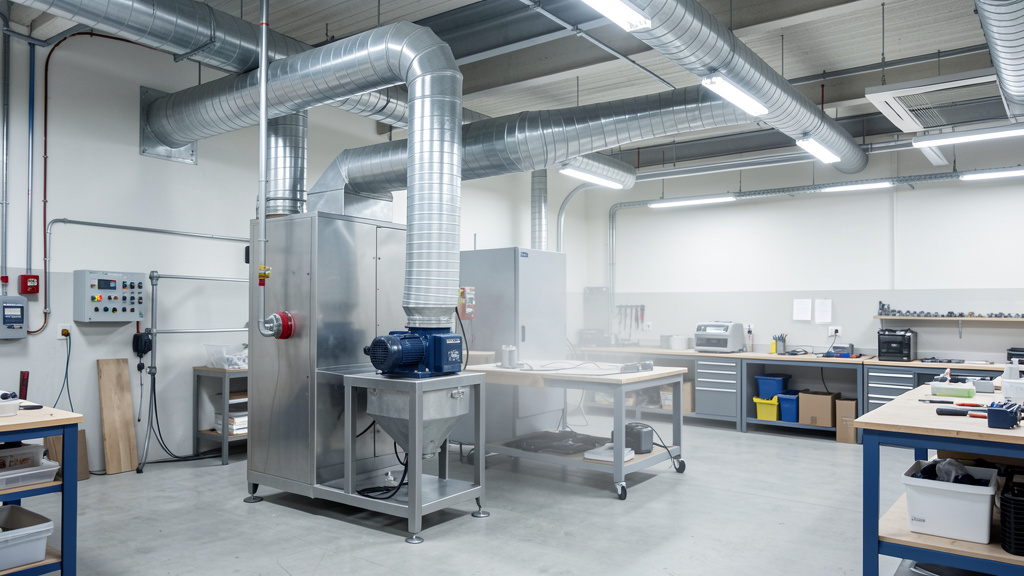
Reduce respiratory risks in your workshop with a systematic approach. This guide details a layered strategy to effectively manage dust at the source, improve air quality, and support the long-term health of your respiratory system through evidence-based practices.
Fine wood dust swirling in a sunbeam isn’t picturesque—it’s a visible indicator of airborne particles requiring attention. Microscopic fragments small enough to bypass natural respiratory defenses can embed deep in lung tissue, potentially contributing to inflammation or long-term respiratory changes. Historical workshop practices often underestimated these risks. Contemporary understanding, informed by industrial hygiene research and occupational health guidelines, emphasizes proactive air quality management. This guide synthesizes established engineering principles, ventilation science, and practical workshop considerations into an adaptable framework. Whether your workspace occupies a garage corner or a dedicated 800-square-foot area, you’ll find actionable strategies to design, implement, and maintain a dust management approach prioritizing respiratory wellness without compromising practicality. Cleaner air supports clearer focus and sustained enjoyment of your craft.
Introduction: Understanding Airborne Particles in Your Workspace
Walk into an active woodworking space, and visible sawdust on surfaces is apparent. What remains unseen are particles smaller than 10 microns (PM10), particularly those under 2.5 microns (PM2.5). For perspective, a human hair measures approximately 70 microns in diameter. These fine particles remain suspended in air long after tools are powered down, circulating throughout your workspace. When inhaled, PM2.5 can reach the alveoli—delicate air sacs facilitating oxygen exchange—where they may trigger physiological responses. Research cited by the National Institute for Occupational Safety and Health (NIOSH) notes that prolonged exposure to certain wood dusts correlates with respiratory sensitization. The International Agency for Research on Cancer (IARC) classifies some wood dusts as Group 1 carcinogens, with documented associations involving specific hardwoods like oak, beech, and mahogany. Softwoods such as pine release volatile compounds that may irritate airways in sensitive individuals. Critically, visible cleanliness does not equate to safe air quality. A workspace appearing tidy after sanding may retain elevated PM2.5 concentrations for an extended period. Occupational safety frameworks establish exposure thresholds—such as OSHA’s permissible exposure limit (PEL) of 5 mg/m³ for hardwood dust averaged over eight hours—to guide risk-aware practices.
This perspective stems from physics and physiology, not alarm. Dust generation follows predictable patterns tied to tool mechanics. A table saw’s cutting action produces larger chips alongside fine particulates from friction and tear-out. A random orbital sander generates a high proportion of respirable particles due to its abrasive motion. Understanding particle behavior forms the foundation for effective control. You cannot manage what you do not measure; you cannot protect against what you cannot characterize. This guide shifts focus from reactive cleanup to proactive airborne contaminant management. We move beyond fragmented suggestions toward a cohesive, layered strategy informed by industrial hygiene practice. Your respiratory wellness is the central consideration around which thoughtful system design unfolds. Let’s explore that framework together.
The Health-First Framework: A Three-Layer Defense Strategy
Effective dust management relies not on a single device, but on an integrated system where layers complement one another. Relying solely on one method—like personal respiratory protection or ambient filtration—creates vulnerability. True resilience emerges through layered defense, a concept applied across industrial hygiene contexts and adapted here for workshop realities. This framework consists of three interdependent layers:
- Layer 1: Source Capture – Intercept particles at the point of generation, before they disperse into your breathing zone. This forms the most impactful foundation.
- Layer 2: Ambient Filtration – Continuously clean air throughout your workspace, addressing particles that escape Layer 1.
- Layer 3: Personal Protection – Provide respiratory safeguards during specific high-exposure activities or system maintenance, serving as a critical supplement—not a standalone solution.
Omitting any layer increases potential exposure. Source capture alone may miss fugitive dust from sanding or material handling. Ambient filtration alone may struggle during high-generation tasks. Personal protection alone depends entirely on consistent, correct usage—a variable factor. Together, they create redundancy: if one layer experiences reduced effectiveness, others provide continued support. This approach mirrors strategies used in professional fabrication environments, thoughtfully scaled for home workshop constraints like budget, space, and tool diversity. Let’s examine each layer with practical detail.
Layer 1: Source Capture – Containing Particles at the Origin
Source capture aims to contain dust within a tool’s shroud or hood and transport it directly to a collection point before particles become widely airborne. This layer targets the initial release phase of dust generation—the moment when fine particles are most concentrated and manageable. Effective implementation significantly reduces the burden on subsequent layers, enhancing overall system efficiency and cost-effectiveness.
Why Source Capture Forms the Foundation:
Without capture, fine particles disperse rapidly due to tool motion and air currents. Physics explains this: smaller particles experience Brownian motion (random movement from air molecule collisions), keeping them suspended longer. Even brief sanding without capture can elevate PM2.5 levels across a modest workspace. Source capture leverages airflow dynamics: positioning an intake near the generation point with sufficient velocity creates a “capture zone” that draws particles away from the breathing area. Industry references (such as ANSI/ASHRAE standards) suggest minimum capture velocities: approximately 100 feet per minute (FPM) for light tasks like sanding, 150 FPM for routing, and 200+ FPM for high-generation tools like thickness planers. Achieving this requires matching airflow volume (CFM—cubic feet per minute) to tool requirements while minimizing resistance in the duct path.
Essential Components for Effective Source Capture:
-
Tool-Specific Hoods and Sealing: Dust ports vary widely in effectiveness. A table saw benefits from a zero-clearance throat plate combined with a well-sealed blade guard featuring a dedicated port (typically 4″ diameter). Thickness planers require hoods enclosing infeed and outfeed zones where chips eject forcefully. Router tables need fences with ports aligned to bit height. Action Step: Audit each tool. Does the port seal tightly against the tool body? Gaps allow air leakage, reducing capture velocity. Research aftermarket shrouds designed for your specific tool model or consider custom solutions using rigid materials. A secure seal matters more than port size alone.
-
Airflow Requirements (CFM) in Context: CFM represents airflow volume, but its value depends on delivery at the tool port. Friction loss in hoses and ducts reduces effective CFM. A common scenario: a dust collector rated for “1000 CFM” may deliver only 300–400 CFM at the tool due to undersized hoses, excessive bends, or poor sealing. The table below offers practical minimum CFM targets at the tool port based on common workshop tools and industry references:
Tool Type Minimum CFM at Port Key Considerations Table Saw (with sealed guard) 350–450 Guard seal integrity is critical; open-top designs may require higher CFM Thickness Planer 600–900 High chip volume demands robust hood sealing and short hose runs Jointer (6–8″) 300–400 Focus sealing on the outfeed hood area Belt Sander (stationary) 400–550 Hood should surround the entire sanding zone Random Orbital Sander 100–150 Requires dedicated micro-hose adapter; per-pad requirement Router Table 250–350 Fence ports must align vertically with bit cutting height Miter Saw 300–400 Full lower hood enclosure significantly improves capture Bandsaw (14″+) 350–450 Blade guide area is the primary dust source CNC Router 800–1200+ Full enclosure is strongly recommended; high CFM essential Note: These represent baseline targets. Higher CFM provides a performance margin. Prioritize sealing and duct efficiency over raw collector ratings.
-
Hose and Duct Sizing Principles: Airflow resistance increases with smaller diameters, sharp bends, and flexible hose length. Visualize water flow: kinking a hose restricts movement. Similarly, air requires smooth, direct paths. Practical guidelines:
- Main Trunk Lines (central systems): 6″ diameter minimizes friction loss over distance.
- Branch Lines to Tools: 4″ is the practical minimum; 5″ preferred for high-CFM tools.
- Flexible Hose at Tool: Match the tool port size (typically 2.5″ or 4″). Avoid unnecessary diameter reductions.
- Bends: Use two 45-degree elbows with a short straight section between them instead of a single 90-degree elbow. Each sharp bend can significantly reduce effective airflow. Smooth, gradual transitions preserve velocity.
-
Blast Gates: Directing Airflow Intentionally: Blast gates are valves that seal unused branches in a central system. Air follows the path of least resistance; open ports on inactive tools divide airflow, starving the active tool of needed CFM. Install blast gates at each tool connection point. Operate them deliberately: open only the gate for the tool in use. For single-tool stations, a simple manual gate suffices. Automated gates (triggered by tool power) offer convenience in complex setups but require careful electrical integration.
-
Shop Vac vs. Dust Collector: Understanding Roles: Confusion here is common. These tools serve distinct purposes:
- Shop Vac (Wet/Dry Vac): Generates high static pressure (suction force) but lower airflow volume. Ideal for low-CFM, high-static tools: random orbital sanders (with micro-hose adapter), biscuit joiners, handheld routers, and cleanup. Use models verified to include HEPA-level filtration on both intake and exhaust paths to prevent recirculating fine particles. Unfiltered shop vacs can worsen air quality.
- Dust Collector (DC): Delivers high airflow volume (CFM) with moderate static pressure. Designed for stationary tools with larger ports (4″+) generating significant chip volume: table saws, planers, jointers. Requires appropriately sized hoses and benefits from cyclone separators. A 1.5–2 HP unit suits many serious hobbyist shops; larger shops may require 3+ HP.
- Integrated Approach (Recommended): Pair a central dust collector (2–3 HP) for stationary tools with a dedicated HEPA-filtered shop vac (featuring auto-start) for sanders and handheld tools. This leverages the strength of each system type.
Addressing Common Source Capture Challenges:
* Challenge: “Dust accumulates around my table saw despite running the collector.”
Considerations: Likely insufficient airflow at the blade due to undersized hose (e.g., 2.5″ instead of 4″), excessive bends, or gaps in the blade guard seal.
Actions: Upgrade to 4″ smooth-bore hose for the final connection. Verify guard seal integrity against the workpiece. Ensure the blast gate is fully open. If possible, measure airflow near the port with an anemometer; visible dust escaping the shroud during operation indicates inadequate capture velocity.
* Challenge: “Fine dust coats surfaces after using a random orbital sander.”
Considerations: Standard shop vac hoses lack the static pressure needed at the sanding pad.
Actions: Use a micro-hose adapter kit designed for your sander model. Confirm the vacuum includes verified HEPA filtration. Begin vacuum operation before contacting the workpiece and continue briefly after lifting the sander.
* Challenge: “The hose clogs frequently when using the thickness planer.”
Considerations: Chip volume exceeds the hose’s transport capacity or airflow velocity is too low to keep chips moving.
Actions: Use the shortest, straightest 4″ (or larger) hose possible. Verify the collector delivers adequate CFM at the planer port. Consider adding a cyclone separator to handle chip volume before it reaches the main filter.
Core Insight: Source capture effectiveness depends on achieving sufficient air velocity precisely where dust is generated—not merely the motor’s horsepower rating. Seal gaps, minimize duct resistance, optimize airflow path, and verify performance through observation. If dust visibly escapes the tool’s shroud during operation, the capture velocity is likely insufficient. Pause, adjust, and re-evaluate.
Layer 2: Ambient Filtration – Managing Residual Airborne Particles
Even well-implemented source capture cannot capture 100% of particles. Activities like hand sanding, material handling, tool changes, and minor system leaks release fine particles into the general workspace air. Layer 2 addresses this residual contamination through continuous air recirculation and filtration. Its purpose is to maintain lower background particle concentrations during work and accelerate air clearance after tools are powered down. Think of it as supporting your workspace’s air quality baseline.
Why Ambient Filtration Complements Source Capture:
Particle counter measurements in workshops show PM2.5 levels can remain elevated for a considerable time after dusty tasks conclude without active filtration. During this period, inhalation exposure continues. Ambient filtration units (AFUs), sometimes called air scrubbers or air cleaners, mitigate this. They do not replace source capture—they enhance the system’s overall resilience. For tasks inherently challenging to capture at source (hand sanding, assembly, finishing), Layer 2 becomes especially valuable. Industrial ventilation principles recognize dilution ventilation (replacing contaminated air) as a supplementary control method. In home workshops without dedicated makeup air systems, high-efficiency recirculating filtration offers a practical implementation of this concept.
Selecting and Sizing Ambient Filtration Thoughtfully:
-
Air Changes Per Hour (ACH): A Practical Metric: Move beyond CFM alone. Calculate required air changes per hour. For workshops with regular dust-generating activities, industrial hygiene references often suggest targeting 8–10 ACH for meaningful contaminant reduction.
- Calculation: Workshop Volume (Length × Width × Height in feet) ÷ Unit CFM = Minutes per Air Change.
- Target: Achieve one full air change every 6–7.5 minutes (yielding 8–10 ACH).
- Example: A 20′ × 20′ × 10′ workshop = 4,000 cubic feet. For 10 ACH: 4,000 cu ft ÷ 6 minutes ≈ 667 CFM minimum unit requirement. Selecting a unit rated at 750+ CFM provides a useful performance margin. Undersizing is a frequent oversight—prioritize adequate capacity.
-
Filter Efficiency: Matching Media to Need:
Filters are rated by efficiency at capturing specific particle sizes. Standard furnace filters (MERV 8) offer minimal protection against fine wood dust. Consider:- MERV 15–16: Captures 90–95% of particles in the 0.3–1.0 micron range. A strong choice for most home workshops, balancing performance, airflow resistance, and cost. Filters are generally more affordable and place less demand on the fan motor.
- True HEPA (H13 standard): Captures 99.95% of particles ≥0.3 microns. Recommended when working with woods known to cause sensitization (e.g., cocobolo, rosewood, western red cedar), for individuals with respiratory sensitivities, or when maximum particle removal is prioritized. Requires a fan motor designed for higher resistance; units typically cost more. Critical: True HEPA requires a sealed housing—gaps around the filter allow unfiltered air bypass.
- Avoid “HEPA-Type” or “HEPA-Like”: These terms lack standardized testing. Seek certified MERV ratings or explicit “True HEPA” (H13) specifications.
-
Strategic Unit Placement:
Placement influences effectiveness:- Central Location: If feasible, position to maximize air circulation across the workspace.
- Clearance: Maintain 1–2 feet of space around the unit, especially near intake vents, to prevent obstruction.
- Height Consideration: Fine dust (PM2.5) remains suspended; it does not settle rapidly like chips. Placing the intake at typical breathing height (3–5 feet) or mounting near the ceiling (to capture rising warm air currents) can be effective. Avoid floor-level placement focused solely on chip collection.
- Airflow Pattern: Position the unit’s exhaust to gently encourage air movement across primary work areas toward the intake. Operate continuously during dusty work and for 30–60 minutes afterward using a timer for the “post-purge” cycle. This residual clearance phase is crucial for reducing cumulative exposure.
-
Commercial vs. DIY Units: Key Considerations:
Some woodworkers build units using furnace blowers and high-MERV filters. This can be cost-effective but requires attention to detail:- Sealing: DIY enclosures often leak around filter edges. Unfiltered air bypassing the media negates filtration efforts. High-quality gaskets and secure clamping are essential.
- Motor Safety: Ensure the blower motor is rated for continuous duty and protected from dust ingress (TEFC—Totally Enclosed Fan Cooled—is preferable). Electrical safety and fire risk awareness are paramount.
- Noise and Reliability: Commercial units often incorporate acoustic damping and undergo safety certification (e.g., UL).
- Guidance: A well-constructed DIY unit with MERV 16 filters can perform well for skilled builders. For most users, the certified safety, optimized airflow design, and time savings of commercial units (from established workshop equipment brands) represent a reliable investment. Strong Caution: Never use an unmodified box fan with a furnace filter taped on—it poses significant fire and inefficiency risks.
Integrating Ambient Filtration with Your System:
Run your ambient unit concurrently with source capture equipment during work sessions. They function synergistically: source capture removes the bulk of particles at origin; ambient filtration polishes the general air volume. After completing work, maintain ambient filtration operation for the post-purge period. For workshops in attached garages or basements sharing air pathways with living spaces, ambient filtration serves an additional role in helping contain particles within the workshop area.
Layer 3: Personal Protection – Targeted Respiratory Safeguards
Layer 3 involves respiratory protection. Its role is specific: to provide supplemental protection during defined high-exposure activities or system maintenance tasks. It is designed as a critical supplement within the layered strategy, not the primary control method. Relying solely on respiratory protection places the entire burden of safety on consistent human behavior—a variable factor. However, when Layers 1 and 2 form a robust foundation, respiratory protection offers valuable backup during sanding sessions, handling sensitizing materials, or performing filter changes.
Understanding Respiratory Protection Options:
-
Filtering Facepiece Respirators (e.g., N95, P100):
- N95: Filters 95% of non-oil particles ≥0.3 microns. Generally not recommended for woodworking environments. Wood dust often contains natural oils (e.g., pine resin), and N95 filters degrade more rapidly in their presence. Achieving and verifying a reliable face seal is also challenging for many users. OSHA guidelines typically do not endorse N95s for woodworking dust control.
- P100 (or N100/R100): Filters 99.97% of particles ≥0.3 microns, including oil-based aerosols. This is the minimum recommended filter standard for workshop use. Look for “NIOSH Approved” labeling with a TC number and explicit “P100” designation. These filters are designed for use with reusable half-mask or full-face respirators, not as standalone disposable masks. Reputable safety equipment brands offer compatible cartridges.
-
Half-Mask Respirators (Elastomeric):
The most common workshop solution. Features a reusable silicone or rubber facepiece with replaceable P100 filter cartridges. Advantages include potential for a better seal, comfort during extended wear, and long-term cost efficiency. Critical Requirement: User seal checks are essential every time the respirator is donned.- Negative Pressure Check: Block filter inlets, inhale gently. The facepiece should collapse slightly and hold position for 10 seconds without leaking.
- Positive Pressure Check: Block the exhalation valve (if present), exhale gently. Slight pressure should build without air escaping at the seal edges.
- Professional Fit Testing: Highly recommended, especially for frequent use. Offered by industrial safety suppliers or occupational health services, it verifies which specific model and size provides an effective seal for your face shape. Facial hair (including stubble) at the seal point typically prevents an adequate seal.
-
Powered Air-Purifying Respirators (PAPRs):
A battery-powered blower draws air through P100 filters and delivers clean air to a loose-fitting hood, helmet, or tight-fitting facepiece. Creates positive pressure inside the hood, eliminating reliance on a perfect facial seal. Ideal for: individuals with facial hair, extended sanding sessions, hot environments (airflow provides cooling), or heightened sensitivity concerns. Advantages include superior comfort, no breathing resistance, and integrated eye protection. Considerations include higher initial cost, battery management, and bulk. For woodworkers prioritizing comfort and consistent protection during dusty tasks, a PAPR represents a significant ergonomic and safety enhancement.
When Respiratory Protection Is Recommended – A Practical Protocol:
During: Tasks with inherently limited source capture (hand sanding, scraping, assembly involving adhesives, spray finishing).
During: Work with woods documented to cause sensitization or irritation (research species-specific hazards; examples include cocobolo, rosewood, padauk, western red cedar).
During: System maintenance activities (emptying collection bins, cleaning or replacing filters)—this is often a peak exposure moment.
As Supplemental Backup: During any dusty operation, even with good source capture, as an added precaution.
Important:* Respiratory protection should not be used to compensate for a known deficiency in source capture or ambient filtration. Address system improvements first.
Respirator Care and Maintenance:
Store in a clean, sealed container away from dust, chemicals, and sunlight.
Replace P100 filters when breathing resistance increases noticeably, after exposure to high dust loads, or per the manufacturer’s schedule (often cited as approximately 40 hours of use). Do not attempt to “clean” depth-loading filters by tapping—they are designed to capture particles throughout the media.
Clean the facepiece regularly with mild soap and water; inspect straps, valves, and seals for wear or damage.
Discard disposable components according to schedule. A poorly maintained respirator provides unreliable protection.
Layer 3 completes the layered strategy by acknowledging real-world variables: unexpected tasks arise, minor leaks occur, maintenance is necessary. With Layers 1 and 2 handling the majority of particle control, Layer 3 provides targeted, reliable backup for specific scenarios, fostering confidence and supporting consistent respiratory wellness practices.
Equipment Selection: Principles Over Promises
Choosing components based on underlying principles leads to more reliable outcomes than focusing solely on marketing specifications. Let’s examine key categories with an emphasis on function, compatibility, and realistic expectations—avoiding brand promotion while highlighting engineering considerations.
Dust Collectors: Looking Beyond Horsepower
Horsepower (HP) ratings on dust collectors are frequently inflated and poorly correlated with real-world performance. A “3 HP” motor might deliver significantly less usable airflow due to inefficient impeller design, housing restrictions, or filter resistance. Prioritize tested CFM ratings at specific static pressure levels (e.g., CFM at 0.5″ or 1.0″ SP), which simulate real duct system resistance. Reputable manufacturers publish these performance curves. Be cautious of products listing only “peak HP” or “maximum CFM” without pressure context.
-
Impeller Design Considerations:
- Radial Blade (Open): Handles larger chips well but operates at lower efficiency. Common on budget-oriented units. May require more frequent cleaning.
- Backward Inclined (Curved): Generally offers higher CFM per horsepower, quieter operation, and better resistance to clogging with fine dust. Found on units emphasizing sustained performance.
- Guidance: Backward-inclined impellers often represent a worthwhile investment for consistent airflow and reduced maintenance, particularly in shops generating significant fine dust.
-
Filter Surface Area and Maintenance:
The filter is critical to sustained performance. Insufficient surface area leads to rapid clogging and declining CFM. A practical minimum: 1,000 square inches of filter area for a 1.5–2 HP collector; 1,500+ sq in is preferable. Consider:- Filter Rating: Minimum MERV 15 for fine dust capture. True HEPA options exist but require motors designed for higher resistance.
- Cleaning Mechanism: Manual filter tapping is often ineffective and can damage media. Units with automatic filter shakers (motorized paddles) or reverse-pulse cleaning systems maintain higher CFM between manual cleanings, reducing workflow interruption and exposure during maintenance.
- Accessibility: Can filters be cleaned or replaced easily without specialized tools? Is the housing designed to seal effectively?
-
Cyclone Separators: Function and Value
A cyclone separator installs between tools and the dust collector. It uses centrifugal force to remove the majority of chips and coarse debris before they reach the collector’s main filter. Potential benefits include:- Preserved Filter Performance: Keeping chips off the fine filter media helps maintain higher airflow (CFM) for longer periods.
- Reduced Filter Maintenance: Emptying a cyclone’s collection drum (designed for chips) is typically cleaner and faster than cleaning a clogged fine filter.
- Extended Component Life: Less debris reaching the impeller may reduce wear.
Practical Note: For shops regularly using chip-generating tools (planers, jointers), a cyclone can significantly enhance system longevity and consistent performance. It is often a more impactful upgrade than moving to a larger collector alone. Ensure the cyclone is appropriately sized for your collector’s airflow capacity per manufacturer guidance. While an investment, it addresses a common pain point: frequent filter cleaning and declining suction.
-
Adaptable Implementation Strategies:
- Budget-Conscious Approach ($300–$600): Focus on optimizing source capture for 1–2 primary tools. Consider a well-reviewed 1.5 HP collector paired with a cyclone separator. Use 4″ ducting to critical tools (table saw, planer). Supplement with a verified HEPA-filtered shop vac for sanding tasks. Prioritize sealing tool ports and minimizing duct bends over raw CFM numbers. This configuration often outperforms a higher-HP unit without a cyclone for sustained performance. Avoid extremely low-cost collectors lacking adequate filter area or robust construction.
- Balanced Approach ($600–$1,500): Target whole-shop coverage for a dedicated hobbyist space. Seek a 2 HP collector with ≥1,200 sq in of MERV 15+ filter area, an automatic cleaning mechanism, and a backward-inclined impeller. Integrate a cyclone separator. Use 6″ main trunk lines with 4″ branches and blast gates. Pair with a dedicated ambient air filtration unit sized for 8–10 ACH. This range often represents a strong balance of performance, features, and value for serious home workshops.
- Comprehensive Approach ($1,500+): Prioritize professional-grade throughput, maximum air quality, and workflow integration. Consider 3+ HP collectors with true HEPA filtration options, robust cyclone systems, and automated blast gates. Invest in a high-capacity ambient filtration system with true HEPA. For frequent sanding or sensitization concerns, evaluate a PAPR system. This tier emphasizes health, efficiency, and minimizing operational friction.
Hoses, Ducting, and Fittings: Ensuring Efficient Airflow
Your ducting system functions as the circulatory network for your dust control strategy. Compromises here diminish the effectiveness of even the most capable collector.
-
Flexible Hose Options:
- Wire-Braid Hose: Common and affordable. However, the internal ribbing creates significant airflow resistance (friction loss). Best reserved for the final, short connection to the tool (ideally under 6–8 feet). Avoid coiling excess hose.
- Smooth-Bore Hose: Features a smooth interior surface (e.g., specific workshop-grade hoses). Reduces friction loss by an estimated 30–50% compared to standard wire-braid hose. Worth the investment for any run exceeding 4 feet, particularly for maintaining CFM to critical tools.
- Avoid: Thin-walled vacuum cleaner hoses—they can collapse under suction, blocking airflow entirely.
-
Rigid Ducting for Permanent Installations:
- PVC Pipe: Smooth interior minimizes friction loss; affordable and easy to assemble. Important Safety Note: PVC can generate static electricity. Wood dust is combustible. Static discharge inside a PVC duct poses a potential fire hazard, especially in low-humidity environments. If PVC is used, rigorous static grounding protocols (bonding all sections with copper wire and connecting to a verified earth ground) are essential. Many safety professionals recommend metal ducting for this reason.
- Metal Ducting (Galvanized Steel): The professional standard. Non-combustible, inherently conductive (reducing static risk when properly grounded), and durable. Higher initial cost and requires appropriate tools for cutting/assembly, but offers superior long-term safety and performance. Spiral pipe simplifies installation.
- Guidance: For safety and performance consistency, metal ducting is generally preferred. If PVC is selected due to constraints, implement and verify robust static grounding measures, and avoid its use in high-dust-volume or very dry workshop environments.
-
Fittings: Minimizing Resistance and Clogs:
- Elbows: Use two 45-degree elbows with a short straight duct section between them instead of a single 90-degree elbow. This smoother transition reduces turbulence, preserves airflow velocity, and minimizes chip accumulation.
- Branch Connections: Prefer wye fittings (angled branch) over tee fittings (90-degree branch) for tool connections. Wyes create a gentler airflow transition, reducing the likelihood of clogs and CFM loss.
- Transitions: Use gradual reducer fittings (e.g., 6″ to 4″) rather than abrupt steps to maintain airflow efficiency.
Filters: The Critical Interface for Air Quality
Filter selection and maintenance impact every layer of your system:
- Dust Collector Filters: Prioritize adequate surface area and cleanability as discussed. Never operate a collector without its designated filter installed; doing so recirculates fine dust and typically voids warranties.
- Ambient Air Filter Units: Verify the housing design seals effectively around the filter media. Even small gaps can allow significant unfiltered air bypass. Look for units with compression clamps or integrated gaskets.
- Shop Vac Filters: Standard cloth collection bags offer minimal fine dust capture. Essential: Use a verified HEPA filter cartridge and, if available, a HEPA-rated collection bag. Many modern workshop vacuums offer integrated HEPA solutions. Retrofit kits exist for some models—verify compatibility and filtration claims independently. Never use a standard shop vac for fine dust tasks without confirmed HEPA-level filtration on all exhaust paths.
- Filter Maintenance Awareness:
- Gently tap collector filters after heavy use (if no auto-clean system).
- Vacuum filter surfaces weekly using a soft brush attachment on a different HEPA-filtered vacuum.
- Replace filters based on manufacturer guidance, observed performance decline (reduced airflow), or a maintenance schedule (e.g., collector filters every 6–12 months under regular use; ambient unit filters every 3–6 months). Do not wait for complete blockage.
Measurement Tools: Replacing Guesswork with Awareness
Objective data supports informed decisions. Two accessible tools enhance system understanding:
- Magnehelic Gauge ($50–$150): Measures static pressure (SP) across your collector’s filter. A rising SP reading indicates filter loading before suction noticeably weakens. Clean or replace filters when SP approaches the manufacturer’s recommended maximum (often 2.5–3.0″ w.g.). Sudden SP changes can also signal duct blockages or leaks.
- Laser Particle Counter ($150–$400): (e.g., models from Temtop, AirVisual) Measures real-time PM1.0, PM2.5, and PM10 concentrations. Use it to:
- Establish baseline air quality.
- Assess source capture effectiveness near tools during operation.
- Verify ambient unit performance during the post-purge cycle (measure levels at 15, 30, 60 minutes after work).
- Identify tasks or areas needing attention.
- Provide objective feedback on system improvements. Observing PM2.5 levels decrease from elevated readings to near-background levels after filtration offers tangible validation. For health-conscious woodworkers, this represents one of the most valuable investments for informed air quality management.
Adapting the Framework to Your Specific Workspace
A system ideal for one environment may falter in another. Context shapes implementation. Let’s explore adaptations for three common workshop scenarios, emphasizing practical adjustments without compromising core principles.
Scenario 1: The Attached Garage Workshop (Managing Airflow Between Spaces)
- Key Considerations: Potential for dust migration into living areas via door gaps, shared HVAC returns, or air pressure differentials. Temperature extremes may affect equipment performance (cold = brittle hoses; heat = motor strain). Electrical circuits may be limited (often 15–20A).
- Layer 1 (Source Capture) Adaptations:
- Enhance workshop isolation: Install quality weatherstripping on the door leading to the house. Use a draft stopper at the base.
- Meticulously seal all duct joints with aluminum foil tape (standard duct tape degrades). Leaks here can distribute dust throughout the garage.
- Verify electrical capacity. A 2 HP dust collector may require a dedicated 20A circuit. Consult a qualified electrician if circuit loading is uncertain. Avoid daisy-chaining power strips.
- Position the collector’s exhaust thoughtfully. If venting outside is feasible, seal the penetration and direct exhaust away from windows/doors. If recirculating indoors (common), the collector must include high-efficiency filtration (MERV 15+); otherwise, it redistributes fine particles.
- Layer 2 (Ambient Filtration) Adaptations:
- Strongly Recommended: Operate the ambient unit continuously during work and for 60+ minutes afterward. This is a primary defense against dust migration.
- Position the unit near the doorway to the house, with exhaust directed into the workshop space. This can help maintain slightly higher air pressure in the workshop relative to the house, reducing infiltration.
- Consider adding a compact, high-efficiency air purifier (e.g., a residential HEPA unit) placed just inside the house doorway as an additional barrier layer.
- Layer 3 (Personal Protection) Adaptations:
- Wear a properly fitted respirator with P100 filters when moving between the workshop and house during or immediately after dusty work. Dust adheres to clothing and hair.
- Keep dedicated workshop footwear and outerwear in the garage. Change before entering living spaces.
- Practical Tip: Install an affordable plastic strip curtain (similar to those used in commercial walk-in coolers) over the doorway to the house. It allows easy passage while significantly reducing air exchange between spaces.
Scenario 2: The Basement Workshop (Addressing Humidity and Airflow)
- Key Considerations: Higher ambient humidity can promote mold growth in collected dust or on filters. Limited natural ventilation. Risk of drawing workshop air (and dust) into the home’s central HVAC system if return vents are present. Concrete floors generate silica-containing dust if dry-swept—avoid this practice.
- Layer 1 (Source Capture) Adaptations:
- Venting Outside Preferred: Basements often allow straightforward duct runs to an exterior wall. Venting the collector’s exhaust outside eliminates recirculation concerns. Critical: Install a backdraft damper on the exhaust port to prevent cold air infiltration when the system is off. Seal all wall penetrations meticulously with fire-rated caulk.
- If Indoor Venting is Necessary: Use only collectors equipped with true HEPA or high-MERV (16+) filtration. Monitor humidity levels; condensation inside a metal collector can cause rust and mold. A small dehumidifier near the collector may be beneficial if basement humidity regularly exceeds 60%.
- Seal all duct joints with aluminum foil tape, which withstands humidity better than standard tape.
- Layer 2 (Ambient Filtration) Adaptations:
- Size the ambient unit based on the total basement volume if the space is open-concept, not just the workshop footprint. Account for lower ceiling heights in volume calculations.
- Elevate the unit on a shelf away from concrete walls to minimize moisture absorption by the housing.
- Operate a dehumidifier concurrently with the ambient filter during humid seasons. Dryer air is generally easier to filter effectively and reduces mold risk in collected materials.
- Layer 3 (Personal Protection) Adaptations:
- Exercise extra caution with respiratory protection during filter changes or bin emptying in humid conditions, as damp dust may harbor additional biological contaminants.
- Launder workshop clothing promptly after use; avoid storing dusty garments in the basement living area.
- Practical Tip: Install a dedicated low-speed exhaust fan (e.g., an energy-efficient in-line fan) in a basement window, set to run continuously. This creates a slight negative air pressure in the basement relative to the main house, drawing filtered air downward from upper levels and exhausting workshop air outside—helping prevent dust migration upward.
Scenario 3: The Dedicated Detached Shop (Optimizing an Ideal Setting)
- Key Advantages: Complete physical separation from living spaces. Often features robust electrical service (220V available). Easier exhaust venting options. Greater flexibility for equipment layout.
- Layer 1 (Source Capture) Adaptations:
- Vent Exhaust Outside: This is highly recommended. Run rigid metal duct from the collector’s exhaust port through the wall. Install a blast gate on the exhaust line to allow selective recirculation on extremely cold days (only if the collector has high-efficiency filtration), but default to venting outside. Always use a backdraft damper.
- Design duct layout for minimal length and bends. Central collector placement often optimizes hose runs. Use 6″ main trunk lines where feasible.
- With 220V available, larger collectors (3+ HP) or integrated cyclone systems become practical for maximum performance and chip handling capacity.
- Layer 2 (Ambient Filtration) Adaptations:
- Size the unit for the shop’s volume. While isolation reduces migration concerns, maintaining 8–10 ACH remains advisable for personal air quality during extended sessions.
- Position units to create optimal cross-flow across primary workbenches. Ceiling mounting is often highly effective in detached shops.
- Consider a simple filtered makeup air intake (e.g., a passive vent with MERV 8 filter or a small booster fan) if venting significant air volume outside. This prevents negative pressure that could potentially affect combustion appliances (like a shop heater) by drawing exhaust gases backward—a critical safety consideration. Consult local codes or an HVAC professional if uncertain.
- Layer 3 (Personal Protection) Adaptations:
- Respiratory protection remains essential for high-exposure tasks and maintenance. Physical isolation reduces home contamination risk, but personal exposure during work is the primary health consideration. Maintain consistent practices.
- Practical Tip: Install a dedicated HVAC mini-split system with a high-MERV filter (MERV 13+) for climate control. This provides continuous, filtered background air exchange independent of the dust collection system—enhancing comfort and baseline air quality during non-dusty tasks like design or assembly.
Sustainable Maintenance Practices: Preserving System Performance
A dust management system requires consistent care to function reliably. Neglect leads to declining performance, increased exposure risk, and shortened equipment life. View maintenance as an integral component of your health-focused strategy, not an optional chore. Establish a simple, sustainable routine.
Daily Practices (Approx. 3–5 Minutes)
- Empty Collection Vessels: Never allow bins or drums to fill beyond two-thirds capacity. A full container restricts airflow and strains the motor. Perform this task while wearing your P100 respirator and safety glasses—emptying is a high-exposure activity.
- Quick Visual Inspection: Scan hoses for kinks, disconnections, or visible damage. Confirm blast gates are positioned correctly for the next planned task.
- Light Filter Tap (If applicable): Gently tap the collector’s filter housing to dislodge surface dust. Perform this outside the main workshop area if possible.
Weekly Practices (Approx. 15–25 Minutes)
- Clean Filter Surfaces: Use a dedicated HEPA-filtered vacuum with a soft brush attachment to clean the exterior of collector and ambient unit filters. Work from top to bottom. Avoid compressed air indoors—it aerosolizes dust. If cleaning outside, wear full PPE and direct airflow away from yourself and entrances.
- Inspect Hoses and Ducts: Check for internal chip buildup, especially in elbows and near tool ports. Use a flashlight. Clear minor obstructions with a flexible brush or plumber’s snake.
- Clean Tool Ports and Hoods: Wipe away resin and dust buildup that could compromise seals. A citrus-based cleaner effectively removes sticky residues.
- Assess Ambient Unit Filter: Tap or vacuum surface dust. Note any discoloration or reduced airflow sensation.
Monthly/Quarterly Practices
- Deep Filter Inspection: For washable filters (verify manufacturer approval first), gentle rinsing may be possible. Critical: Allow filters to dry completely (48+ hours in a well-ventilated area) before reinstalling. Moisture promotes mold and ruins efficiency. Most cartridge filters are not washable—replace per schedule.
- Impeller Inspection: Power off and unplug the collector. Remove the access panel. Check impeller blades for chip accumulation or damage. Clean carefully with a soft brush.
- Motor and Bearing Check: Listen for unusual noises (grinding, screeching). Feel for excessive vibration during operation. Lubricate bearings only if specified in the manual (many modern units feature sealed bearings).
- Gauge Verification: Ensure the Magnehelic gauge reads zero when the system is off. Follow particle counter calibration instructions.
General Filter Replacement Guidance
- Dust Collector Filter: Every 6–12 months under regular use. Replace immediately if torn, oil-soaked, or if cleaning no longer restores noticeable airflow.
- Ambient Air Filter: Every 3–6 months. HEPA filters may last longer than MERV 16 due to deeper media, but monitor performance.
- Shop Vac HEPA Filter: Every 3–4 months with frequent sanding use.
- Respirator P100 Filters: Approximately every 40 hours of use, or when breathing resistance increases noticeably. Store spare filters in a sealed container.
Addressing Common Maintenance Observations
- Observation: Suction feels weak at all tools.
Possible Causes: Clogged main filter, full collection bin, or significant duct leak.
Actions: Empty the bin. Clean or replace the main filter. Check the Magnehelic gauge—if static pressure is high, clean the filter. Inspect duct joints for gaps (listen for hissing, feel for air leaks). Seal leaks with aluminum foil tape. - Observation: Suction weak at only one tool.
Possible Causes: Clogged hose section, closed blast gate, or blockage at the tool’s dust port.
Actions: Disconnect the hose at both ends. Inspect and clear obstructions (outside, with PPE). Verify the blast gate is fully open. Clean the tool’s internal dust port and hood. - Observation: Unusual noise or vibration from the collector.
Possible Causes: Impeller imbalance (chips stuck on blades), loose mounting hardware, or bearing issues.
Actions: Power off completely. Inspect and clean the impeller. Tighten all mounting bolts. If vibration persists, consult the manual or a qualified technician—do not ignore persistent mechanical issues. - Observation: Fine dust visible around the collector housing.
Possible Causes: Filter damage, poor seal between filter and housing, or housing crack.
Actions: Power off. Inspect the filter for tears. Check the gasket/seal around the filter housing. Tighten clamps evenly. Replace damaged components immediately—this indicates a critical failure in containment.
Consistent maintenance reflects respect for your tools, your craft, and your long-term well-being. A well-maintained system operates efficiently, conserves energy, extends equipment life, and, most importantly, reliably fulfills its role in supporting a healthier workshop environment. Schedule maintenance tasks proactively. Your future self will appreciate the commitment.
Navigating Common Challenges: A Methodical Approach
Even well-designed systems encounter issues. Approach troubleshooting systematically: observe the symptom, isolate variables, identify the most probable root cause, and implement a targeted solution. Below are frequent scenarios with practical diagnostics and actions.
Challenge: “Dust escapes around my table saw blade guard during cuts.”
- Root Cause Analysis: Typically indicates insufficient capture velocity at the blade. Contributing factors often include undersized hose reducing CFM at the port, gaps in the blade guard seal, an open throat plate, or a blast gate not fully open.
- Diagnostic Steps:
- Confirm the blast gate for the table saw is fully open.
- (Safely) place your hand near the dust port while the saw is running—do you feel strong, consistent suction? Weak or intermittent suction suggests an airflow issue.
- Verify hose diameter: Is it 4″ continuously from collector to saw port? Any reducers?
- Inspect the blade guard: Does the flexible skirt maintain contact with the workpiece? Is a zero-clearance throat plate installed? Gaps here allow dust to escape before reaching the port.
- Targeted Actions:
- Immediate: Install a zero-clearance throat plate. Ensure the blade guard skirt is flexible and seals against the workpiece. Add task lighting to the guard if visibility is a concern.
- Short-Term: Upgrade the hose run to 4″ smooth-bore. Eliminate unnecessary bends. Confirm blast gate operation.
- Long-Term: If feasible, measure CFM at the port. If significantly below 350 CFM, evaluate duct path improvements (shorter run, fewer bends) or collector capacity relative to your setup. During table saw use, ensure the ambient filtration unit is operating.
- Key Insight: Removing the blade guard to improve visibility compromises the primary dust containment barrier. Invest in guard modifications that enhance visibility (integrated LED lighting) or seek guard designs prioritizing both safety and sightlines.
Challenge: “My ambient air filter runs constantly, but surfaces still collect dust quickly.”
- Root Cause Analysis: Potential causes include unit undersizing for the space, saturated or bypassing filter, ineffective placement, or overwhelming fugitive dust due to inadequate source capture.
- Diagnostic Steps:
- Recalculate ACH: Measure workshop volume (L×W×H). Divide by the unit’s rated CFM. Is it achieving 8–10 air changes per hour?
- Inspect Filter: Is it heavily loaded? Does air visibly bypass the edges? Remove the filter—does suction feel dramatically stronger? (Indicates clogging).
- Evaluate Placement: Is the intake blocked by a wall or cabinet? Is it positioned at floor level? Use a particle counter if available: measure PM2.5 near the unit intake versus across the room. A large difference suggests poor air circulation.
- Assess Source Capture: Is visible dust billowing from tools during operation? If yes, Layer 1 requires attention first.
- Targeted Actions:
- If undersized: Add a second ambient unit, or replace with a higher-CFM model. Position units to encourage cross-flow.
- If filter issue: Clean or replace the filter immediately. Ensure the housing seals tightly—add foam tape if gaps are evident.
- If placement issue: Relocate the unit to breathing height (3–5 ft), away from obstructions. Adjust exhaust direction to gently move air across work areas.
- If source capture is insufficient: Prioritize sealing tool ports, improving hoods, and optimizing ducting. Ambient filtration supports source capture; it cannot fully compensate for major fugitive emissions.
- Key Insight: Ambient filtration is a continuous process. It reduces background particle concentrations and clears residual dust after work, but it will not make air “instantly clear” during heavy sanding. Use objective measurements (particle counter) to set realistic expectations—target PM2.5 levels below 15 µg/m³ during work and near-background levels after the post-purge cycle.
Challenge: “My dust collector hose clogs frequently right after the thickness planer.”
- Root Cause Analysis: Chip volume exceeds the hose’s ability to transport particles. Chips settle and accumulate, especially in horizontal runs, after bends, or due to insufficient airflow velocity. Planers generate high chip volumes, making them prone to clogs.
- Diagnostic Steps:
- Hose Diameter: Is it 4″ minimum? Smaller diameters clog rapidly with planer chips.
- Hose Path: Is the run as short and straight as possible? Every bend increases clog risk. Does the hose slope downward from planer to collector? Horizontal runs are problematic.
- Airflow Verification: Is CFM at the planer port sufficient (target >800 CFM)? Undersized collector, excessive duct length, or friction loss can reduce velocity below the threshold needed to keep chips moving (typically 3,500–4,000 FPM in 4″ duct).
- Hood Seal: Is the planer’s dust hood fully sealed around infeed and outfeed areas? Leaks reduce effective airflow at the chip ejection point.
- Targeted Actions:
- Immediate: Shorten the hose run. Replace sharp bends with two 45-degree elbows. Ensure the hose slopes downward toward the collector.
- Highly Recommended: Install a cyclone separator. Its design handles high chip volumes more effectively than a filter bag alone, maintaining better airflow to the tool.
- Verify: Confirm CFM at the planer port. If low, check for blockages, ensure the blast gate is open, or evaluate collector capacity.
- Operational Tip: Start the dust collector before powering on the planer. Allow airflow to stabilize for 10 seconds. Power off the planer before stopping the collector—this helps clear chips from the hose.
- Key Insight: Clogs stem from insufficient transport velocity, not merely “too many chips.” Physics defines the minimum airspeed required to keep particles suspended. Respect this principle: optimize hose size, path, and airflow.
Challenge: “I wear a respirator while sanding, but my throat feels irritated afterward.”
- Root Cause Analysis: Potential causes include respirator seal leakage, saturated or incorrect filter type, extremely high dust exposure overwhelming even minor leaks, or irritation from chemical off-gassing (finishes, adhesives) requiring additional filtration.
- Diagnostic Steps:
- Perform Seal Check: Execute negative and positive pressure checks every time the respirator is donned. Does the facepiece hold collapse/pressure?
- Verify Filter Type: Are filters explicitly labeled “NIOSH Approved P100”? Not N95, not “HEPA-type.”
- Assess Fit: Facial hair (even light stubble), eyeglass straps, or incorrect size can break the seal. Try different mask sizes/models.
- Evaluate Task: Is this during heavy sanding of MDF, plywood, or finished surfaces? These generate high dust loads or potential chemical vapors. Is the sander’s source capture hose connected and functioning?
- Targeted Actions:
- If seal issue: Shave thoroughly before use if using a tight-fitting respirator. Try different half-mask models known for varied sizing. Pursue professional fit testing. Consider a PAPR with a loose-fitting hood if facial hair is maintained.
- If filter issue: Replace filters immediately. Store spares in a sealed container.
- If exposure issue: Enhance source capture at the sander (use a dedicated micro-hose kit). Operate the ambient filtration unit on high during sanding. Limit continuous sanding duration; take breaks in a clean air area.
- If chemical irritation suspected: For finishes or adhesives, use a respirator with combination cartridges (P100 + Organic Vapor). Consult the product’s Safety Data Sheet (SDS) for specific hazard information.
- Key Insight: Respiratory discomfort is a signal requiring attention. Do not dismiss it as something to “get used to.” Address the root cause promptly—your respiratory comfort is integral to sustainable workshop practice.
Your Questions, Answered
Q: Is a HEPA-filtered shop vac sufficient for dust control in my small workshop?
A: For a very small space (under 100 sq ft) used only for light, intermittent tasks (occasional small cuts, minimal sanding), a high-quality HEPA-filtered shop vac used directly at the tool can provide adequate source capture (Layer 1). However, it does not replace the need for ambient air filtration (Layer 2). You should still supplement with a dedicated ambient air cleaner sized appropriately for your space volume. For regular use of stationary tools like a table saw or planer, a dedicated dust collector becomes necessary to deliver the sustained airflow volume (CFM) required for effective chip and dust capture. A shop vac alone generally cannot provide the continuous high-volume airflow needed for these tools.
Q: What is the practical difference between MERV 13, MERV 15, and True HEPA filters for wood dust? Is HEPA worth the extra cost?
A: The difference lies in efficiency at capturing the smallest, most respirable particles (PM2.5 and below). MERV 13 captures approximately 85% of particles in the 0.3–1.0 micron range. MERV 15 captures 90–95%. True HEPA (H13 standard) captures 99.95% of particles ≥0.3 microns. For general woodworking with common species (pine, oak, maple), a well-sealed system using MERV 15–16 filters provides robust protection and often represents the best value. True HEPA is particularly beneficial if: you frequently work with woods known to cause sensitization (e.g., cocobolo, rosewood, western red cedar), you have pre-existing respiratory conditions, you prioritize maximum particle removal, or your collector exhausts air indoors. Note that HEPA filters create higher airflow resistance, so ensure your unit’s fan motor is designed to handle it. The higher initial cost and potential filter replacement expense should be weighed against your specific needs and risk tolerance.
Q: Can I safely vent my dust collector’s exhaust indoors during cold winter months?
A: Venting indoors is only advisable if the collector is equipped with high-efficiency filtration (minimum MERV 15, ideally True HEPA) and you actively monitor air quality. Venting without adequate filtration recirculates fine dust, degrading indoor air quality. Even with good filtration, some particle bypass can occur over time as filters load. The preferred practice is to vent outside year-round using a backdraft damper to minimize heat loss. If indoor venting is unavoidable due to extreme cold: 1) Use True HEPA filtration on the collector, 2) Operate your ambient air filtration unit continuously at a higher speed during and after work, 3) Use a particle counter to verify PM2.5 levels remain within acceptable ranges (e.g., below 15 µg/m³), and 4) Limit the duration of dusty tasks on very cold days. Never vent a collector lacking high-efficiency filtration indoors.
Q: How do I know when to replace the filter in my ambient air cleaner? The manual says “every 6 months,” but it looks clean.
A: Visual inspection is often misleading. Filter media loads internally; the surface may appear clean while airflow resistance has increased significantly. Follow the manufacturer’s time-based guideline as a maximum interval. More precise indicators include: 1) Using a Magnehelic gauge on the unit (if feasible)—replace when static pressure rises 25–50% above the clean-filter reading, 2) Observing performance—if the room takes noticeably longer to clear after work, or your particle counter shows slower PM2.5 reduction, replace the filter, or 3) In high-use environments (daily sanding), replace MERV 15 filters every 3–4 months; True HEPA filters may last 6–8 months. When uncertain, replacement is a prudent step. A clogged filter reduces cleaning efficiency and strains the motor.
Q: I maintain facial hair. Does this prevent me from using a standard half-mask respirator effectively?
A: Yes, facial hair (including stubble, beards, or mustaches that contact the seal area) typically prevents a reliable seal on tight-fitting elastomeric half-mask or full-face respirators. OSHA and NIOSH guidelines state that tight-fitting respirators require a clean-shaven face at the seal interface. Your practical options are: 1) Shave thoroughly before each use (often impractical), 2) Use a Powered Air-Purifying Respirator (PAPR) with a loose-fitting hood or helmet—these create positive pressure and do not require a facial seal, making them ideal for bearded users, or 3) Explore specialized full-face respirators with powered air systems designed for facial hair (less common, higher cost). Do not rely on a tight-fitting respirator with facial hair present at the seal—it provides unreliable protection. A PAPR is frequently the most practical and comfortable long-term solution for consistent respiratory protection.
Q: Are cyclone separators truly worth the investment and space requirement? Can’t I just clean my collector’s filter more often?
A: For workshops regularly using chip-generating tools (thickness planer, jointer, wide belt sander), a cyclone separator is often one of the most valuable system upgrades. Its benefits extend beyond convenience: 1) It preserves main filter performance by removing the majority of chips before they reach the fine filter media, helping maintain higher, more consistent CFM at your tools, 2) It significantly extends main filter life, reducing replacement frequency and cost, 3) It reduces exposure risk during maintenance—emptying a chip-filled drum is generally cleaner and faster than cleaning a clogged fine filter loaded with dust, 4) It helps keep the collector’s impeller cleaner, potentially reducing wear. While cleaning the main filter more frequently is possible, it is time-consuming, interrupts workflow, and exposes you to concentrated dust. The cyclone’s contribution to sustained performance, reduced maintenance burden, and enhanced user safety often justifies its cost and footprint for active workshops.
Q: I primarily use hand tools (chisels, hand planes, scrapers). Do I still need a comprehensive dust collection system?
A: Hand tool woodworking generates significantly less airborne dust than power tools, but it is not dust-free. Hand planing and scraping produce fine shavings that can become airborne, particularly during cleanup. The primary exposure risks shift to: 1) Dry sweeping or brushing workbenches (which aerosolizes settled dust), and 2) Any sanding performed (even by hand). Your system can be appropriately scaled: 1) Layer 1: Focus on cleanup practices. Use a HEPA-filtered shop vac with a soft brush attachment for all cleanup—never dry sweep. Keep a dedicated micro-brush and dustpan for immediate chip collection. 2) Layer 2: A single, correctly sized ambient air filtration unit (calculate ACH for your space) running during and after work sessions is advisable, especially if you perform any sanding. 3) Layer 3: Wear a P100 respirator during sanding and cleanup activities. While a central dust collector is likely unnecessary, neglecting ambient filtration and proper cleanup practices still poses a cumulative exposure risk over time. Prioritize wet-wiping surfaces and using the HEPA vac for debris removal.
Q: What is the single most impactful improvement I can make on a limited budget?
A: Address the weakest link in Layer 1 (Source Capture) for your most frequent high-dust task. For most woodworkers, this is random orbital sanding. Invest in a verified HEPA-filtered shop vac (or retrofit your existing vac with a certified HEPA kit) and a micro-hose adapter kit designed for your specific sander model. Use it correctly: start the vacuum before sanding begins, keep the hose connected throughout use, and continue running for 10 seconds after lifting the sander. This targeted upgrade addresses the activity generating the highest concentration of respirable particles (PM2.5). Pair this with a simple, low-cost ambient solution: position a standard box fan with a securely taped MERV 13 furnace filter over the intake, blowing air out a window during sanding sessions. Prioritizing high-exposure tasks delivers meaningful risk reduction without requiring a full system overhaul.
Q: How can I verify if my current dust control system is effectively protecting my air quality? I can’t see the particles.
A: Objective measurement is essential. Invest in a laser particle counter (e.g., Temtop M10, AirVisual Pro). It is the only reliable way to assess performance. Use it to: 1) Measure baseline PM2.5 levels before starting work, 2) Measure near your breathing zone during operation of each tool (e.g., while sanding), 3) Measure again at 15, 30, and 60 minutes after stopping work, with ambient filtration running. Compare readings to established air quality indexes: Good (<12 µg/m³ PM2.5), Moderate (12–35), Unhealthy for Sensitive Groups (35–55). If levels consistently exceed 35 µg/m³ during work or remain above 15 µg/m³ after a 60-minute post-purge filtration period, your system likely needs enhancement. This data transforms guesswork into informed decision-making and validates the effectiveness of your Health-First Framework.
Q: Is dust from engineered woods (MDF, plywood) significantly more hazardous than solid wood dust?
A: Engineered woods present additional considerations beyond solid wood dust. First, materials like MDF (composed of fine wood particles and resin) generate substantially higher volumes of fine dust (PM2.5) per operation than solid wood. Second, many engineered products use urea-formaldehyde or other resin binders. Sanding or cutting can release formaldehyde gas and dust particles adsorbed with formaldehyde. Formaldehyde is classified as a human carcinogen (IARC Group 1). Third, additives like fire retardants or moisture-resistant coatings may introduce other compounds. Recommended Protocol for Engineered Woods: Treat operations involving MDF, plywood, or particleboard with heightened awareness: 1) Maximize source capture (use tool-specific hoods, verify high CFM delivery), 2) Operate ambient filtration on high during and after work, 3) Wear a respirator with combination cartridges (P100 + Organic Vapor) rated for formaldehyde—standard P100 filters do not stop gases, 4) Work in a well-ventilated area; if possible, perform cutting/sanding near an open door with an exhaust fan blowing outward, and 5) Clean surfaces thoroughly afterward using a HEPA vacuum. Never underestimate the dust generated by engineered wood products.
Conclusion: Building a Healthier Workshop, One Step at a Time
This guide has reframed workshop dust not as an inevitable nuisance, but as a manageable factor within your control. You now have a clear, adaptable framework—the Health-First Strategy—built on three complementary layers: Source Capture to contain particles at origin, Ambient Filtration to maintain cleaner background air, and Personal Protection for targeted support during specific activities. This is not a rigid prescription, but a flexible system informed by ventilation science and practical workshop experience. You understand the underlying principles—airflow dynamics, particle behavior, filter science—and how to apply them within your unique constraints of space, budget, and workflow. Knowledge replaces uncertainty; actionable steps replace overwhelm.
Three foundational practices support lasting success:
1. Prioritize Source Capture: Focus on sealing tool ports, optimizing duct paths, and matching airflow to tool needs. This layer delivers the greatest reduction in airborne particles.
2. Integrate Ambient Filtration: Continuous air cleaning manages residual particles and supports faster clearance after work. Size it correctly and operate it consistently.
3. Apply Personal Protection Thoughtfully: Use respiratory protection correctly for high-exposure tasks and maintenance, recognizing its role as a supplement within the layered system—not a standalone solution.
This framework scales with your journey. Whether your next step is adding a micro-hose kit for your sander, calculating the correct size for an ambient air cleaner, or installing weatherstripping on a workshop door, each improvement meaningfully enhances your environment. Progress, not perfection, builds momentum. Every thoughtful adjustment compounds, creating a safer, more enjoyable space over time.
The 24-Hour Action Step: Begin Today
Knowledge gains value through application. Within the next 24 hours, complete this single, concrete action:
👉 Identify your single most frequent dust-generating task (likely sanding) and implement one verified improvement to its source capture.
If using a random orbital sander: Research and order a micro-hose adapter kit compatible with your sander and a HEPA-filtered shop vac.
If using a table saw: Inspect the blade guard seal and throat plate. Order a zero-clearance throat plate if needed.
If your ambient unit seems ineffective:* Calculate your workshop volume and verify its CFM achieves 8+ air changes per hour. Research appropriately sized replacements if needed.
Do not wait for a “perfect” overhaul. Do not attempt everything at once. Take this one specific step. Write it down. Place the order. Make the measurement. This small commitment breaks inertia and anchors your intention toward a healthier workspace. Momentum begins with action.
The Broader Perspective: Crafting with Confidence for Years Ahead
Your workshop is a place of creation, learning, and personal fulfillment. Protecting your ability to enjoy it fully for years to come is a profound act of stewardship—for your craft, your well-being, and those who share your space. The choices you make about air quality today contribute to your long-term respiratory wellness. Choosing to implement even one element of this framework is choosing to support your most vital asset: your breath. It’s choosing to leave the workshop feeling accomplished, not fatigued; to wake refreshed; to share your space with peace of mind. This is not merely an equipment purchase; it is an investment in sustained creativity, comfort, and the simple joy of breathing easy while you create.
You hold the knowledge. You have a clear path. You possess the ability to shape your environment. Start with your 24-hour action. Breathe easier tomorrow.
Explore Our Complete Workshop Wellness Series:
Creating a Non-Toxic Finishing Area: Ventilation, Material Selection, and Safe Practices | Respiratory Protection Demystified: Fit, Filters, and Real-World Application | Workshop Electrical Safety Fundamentals: Circuits, GFCI, and Tool Protection | Sustainable Workshop Practices: Waste Reduction and Material Stewardship | Ergonomic Workshop Design: Supporting Comfort and Longevity in Your Craft