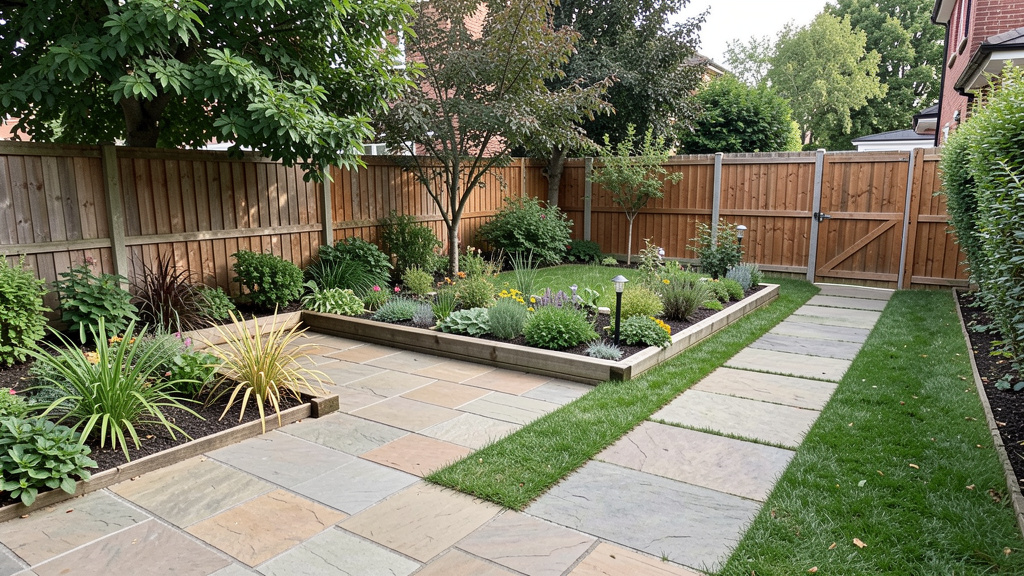
Stop fighting your yard’s layout. Start designing with intention—where every step feels purposeful, every zone invites connection, and your outdoor living expands without adding a single square foot.
Imagine stepping from your back door onto a patio that effortlessly guides guests toward the fire pit, while a subtle change in paving material signals the shift to a quiet reading nook tucked beneath a mature oak. Children’s laughter carries from the play area—visible for supervision yet separated enough to avoid disrupting adult conversation. The path to the vegetable garden feels like a gentle invitation, not a chore. This isn’t magic reserved for magazine spreads. It’s the deliberate art of landscape zoning: choreographing movement, purpose, and emotion across your property. This guide reveals a behavior-based framework used by thoughtful designers to transform disjointed outdoor spaces into cohesive, intuitive landscapes that adapt to real life—not idealized fantasies. No prior design experience required. Just clarity, observation, and the willingness to see your yard through a new lens.
Introduction: Beyond Pretty Pictures—The Science of Spatial Flow
When most homeowners envision landscape design, they picture lush plantings, elegant patios, or sparkling water features. Yet the most celebrated outdoor spaces share a hidden quality: flow. Flow is the invisible current that guides movement, defines purpose, and creates emotional resonance across a property. It’s why some yards feel expansive and inviting despite modest footprints, while others—packed with expensive elements—feel cramped, confusing, or underused.
Landscape zoning is the deliberate process of dividing your outdoor area into distinct activity zones (entertaining, relaxation, play, utility, ecological) and, crucially, designing the intentional connections between them. This approach draws from established principles in environmental psychology and landscape architecture, particularly the concept of “prospect-refuge” (the human preference for spaces offering both visibility and shelter) and “defensible space” theory (how spatial organization influences comfort and security). Research in environmental psychology suggests that thoughtfully zoned landscapes can support reduced household stress, encourage more time spent outdoors, and strengthen family interaction by minimizing spatial conflicts—like active play disrupting quiet moments or muddy pathways tracking through dining areas.
This guide moves decisively beyond superficial inspiration boards and fragmented DIY tips. We equip you with a repeatable, behavior-based framework to analyze your property’s unique constraints and opportunities, map zones to your household’s documented patterns (not idealized fantasies), and implement transitions that feel intuitive. Whether you’re sketching on a napkin, collaborating with a designer, or executing phased improvements yourself, these principles ensure every decision serves a purpose. Let’s begin by understanding the core philosophy that makes zoning work: designing with human behavior, not against it.
The Harmony Framework: Three Layers to Seamless Outdoor Living
Thoughtful landscape design begins not with plants or pavers, but with a behavioral blueprint. The Harmony Framework structures this process into three interdependent layers. Skipping any layer risks creating zones that feel isolated, awkwardly connected, or misaligned with how your household actually lives. Layer 1 focuses on why people move and gather. Layer 2 defines what each space must do. Layer 3 solves how to move between them gracefully. Together, they create a landscape that feels intuitive, as if it grew organically from your family’s rhythms.
Layer 1: Human Behavior Mapping—Charting the Invisible Currents
Before drawing a single line on paper, observe how your household currently uses the yard. This isn’t about aspirations (“We’ll host brunches every Sunday!”); it’s about documented patterns. Grab a notebook or use your phone’s notes app and spend three non-consecutive days noting:
- Traffic Paths (Desire Lines): Where do people walk most frequently without prompting? Trace paths from back door to mailbox, garage to patio, child’s bedroom window to swing set, or compost bin to garden. These worn trails are nature’s vote for efficient routes—honor them.
- Sun and Shadow Patterns: At 9 AM, 1 PM, and 5 PM, sketch or photograph where sunlight falls. Note persistent shade from trees, fences, or structures. A breakfast nook needs gentle morning sun; an afternoon reading spot demands deep shade; a vegetable garden requires consistent sun exposure.
- Noise and Privacy Sources: Is the neighbor’s AC unit audible near the proposed dining area? Does street traffic create visual distraction? Use a free decibel meter app for objectivity. Identify “quiet pockets” and “noise corridors.”
- Microclimate Zones: Feel for wind tunnels (between house and garage), damp areas (poor drainage after rain), or heat sinks (south-facing brick walls radiating afternoon warmth). These dictate where certain activities thrive or fail.
- Household Member Input: Interview each resident separately. A teenager might crave a secluded hangout spot visible from the house (for safety) but shielded from direct sightlines (for privacy). A grandparent may need a flat, well-lit path to a garden bench. A pet owner needs easy access to a designated relief area. Document these nuances without judgment.
Why this layer is essential: Studies of residential landscape redesigns indicate that projects ignoring existing behavior patterns often result in underused spaces. For instance, placing a vegetable garden far from the kitchen door—despite daily usage patterns—typically leads to neglect. Conversely, aligning functional areas with natural movement paths significantly increases daily engagement.
Common mistake to avoid: Assuming all family members share identical needs or movement patterns. One partner may exit the house via the garage; another through the mudroom. Children may have established “secret” paths through the yard. Documenting these variations prevents designing a landscape that serves only one perspective.
Budget-friendly alternative: No time for multi-day observation? Recreate a typical Saturday. At breakfast, note where coffee is sipped. After lunch, track where kids gravitate. In the evening, observe gathering points. Supplement with timestamped photos throughout the day. Review security camera footage (if available and ethically appropriate) to identify unconscious movement patterns. The goal is evidence, not assumption.
The Fundamental Principle: Your landscape should serve the life you live today, not the life you imagine living someday. Design follows behavior—not the reverse.
Layer 2: Zone Definition—Clarifying Purpose Without Compromise
With behavior mapped, define each activity zone by its core function, required dimensions, sensory needs, and non-negotiable boundaries. Ambiguity here causes zones to bleed into one another, creating conflict and frustration. A “multi-use lawn” often becomes a dumping ground for toys, sports equipment, and neglected furniture. Instead, assign singular primary purposes. Clarity creates freedom.
We categorize residential zones into five universal types. Most properties combine 3–4; rarely does one yard need all five. Be ruthless in prioritization based on your Layer 1 findings.
The Entertaining Zone
Purpose: Hosting gatherings (meals, conversations, celebrations).
Non-negotiables: Proximity to kitchen access (practical distance), level ground, ambient lighting, seating capacity aligned with typical guest count.
Sensory considerations: Shield from street noise using plantings or berms; incorporate subtle background sound (bubbling fountain) to mask conversations and create acoustic privacy. Avoid placing directly under noisy tree branches (squirrels, falling leaves). Ensure sightlines allow hosts to monitor children’s areas without turning away from guests.
Dimensional guidance: Allow comfortable space per seated guest for movement. Include clearance behind chairs for traffic flow.
Illustrative example: A homeowner initially planned their patio against the rear fence for perceived privacy. Behavior mapping revealed their kitchen door opened across uneven grass—a journey requiring careful navigation after dark. They relocated the patio adjacent to the house, adding a defined path with low-voltage path lights. Result: spontaneous evening gatherings became routine; tripping hazards eliminated; connection to the home strengthened.
Counter-example: A patio installed deep in the yard, surrounded by dense plantings for “seclusion.” Within months, it became storage for unused furniture. The distance from the house, lack of lighting, and narrow access path made evening use impractical. The space felt isolated, not intimate.
Budget adaptation: Start with a defined “rug” of outdoor carpet or interlocking tiles on existing grass. Add string lights overhead. Test the location and size for two weeks before committing to permanent hardscape.
The Relaxation Zone
Purpose: Solitary recharge or intimate conversation (reading, meditation, morning coffee, stargazing).
Non-negotiables: Visual separation from high-traffic zones (play area, main path), comfortable seating oriented toward a pleasing view (not a blank fence), protection from prevailing wind or harsh sun as needed.
Sensory considerations: Prioritize views of nature (a single specimen tree, bird feeder, water feature) over “designed” features. Incorporate tactile elements (smooth stone bench, textured throw pillow). Introduce subtle scent (lavender, jasmine) near seating. Minimize auditory intrusion—position away from play zones or street noise.
Dimensional guidance: As small as 6×8 ft (1.8×2.4 m)—just enough for a chair, small side table, and psychological separation.
Illustrative example: In a compact backyard, a relaxation nook was carved beneath a mature tree. A curved bench followed the tree’s root flare, with a permeable path leading from the patio. Strategic planting created a “green curtain” blocking sightlines to neighboring yards. A small solar-powered lantern provided soft evening light. The owner reports using this spot daily for quiet reflection—a non-negotiable ritual.
Counter-example: A relaxation zone placed adjacent to a children’s play area, separated only by a low hedge. Constant noise and visual distraction rendered it unusable for its intended purpose.
Budget adaptation: Repurpose a weather-resistant armchair. Define the space with a circular rug of river rocks or a ring of potted plants. Hang a simple hammock chair from a sturdy branch.
The Play & Activity Zone
Purpose: Active recreation (children’s play structures, sports, pet area, bocce court, yoga space).
Non-negotiables: Safety (appropriate surfacing under play structures), clear visibility from primary supervision points (kitchen window, patio), containment (fencing if needed for pets or young children), durable surfacing.
Sensory considerations: Use sound-absorbing materials near boundaries to minimize noise transfer. Avoid placing near fragile plantings, water features, or quiet zones. Ensure adequate space for activity sprawl (balls rolling, running).
Dimensional guidance: Size appropriately for the intended activity. Allow safety zones around equipment.
Illustrative example: A family converted a weedy corner into a multi-generational activity zone. Synthetic turf provided a clean, durable surface for toddler play and adult games. A low bench along the perimeter doubled as seating for supervising adults and a visual boundary. Strategic placement allowed supervision from the kitchen window while feeling distinct from the entertaining patio.
Counter-example: A play zone isolated at the far end of a large property. Parents felt uneasy supervising from the house; children rarely used it independently due to the psychological and physical distance.
Budget adaptation: Define boundaries with painted rocks or low log edging. Use donated tires (sanded and painted) as planters or seating. Install a simple clothesline “boundary” with flags for temporary definition.
The Utility Zone
Purpose: Housing functional elements (trash/recycling bins, compost system, tool storage, HVAC units, hose reels).
Non-negotiables: Concealment from main views and guest pathways, easy access for service vehicles (trash collection), durable non-slip surfacing, ventilation for compost bins, security for tool storage.
Sensory considerations: Use sound-dampening materials near compressors; ensure compost bins have proper airflow; position hose reels to avoid tripping hazards.
Dimensional guidance: Match size precisely to equipment. Allow clearance in front of bins for access.
Illustrative example: A solution for a narrow side yard: a custom screen hid trash bins along the property line. A pocket door in the screen allowed alley access for collection day without entering the main yard. Gravel surfacing prevented mud; a small roof overhang protected bins from rain. A climbing rose softened the screen visually while providing fragrance. The zone became virtually invisible yet highly functional.
Counter-example: Utility zone placed prominently near the front walkway. Daily eyesore diminished curb appeal; guests felt uncomfortable passing bins en route to the door.
Budget adaptation: Use salvaged pallets to build a simple bin enclosure. Paint cinder blocks to create a low wall. Hang hooks on a fence for hose and tool storage. Prioritize concealment and organization.
The Ecological Zone
Purpose: Supporting local wildlife, managing stormwater, growing food, or cultivating native habitats.
Non-negotiables: Alignment with sun/water needs of selected plants; minimal human traffic to protect delicate ecosystems; appropriate soil preparation; consideration of local regulations (e.g., rain garden placement).
Sensory considerations: Celebrate seasonal changes (spring blooms, fall berries, winter seed heads). Incorporate bird baths, pollinator hotels, or small water features. Use texture and movement (ornamental grasses) for visual interest beyond flowers.
Dimensional guidance: Highly flexible—from a small raised bed for herbs to a larger meadow restoration. Start small; expand as knowledge grows.
Illustrative example: A homeowner converted a water-intensive lawn into a native plant garden. They zoned it as “ecological,” with a mown path looping through for observation. Within a few seasons, wildlife sightings increased noticeably; maintenance time decreased significantly; stormwater runoff visibly reduced. They added a small bench at the path’s end—a quiet spot to observe the evolving ecosystem.
Counter-example: An ecological zone placed where family members cut through daily as a shortcut. Trampled seedlings, compacted soil, and frustrated gardeners led to abandonment. The zone failed because its purpose conflicted with documented behavior.
Budget adaptation: Start with a single native plant guild. Use free mulch from municipal programs. Collect rainwater in repurposed containers for irrigation.
Why precise definition matters: Each zone’s success depends on meeting its specific requirements. Blurring boundaries—like adding a grill to the relaxation zone—introduces conflicting sensory inputs (smoke, heat, activity noise) that undermine the zone’s core purpose. A relaxation zone must feel like a sanctuary; an entertaining zone must facilitate connection. Clarity prevents compromise.
Budget tip: Start with temporary zone markers before permanent installation. Use patio stones to outline the entertaining area, an outdoor rug for the relaxation spot, rope lights to define the play zone boundary, or painted stakes for the ecological area. Live with these markers for two weeks. Adjust locations, sizes, and boundaries based on actual use. This low-cost prototyping prevents expensive redesigns later.
Layer 3: Transition Design—Weaving Zones into a Cohesive Whole
Zones alone are islands. Transitions are the bridges that create flow. Poor transitions cause hesitation (“Which way to the garden?”), disrupt experiences (“Why is this path so narrow?”), or create safety hazards (unexpected steps). Exceptional transitions feel intuitive, enhancing the journey between zones and deepening the emotional experience of the landscape. Transitions operate on three interconnected levels: physical (paths), visual (sightlines), and experiential (sensory shifts). Master all three.
Physical Transitions: Paths as Purposeful Corridors
Paths are not mere connectors; they are design elements that control pace, perspective, and purpose. Every path should answer: Where am I going? How should I feel on this journey?
- Width dictates function and psychology:
- 18–24 inches (45–60 cm): Intimate garden paths (single file, slow contemplative pace). Ideal for ecological zones or relaxation zone access.
- 36–48 inches (90–120 cm): Main circulation routes (two people walking abreast comfortably, wheelbarrow access). Essential for paths connecting house to entertaining zone or utility area.
- 60+ inches (150+ cm): Primary entertaining arteries (group movement during parties). Use sparingly to avoid overwhelming small spaces.
- Material signals intent and manages expectations:
- Stepping stones set in moss or thyme: “Pause, observe nature. This is a journey, not a destination.”
- Smooth, level flagstone or concrete pavers: “Effortless, accessible movement to the patio.”
- Crushed gravel with audible crunch: “You’re entering a private, contemplative zone.” The sound provides auditory feedback.
- Irregular slate pieces with creeping thyme between: “This path rewards attention; notice the details.”
- Alignment and curvature guide movement and emotion:
- Straight paths convey efficiency, formality, and direct access (utility zone, main house entry).
- Gently curved paths encourage exploration, slow the pace, and reveal views gradually (garden paths, relaxation zone access).
- Critical nuance: Curves should feel organic, not arbitrary. Align bends with focal points (a specimen tree, sculpture) to justify the curve and create anticipation. Avoid sharp turns unless intentional (e.g., revealing a hidden bench).
- Grade and accessibility considerations:
- Maximum slope for accessible paths: 1:12 ratio (1 inch rise per 12 inches run).
- For steeper slopes: incorporate switchbacks, landings (min 5×5 ft / 1.5×1.5 m), or steps with consistent riser height and deep treads.
- Always include non-slip surfaces on steps and slopes (textured pavers, grooved concrete).
Illustrative application: In a sloped backyard, a series of gentle switchback paths connected the upper patio (entertaining) to the lower play area. Each landing offered a different curated view: first the fire pit framed by plantings, then the vegetable garden, finally the play structure visible through a gap in the foliage. The path width narrowed slightly on ascents to naturally slow pace, widening at landings for resting. Handrails were integrated subtly into low retaining walls. Result: Safe navigation for all ages; children enjoyed the “adventure” of the journey; every step felt intentional.
Common mistake: Paths that dead-end without purpose. Every path should lead to something meaningful (a bench, a focal point, a functional zone). If a path ends at a fence, add a purposeful element: a bird feeder, a piece of garden art, or a gate to a hidden compost area. A dead-end path feels like an error; a path ending at a destination feels like a discovery.
Visual Transitions: Managing Sightlines for Discovery and Comfort
What you see (or don’t see) as you move shapes anticipation, privacy, and emotional response. Visual transitions control the narrative of your landscape.
- Reveal and conceal strategically: Use plantings, pergolas, changes in grade, or screens to partially hide zones. A relaxation nook glimpsed through arbor foliage feels inviting and private; fully exposed, it loses intimacy. A play area visible from the kitchen window provides peace of mind; completely hidden, it causes anxiety.
- Framing views intentionally: Position openings in fences, hedges, or pergola slats to frame desirable views. Block undesirable views (garbage cans, utility poles) with layered screening (tall grasses + medium shrubs + groundcover).
- Sightline hierarchy from key vantage points: From the main living area (e.g., kitchen window, primary patio seating), prioritize views of high-use zones requiring supervision (play area). Secondary zones (utility, ecological) should be visually minimized or screened. Create “borrowed views” by aligning sightlines with attractive elements beyond your property (a community park, mature tree canopy).
- Using vertical elements to define space: A pergola over a path signals transition between zones. A change in fence height visually segments space without physical barriers.
Case illustration: A coastal property had a stunning ocean view but a cluttered side yard visible from the main deck. Strategic planting of native shrubs along the property line preserved the ocean view while visually concealing the side yard. A small, intentional gap in the plantings aligned precisely with the path to the beach access point, creating a “view tunnel” that drew the eye purposefully toward the destination. The transition felt seamless and intentional.
Experiential Transitions: Sensory Shifts That Signal Change
Engage multiple senses to mark zone boundaries subtly and memorably. These micro-transitions prepare the mind and body for the shift in activity ahead.
- Sound: A bubbling fountain near the patio masks street noise as you step toward the relaxation zone. Wind chimes signal entry to a meditation garden. The crunch of gravel underfoot announces departure from the formal entertaining area.
- Texture underfoot: Transition from smooth patio pavers to crunchy gravel to soft lawn—each surface change telegraphs a shift in activity and pace. A strip of smooth river stones along a path edge invites barefoot walking toward a relaxation zone.
- Scent: Plant lavender or rosemary along the path to the relaxation zone; its fragrance triggers calm and signals transition. Citrus-scented herbs near the kitchen garden stimulate appetite.
- Light: Gradual dimming of path lights as you move from entertaining to relaxation zones supports circadian rhythms and signals winding down. Uplighting a specimen tree at a path junction creates a focal point and gentle guidance.
- Temperature shifts: A path moving from sun-drenched patio into dappled shade under a pergola with climbing vines provides physical relief and psychological transition. A small water feature at a zone boundary adds cooling humidity in dry climates.
Why transitions make or break flow: Research on landscape perception indicates that properties with intentional multi-sensory transitions are often perceived as more inviting and memorable. Thoughtful transitions can enhance the sense of discovery and perceived spaciousness. The brain registers these subtle shifts as intentional design, increasing emotional connection. Transitions transform a sequence of zones into a cohesive narrative journey.
The Fundamental Principle: Transitions are not empty space—they are the narrative thread that turns isolated zones into a cohesive, emotionally resonant story.
Adapting the Framework to Your Property’s Unique Constraints
No two properties are identical. Slopes, odd shapes, existing trees, tight urban lots, or HOA restrictions require flexible, intelligent application of the Harmony Framework. Below, we address common constraints with actionable strategies. The goal is not to overcome constraints, but to leverage them as defining features of your landscape’s character.
Navigating Sloped Terrain: Turning Challenges into Assets
A slope isn’t a flaw—it’s an opportunity for dynamic, multi-dimensional zoning that flat lots cannot replicate. Embrace the grade.
- Terracing for vertical zoning: Create level “rooms” on steep slopes using retaining walls. This defines zones vertically while maximizing usable space. Place the entertaining zone on the upper terrace (best views, proximity to house), play area mid-slope (visible from house windows), relaxation nook on a lower terrace (sheltered, intimate).
- Engineering note: Retaining walls over 18 inches (45 cm) in height typically require professional consultation. For smaller DIY projects, use segmental retaining wall blocks with proper base preparation and drainage.
- Drainage imperative: Install weep holes and gravel backfill behind walls to prevent hydrostatic pressure buildup. Slope terrace surfaces slightly away from walls.
- Planting strategy: Use deep-rooted groundcovers on terrace faces to stabilize soil. Avoid planting large trees near retaining walls.
- Switchback paths for safe, engaging circulation: Gentle curves reduce effective grade steepness. Calculate slope: (rise ÷ run) x 100. Aim for paths under 10% grade for comfortable walking; under 5% for accessibility.
- Design tip: Space switchbacks at intervals matching natural resting points. Widen landings slightly for pausing and viewing.
- Material choice: Use textured pavers or rough-cut stone on slopes for traction. Avoid smooth surfaces.
- Stair integration for necessary elevation changes: When elevation change exceeds 2 ft (0.6 m), stairs are necessary.
- Safety standards: Tread depth minimum 11 inches (28 cm); riser height maximum 7.5 inches (19 cm). Maintain absolute consistency in riser height—variation causes trips.
- Aesthetics and function: Curve stairs to soften descent visually. Flank with low-voltage step lights for safety. Integrate planters into stair landings.
Maximizing Compact Urban Lots: Illusions of Space and Multi-Functional Genius
Small yards demand precision, intentionality, and clever illusions. Every inch must earn its keep. The goal is psychological expansion, not physical enlargement.
- Vertical zoning to reclaim “air space”: Use walls, fences, and structures to create layered zones. A pergola over the patio defines the entertaining zone vertically. Espaliered fruit trees provide privacy, food, and seasonal interest. Wall-mounted planters transform blank surfaces into productive ecological zones.
- Multi-functional zone design: Every element must serve multiple purposes. A built-in bench with hidden storage serves as seating, toy containment, and a clear boundary. A fold-down table mounted on the fence converts a narrow side yard into an instant dining spot. A raised planting bed doubles as seating.
- Strategic use of mirrors and reflective surfaces: Place a weatherproof, shatter-resistant mirror on a fence to reflect greenery or sky, doubling the perceived depth. Critical caution: Avoid reflecting neighboring windows for privacy reasons; angle carefully to capture only desirable elements. Use reflective surfaces sparingly—a single well-placed mirror is powerful.
- Color and material psychology: Light-colored paving reflects light and makes spaces feel larger. Dark accents create depth and visual “recession.” Use consistent materials throughout to avoid visual fragmentation.
- Case illustration: A compact urban backyard was transformed using the Harmony Framework:
- Entertaining zone: Patio of light-gray pavers adjacent to the kitchen door. Built-in bench seating with lift-top storage.
- Relaxation zone: A hanging chair suspended in the far corner, shielded from street view by a tall planter of clumping bamboo.
- Ecological zone: A vertical garden system on the back fence featuring herbs, strawberries, and pollinator-friendly flowers.
A curved path of irregular slate pieces connected zones, with creeping thyme planted between stones for scent. Strategic placement of a single mirror on the side fence reflected the vertical garden, creating an illusion of depth. The space felt surprisingly spacious due to clear zone separation, intentional sightlines, and multi-functional elements.
Working With Existing Mature Trees: Honoring Legacy While Designing Forward
Established trees are irreplaceable assets but impose significant constraints (root zones, shade patterns, falling debris). Design with the tree, not against it.
- Root Protection Zone (RPZ) is critical: Calculate RPZ radius as approximately 1 foot (30 cm) per inch of trunk diameter measured at breast height (DBH—4.5 ft / 1.4 m above ground). Example: A 20-inch DBH tree has a roughly 20-ft (6 m) radius RPZ. Avoid digging, paving, changing grade, or storing heavy materials within the RPZ. Compaction or root damage can severely harm a mature tree.
- Zone integration: Design the RPZ as part of your ecological zone—a mulched bed with shade-tolerant native plants. Place a bench outside the RPZ with a view of the tree, making the tree the focal point.
- Path routing: Route paths around the RPZ. If a path must cross near the edge, use permeable materials (stepping stones with gaps, mulch) to allow water and air penetration.
- Shade mapping for intentional placement: Track sun patterns over multiple seasons. Dense shade zones suit relaxation zones (cool in summer) or ecological zones (shade-loving plants). Dappled shade works well for dining areas (filtered light reduces glare). Full sun zones suit entertaining, play, or vegetable gardens.
- Canopy views and architecture: Position seating to frame the tree’s trunk, branch structure, or seasonal changes. A bench facing the trunk invites appreciation of bark texture and form. Use uplighting at the base (with shielded fixtures) to highlight the tree’s architecture at night.
- Debris management planning: Position relaxation or dining zones away from trees that drop significant debris. Place a small, discreet trash can nearby for easy cleanup. Choose furniture with slatted surfaces to allow debris to fall through.
Navigating HOA or Municipal Restrictions: Creative Compliance and Diplomacy
Restrictions on fencing heights, structure types, plant species, or hardscape materials require strategy, documentation, and ingenuity—not frustration.
- Pre-submission intelligence gathering: Before designing, obtain written HOA guidelines or municipal codes. Note exact wording—e.g., “fences cannot exceed 4 ft” may allow living walls (hedges) at greater heights if not classified as “fences.” Understand the intent behind rules (privacy, aesthetics, safety) to propose compliant alternatives.
- Alternative screening solutions:
- If solid fences are banned: Use layered planting (tall ornamental grasses + medium shrubs + groundcover) for privacy. Bamboo in large, root-barrier containers avoids invasive species concerns.
- For utility zone concealment: Build a “green wall” using trellis panels with fast-growing, non-invasive vines.
- Material and plant substitutions:
- HOA requires “natural stone” patios? Use concrete pavers with realistic stone textures.
- Mandates specific plant palettes? Choose cultivars within the approved list that suit your zone needs.
- Documentation and presentation strategy:
- Photograph existing conditions thoroughly.
- Submit detailed drawings with botanical names, material specifications, and dimensions.
- Frame proposals around community benefits: “This native planting palette reduces water usage and supports local pollinators,” or “The permeable path reduces stormwater runoff.”
- Offer to provide maintenance records proving plant health.
Common Zoning Mistakes—and How to Avoid Them
Even well-intentioned designs falter without foresight. Below, we dissect frequent pitfalls observed across residential landscapes, with corrective strategies grounded in behavioral observation and practical experience. Recognizing these errors before breaking ground saves time, money, and frustration.
Mistake 1: Ignoring the “Daily Path” from House to Key Zones
Symptom: A beautiful patio or garden rarely used because the route from the kitchen involves stepping over toys, navigating uneven grass, or passing through the utility zone.
Root cause: Designing zones in isolation without mapping primary movement patterns during Layer 1. Prioritizing “ideal” location over practical access.
Fix: During behavior mapping, identify the top 3 daily journeys (e.g., kitchen → patio for morning coffee, back door → mailbox). Ensure these paths are:
– Shortest practical distance for high-use zones
– Well-lit for evening use (path lights every 8–10 ft)
– Wide enough for comfortable passage (min 36 inches / 90 cm)
– Surface-appropriate (non-slip near pools, smooth for accessibility, permeable to avoid mud)
– Psychologically inviting (curved, lined with low plantings, leading to a visible destination)
Pro tip: Install temporary path lighting (solar stake lights) along proposed routes before finalizing zone locations. Walk the path at dusk and dawn. Does it feel safe? Inviting? Efficient? Adjust based on lived experience.
Mistake 2: Over-Zoning—Creating Too Many “Special Purpose” Areas
Symptom: A “yoga deck,” “bird-watching blind,” and “herb spiral” compete for limited space, leaving no room for flexible, spontaneous use. Zones feel underutilized and high-maintenance.
Root cause: Enthusiasm overriding practicality; designing for hypothetical activities rather than documented behaviors.
Fix: Apply the “Two-Week Test” rigorously. For any proposed zone, ask: “Based on my Layer 1 observations, will this space be used at least twice weekly year-round by someone in this household?” If the honest answer is no, consolidate. A single relaxation zone can host morning coffee, evening reading, and weekend yoga. A versatile lawn area can serve play, picnics, and stargazing. Prioritize zones with high, documented usage over hyper-specialized ones.
Exception: If a household member has a dedicated, frequent hobby (e.g., serious vegetable gardening), allocate space—but integrate it thoughtfully within the framework.
Mistake 3: Poor Transition Between Public and Private Zones
Symptom: Guests exiting the house step directly into the children’s sandbox, the utility zone with trash bins, or a private relaxation nook, causing social awkwardness.
Root cause: Failing to sequence zones by privacy level and guest flow. Placing high-privacy zones along primary guest circulation routes.
Fix: Arrange zones in a deliberate “privacy gradient” radiating from the house:
1. Semi-public zone: Entertaining area (visible from house, accessible to guests)
2. Semi-private zone: Play/activity area (visible for supervision, separated from direct guest flow)
3. Private zone: Relaxation/ecological zones (shielded visually and acoustically)
4. Service zone: Utility area (concealed, accessed via separate route)
Use clear transition elements to mark shifts between privacy levels: a gate, a change in paving material, an arbor with climbing vines, or a subtle change in path width. Train household members on the intended flow: “Guests stay in the patio area; the path beyond the arbor leads to our private garden.”
Mistake 4: Forgetting Seasonal and Time-of-Day Shifts
Symptom: A patio perfect for summer dinners becomes unusable in spring due to afternoon sun glare, or in fall due to exposure to prevailing winds.
Root cause: Designing for one season or one time of day observed during planning. Ignoring microclimate variations across the property.
Fix: Layer 1 mapping must include seasonal observations over multiple months if possible:
– Winter: Where does snow pile up? Which areas receive welcome sun on cold days? Where do cold winds funnel?
– Summer: Where does shade fall at 3 PM (peak heat)? Are there wind tunnels?
– Shoulder seasons (spring/fall): Where does morning sun hit for coffee? Where does afternoon light linger?
Adapt zones dynamically:
– Add retractable awnings, pergolas with deciduous vines (shade in summer, sun in winter), or large umbrellas for flexible sun control.
– Position fire pits or outdoor heaters in wind-protected spots identified during mapping.
– Include a “three-season” zone: a covered patio or porch area usable during light rain or cooler temperatures.
– Plant deciduous trees on the west side of patios for summer shade and winter sun penetration.
Wisdom: “A landscape designed for only summer is half a landscape.” Build in flexibility for year-round enjoyment.
Mistake 5: Neglecting Maintenance Realities and Household Capacity
Symptom: A lush lawn between zones requires mowing twice weekly; intricate gravel paths need constant weeding; a complex water feature becomes an algae-filled eyesore. Initial enthusiasm fades; the yard becomes overgrown.
Root cause: Choosing materials, plants, or features without honestly matching them to the household’s available time, skill level, physical ability, and budget for upkeep.
Fix: During Layer 2 (Zone Definition), assign a “maintenance consideration” to each proposed element:
– Very Low: Synthetic turf alternatives, mulch beds with native groundcovers, drought-tolerant native plants, permeable gravel paths with landscape fabric
– Low: Clover lawn mix, ornamental grasses, self-seeding annuals, simple drip irrigation
– Moderate: Traditional lawn (mowing, edging), mixed perennial beds (deadheading), gravel paths without fabric
– High: Rose gardens, formal knot gardens, water features requiring weekly cleaning, vegetable gardens
Total the considerations per zone. Compare to your household’s realistic weekly maintenance capacity (be brutally honest: “We can spend 30 minutes weekly on yard upkeep”). If the demand exceeds capacity, simplify before installation. Replace high-maintenance elements with resilient alternatives:
– Traditional lawn → Clover mix or native sedge lawn (drought-tolerant, rarely mowed)
– Bare soil garden beds → Mulched native plant guilds (self-sustaining, weed-suppressing)
– Gravel path without fabric → Stepping stones with thyme or moss between
Professional insight: “A beautifully maintained simple design outperforms a neglected complex one every time. Sustainability includes human sustainability—design for the life you actually live.”
Your Questions, Answered
Q: How small can a zone be and still be functional?
A: Functionality depends entirely on purpose, not just square footage. A relaxation zone can be remarkably compact—5×7 feet (1.5×2.1 meters) is sufficient for a comfortable chair, small side table, and psychological separation. The critical factor is clear definition: use a change in paving material (e.g., pavers within a gravel area), a low planter edge, or strategic planting to mark its boundaries unmistakably. Avoid “leftover” spaces; intentionally design even tiny zones with purpose. A narrow side yard can become a functional utility zone or a serene “green tunnel” path to the backyard.
Q: Can I have multiple zones of the same type (e.g., two relaxation areas)?
A: Absolutely—and this is often highly advisable for households with diverse needs or large properties. For example: a sunny morning coffee nook near the kitchen door (oriented east for morning light), and a shaded evening reading spot deeper in the yard under a tree (oriented west to catch afternoon breeze). Differentiate them intentionally by orientation (sun vs. shade), views (garden vs. sky), sensory elements (wind chimes vs. water feature), or time of primary use. Ensure transitions between them feel intentional, not confusing—use distinct path materials or sightline cues to guide movement.
Q: What’s the absolute minimum width for a path between zones?
A: For primary circulation routes connecting the house to main activity zones (entertaining, play), 36 inches (90 cm) is the practical minimum to allow two people to walk comfortably abreast and accommodate occasional equipment (wheelbarrow, wagon). For secondary paths (garden exploration, access to a hidden bench), 18–24 inches (45–60 cm) is acceptable. Critical exception: If accessibility for wheelchairs, walkers, or strollers is required, maintain a consistent minimum width of 48 inches (120 cm) with gentle slopes (max 5% grade) and level landings at turns. Always prioritize safety and inclusivity.
Q: How do I zone a yard with no existing features, mature trees, or natural anchors?
A: Start with Layer 1 behavior mapping even more rigorously. Without natural anchors, you have greater creative flexibility but also greater responsibility to create intentional structure. Use hardscape elements strategically: a curved low retaining wall can define a terrace and create visual interest; a freestanding pergola can anchor the entertaining zone and provide vertical definition; a specimen tree planted early (choose fast-growing, structurally sound species suitable for your region) establishes a future focal point. Remember: empty space is an opportunity for clarity, not a void to be filled haphazardly. Begin with strong bones (paths, zone boundaries), then add layers over time.
Q: Should the entertaining zone always be closest to the house?
A: In most cases, yes—proximity to kitchen access, indoor restrooms, and primary living spaces significantly reduces friction for hosting and daily use. However, thoughtful exceptions exist: if the best view, most level ground, or optimal sun exposure is farther out, create a strong, inviting transition path to bridge the distance. This path must be wide, well-lit, level (or gently graded), and psychologically appealing (curved, lined with plantings, leading to a visible destination). Never sacrifice a superior location solely for proximity if the journey is pleasant, safe, and practical. The key is making the path part of the experience, not an obstacle.
Q: How do I handle a zone that genuinely serves conflicting purposes (e.g., a play area that adults also use for morning yoga)?
A: Design for the dominant activity first, then layer in flexibility and clear protocols. For a shared play/yoga zone:
– Use durable, non-toxic, easy-clean surfacing
– Install dedicated, accessible storage nearby (bench with lid, shed) for quick toy cleanup before yoga
– Define boundaries clearly with low edging or plantings so the space feels intentional for both uses
– Establish household understanding: “Mornings 6–8 AM reserved for yoga; after 8 AM, space is open for play”
– If conflicts persist despite these measures, consider splitting the functions into adjacent but distinct zones—a small dedicated yoga pad (6×8 ft) next to the larger play area. Clarity prevents resentment.
Q: What specific plants are best for creating “soft,” permeable transitions between zones?
A: Choose plants with airy textures, see-through qualities, and seasonal interest that partially screen without blocking light, views, or airflow. Top performers across many climate zones:
– Ornamental grasses: Maiden grass (Miscanthus sinensis), switchgrass (Panicum virgatum), feather reed grass (Calamagrostis x acutiflora ‘Karl Foerster’)—provide movement, sound, and vertical softness.
– See-through shrubs: Spirea (Spiraea japonica ‘Magic Carpet’), fothergilla (Fothergilla gardenii), smoke bush (Cotinus coggygria)—offer seasonal color without dense opacity.
– Vines on open trellises: Native honeysuckle (Lonicera sempervirens), clematis (Clematis spp.), crossvine (Bignonia capreolata)—create vertical separation with dappled light.
Avoid dense, opaque hedges for transitions—they create hard barriers that disrupt flow. Instead, layer plants at varying heights (tall grasses behind medium shrubs with groundcover beneath) to guide the eye gradually and maintain visual connection.
Q: How can I implement landscape zoning in a rental property with no permanent changes allowed?
A: Focus intensely on Layer 3 (Transitions) and temporary, reversible zone definition:
– Use outdoor rugs (secured with rug pads) to mark patio “rooms” or relaxation spots.
– Place potted plants, folding screens, or tall grasses in containers to create visual boundaries between zones.
– Install battery-operated or solar path lights to define routes and signal transitions.
– Add a freestanding market umbrella or pop-up canopy to anchor a temporary entertaining zone.
– Use removable adhesive hooks on fences for hanging lights or small planters.
Document all changes with photos for landlord approval. Prioritize elements that can move with you. This approach builds spatial awareness and proves the value of zoning—making future permanent implementation easier.
Q: Is landscape zoning only beneficial for large properties?
A: Not at all—zoning is more critical on small lots. Without clear definition, compact yards become chaotic, multi-purpose battlegrounds. In tight spaces, zones may share edges but must have distinct identities (e.g., different paving materials, dedicated furniture sets, vertical elements). A 10×12 ft patio can feel like two zones: a dining area (table + chairs) and a lounging area (bench + side table), separated by a change in paver pattern or a narrow planter strip. Vertical elements (wall planters, hanging lights, pergola sections) help delineate zones without consuming precious floor space. The goal is psychological separation and intentional flow, not physical distance. Small spaces demand greater precision in zoning.
Q: How do I involve children in the zoning process without compromising the overall design integrity?
A: Give children agency within clearly defined parameters. During Layer 1 mapping, ask open-ended questions: “Where do you like to play most? What would make your play area even better?” For Layer 2 zone definition, offer constrained choices: “Should the play zone have a sandbox or a chalkboard wall?” “Which color should the bench be: blue or green?” Involve them in planting fast-growing, rewarding seeds (sunflowers, beans, radishes) in their designated zone. Assign age-appropriate “zone steward” roles (watering specific plants, feeding the bird feeder). This builds ownership, teaches spatial awareness, and respects their perspective. Avoid letting children dictate entire layouts—guide their input toward functional, safe solutions that align with the overall framework. Their enthusiasm becomes an asset, not a complication.
Q: How do climate zones (hot/dry, cold/wet, humid/subtropical) impact zoning decisions?
A: Climate fundamentally shapes zone placement, materials, and plant choices—but the Harmony Framework remains universally applicable. Key adaptations:
– Hot/Dry climates: Prioritize shade structures (pergolas with vines) over the entertaining zone; place relaxation zones in coolest microclimates; use light-colored, heat-reflective paving; select drought-tolerant native plants; incorporate water features sparingly but strategically for cooling effect.
– Cold/Wet climates: Elevate entertaining zones on decks or patios with excellent drainage; use non-slip, freeze-thaw resistant materials; position relaxation zones to capture precious winter sun; include covered “three-season” zones; select plants tolerant of wet soil and shade.
– Humid/Subtropical climates: Prioritize airflow in zone placement to reduce mold/mildew; use elevated structures over damp ground; select disease-resistant plant varieties; incorporate fans or breezeway designs into entertaining zones; use materials resistant to humidity.
Always consult local extension services or native plant societies for climate-specific recommendations. The framework provides the structure; local knowledge fills in the details.
Conclusion and Your 24-Hour Action Plan
Landscape zoning transforms outdoor spaces from a collection of disconnected elements into a harmonious, intuitive extension of your home. By mapping human behavior with honesty, defining zone purposes with precision, and designing transitions that feel inevitable, you create a landscape that adapts to your life—not the reverse. The Harmony Framework provides a repeatable process, but its true power emerges when tailored to your property’s unique story: the slope that offers panoramic views at sunset, the mature oak that shelters generations of memories, the compact urban lot that proves intention triumphs over square footage. This is design grounded in empathy, observation, and respect—for your family’s rhythms, your land’s character, and your own capacity.
Recall the three pillars that ensure lasting success and satisfaction:
1. Behavior before beauty: Let documented patterns—not aspirational images—guide zone placement and size. Design for the life you live today.
2. Clarity over clutter: Define each zone’s purpose singularly and protect its boundaries. Avoid ambiguous “multi-use” areas that satisfy no one fully.
3. Transitions as narrative: Treat paths, sightlines, and sensory shifts as essential design elements that weave zones into a cohesive, emotionally resonant journey.
The 24-Hour Rule: Your First Step Toward Flow
You don’t need a weekend, a budget, or a contractor to begin. Transformation starts with awareness. Within the next 24 hours:
1. Grab your phone and take three specific photos of your yard: one looking out from your most-used back door, one from the window you look through most often, and one standing in the spot you wish felt more functional or inviting.
2. Open a notes app and answer this single question: “What is the ONE journey I take most often in my yard? (e.g., coffee cup to patio chair, trash bin to alley, child’s hand to swing set). What specifically frustrates me about this path right now?” Be precise.
3. Sketch a single line on any available paper (napkin, envelope, margin) connecting your back door to that destination. Next to the line, write one word describing how you want to feel on that journey (e.g., “calm,” “energized,” “unhurried,” “connected”).
This tiny act shifts you from passive observer to intentional designer. It anchors the entire framework in your reality. Tomorrow, you’ll see your yard not as a problem to solve, but as a canvas of possibilities—waiting for your next deliberate stroke. This is where mastery begins.
The Bigger Picture: Your Landscape as a Living System
A well-zoned landscape is more than an aesthetic achievement or functional upgrade. It is a living system that conserves energy (yours and the planet’s), strengthens family bonds through thoughtfully designed interaction spaces, and honors the land’s inherent character. Each time you choose a native plant over a thirsty exotic, a permeable path over impervious concrete, or a shared fire pit over isolated seating, you contribute to a healthier micro-ecosystem and community. You reduce runoff, support pollinators, lower cooling costs through strategic shade, and create spaces that foster connection rather than isolation. This is the quiet value of intentional design: creating spaces that don’t just look good, but do good—for you, your loved ones, the local wildlife, and the world beyond your fence. Your yard becomes a testament to mindful living, a daily reminder that beauty and function are not opposites, but partners. Start small. Observe deeply. Design with purpose. The flow is waiting.
Explore Our Complete Outdoor Living System:
Designing a Low-Maintenance Native Plant Garden for Your Climate Zone | Path Materials Deep Dive: Gravel vs. Pavers vs. Stepping Stones vs. Mulch | The Ultimate Guide to Outdoor Lighting Zones: Safety, Ambiance, and Ecology | Building a DIY Pergola: Step-by-Step Plans and Pro Tips for Any Skill Level | Creating Wildlife Habitats in Suburban Yards: Birds, Bees, and Beyond | The Seasonal Yard Journal: A Simple System to Track Sun, Growth, and Joy All Year Long